Introduction
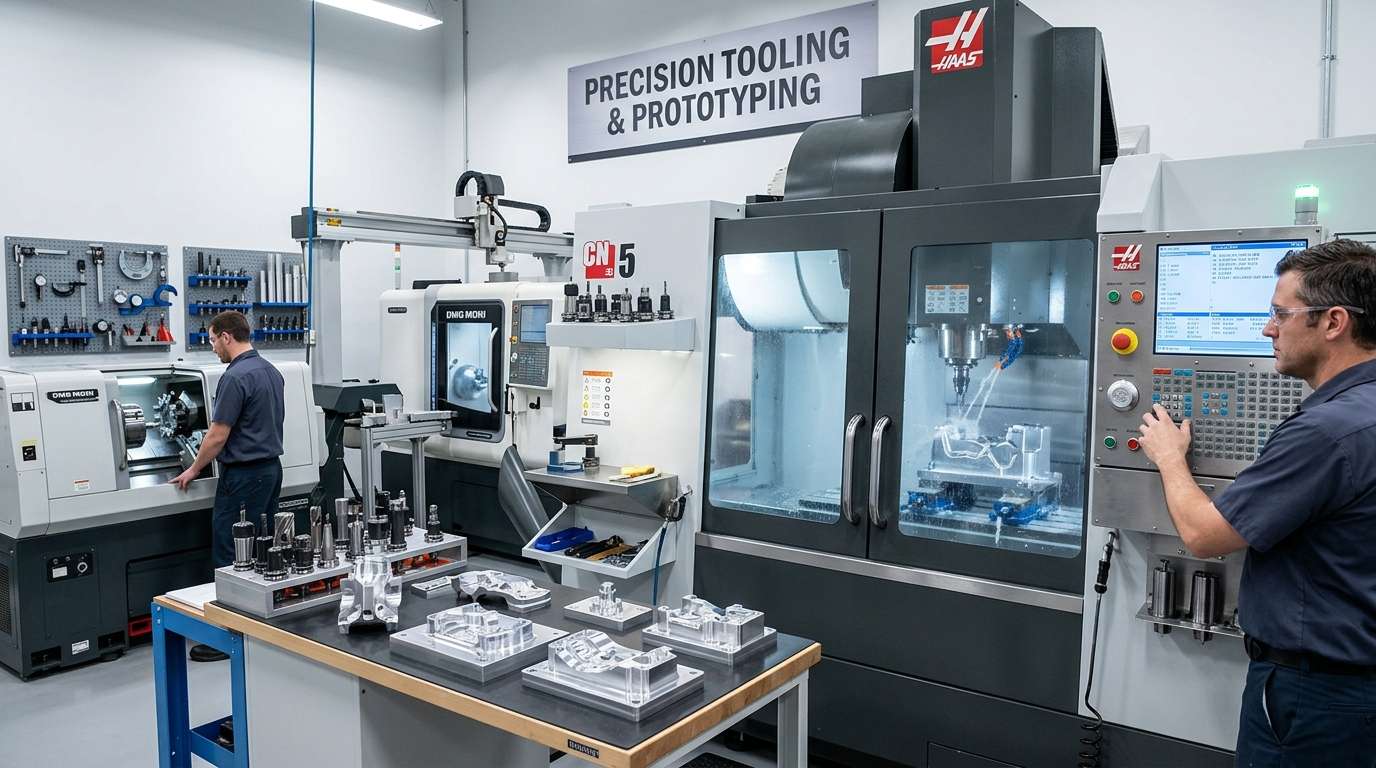
If you have ever wondered how a block of metal turns into a precision aerospace bracket or a medical implant with tolerances tighter than a human hair, the answer lies inside the CNC machine itself. Modern manufacturing runs on accuracy, repeatability and speed and CNC technology is what makes all three possible at once.
At its core, a CNC (Computer Numerical Control) machine replaces manual hand wheel-cranking with programmed instructions. The machine reads a program, then moves the cutting tool, spins the spindle, swaps tools, and shapes the work piece all without a hand touching a dial.
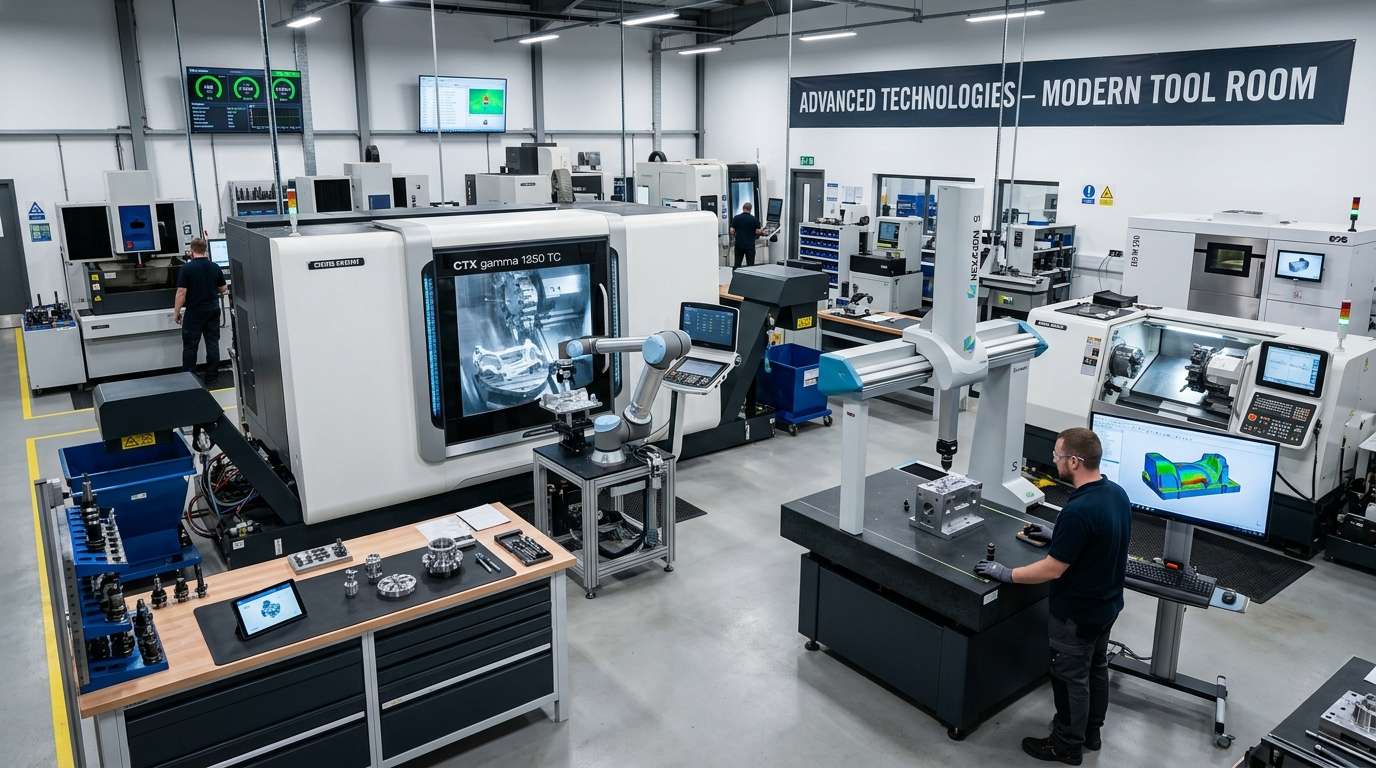
But a CNC machining center isn’t one single mechanism. Pop the covers off and you’ll find a small ecosystem of mechanical, electrical, and control systems, each doing its own job, all synced to the same program. Knowing how all of these elements work and why that affects the quality of parts helps understand why some machines are better than others.
Use this guide to get an overview of what the key CNC machine components are and how they work together.
Table of Contents
- What Is a CNC Machine?
- How Does a CNC Machine Work?
- Main CNC Machine Components
- CNC Machine Structure
- Importance of the CNC Controller
- Role of the Spindle and Cutting Tools
- Why Precision Matters in CNC Machining
- Orbitol CNC Machining Capabilities
- How to Maintain CNC Machine Parts?
- Conclusion
1. What Is a CNC Machine?
A CNC machine is simply a computer-controlled system that turns programmed instructions into physical tool movement. Depending on how it’s set up, one machine can handle:
Milling
Turning
Drilling
Boring
Tapping
Contouring
High-speed machining
Multi-axis machining
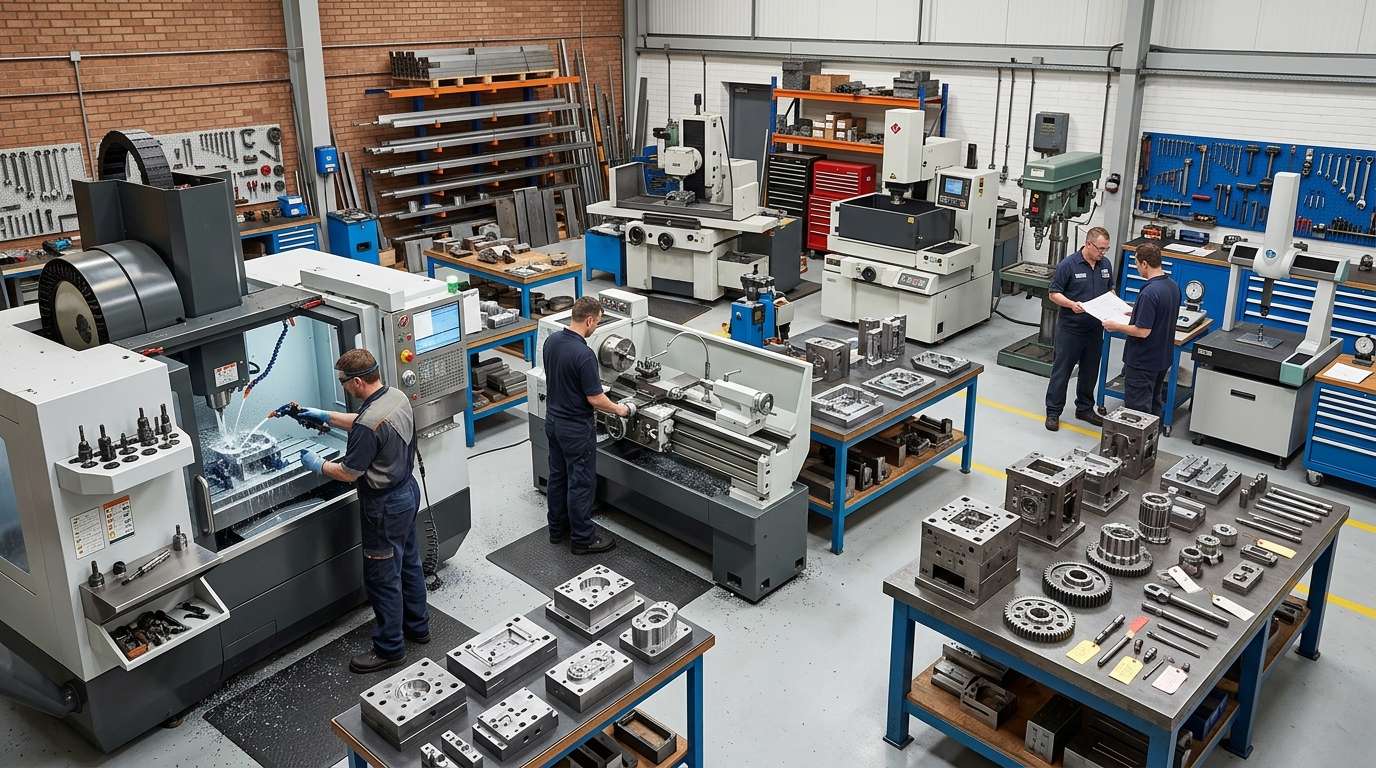
At Orbitol Intelligence, this shows up in the form of 3-axis and 5-axis machining centers, Swiss-type sliding-head machines, CNC turning, EDM, grinding, and heat-treatment lines a full toolkit rather than a single machine doing everything.
2. How Does a CNC Machine Actually Work?
It starts long before the machine turns on with a digital design. CAD/CAM software builds the part geometry and generates the toolpath the machine will eventually follow.
From there, the CNC controller reads that program and converts it into electrical signals. Those signals drive the servo motors and the rest of the machine’s systems. The drive system then moves the machine along its axes while the spindle spins the cutting tool at whatever speed the program calls for.
As the tool moves through the material, it removes exactly what it needs to no more, no less until the finished geometry appears. It’s this tight loop between software, mechanics, and tooling that lets CNC machining hit repeatable, tight tolerances job after job.
3. The Main Components of a CNC Machine
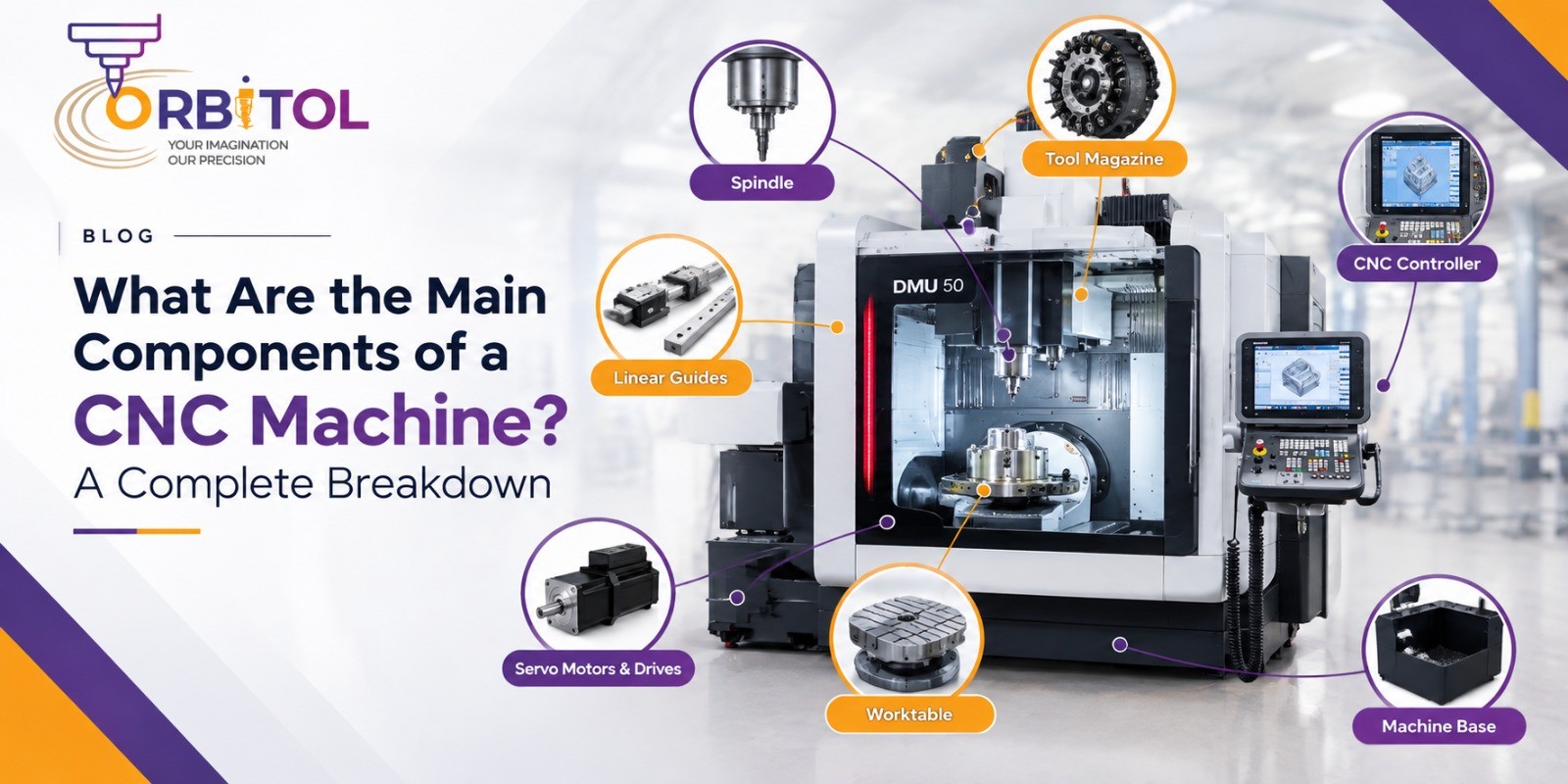
1. CNC Controller
You can compare the controller to the brain of the machine. It receives the program and issues commands such as how to move the axes of the machine, how fast the spindle has to turn, and when each operation should start.
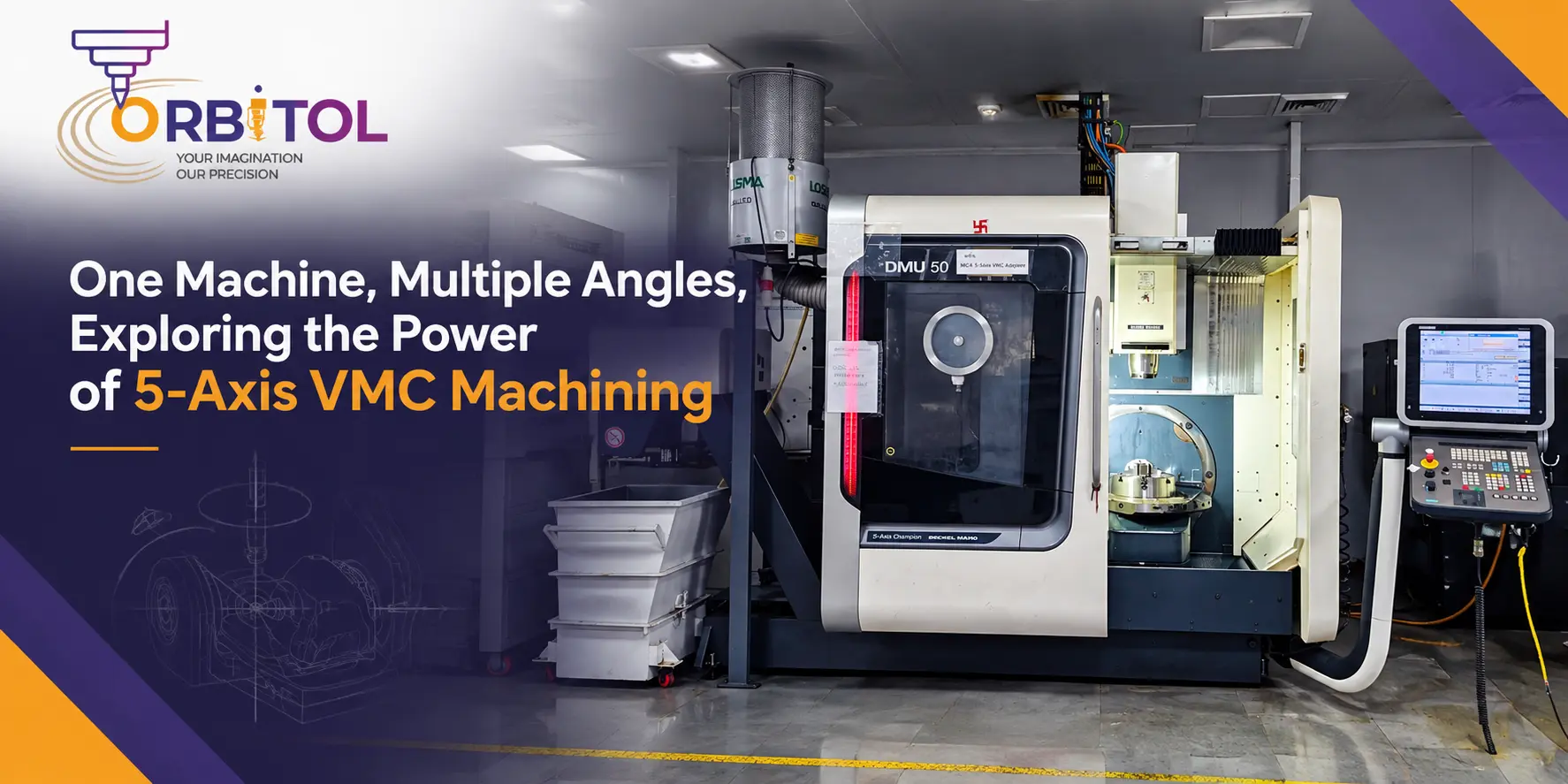
Orbitol DMG MORI DMU 50 is a 5-axis machine that works with the SIEMENS 840D controller, whereas other machines use the systems made by Siemens or Fanuc. With a high-quality controller, it is possible to carry out precise tool movement, execute programs smoothly, coordinate all axes, control the spindle speed, change tools, and get repeatable output.
2. Spindle
The spindle works similarly to the muscles and performs the task of holding the cutting tool in place while also rotating it correctly; the spindle provides the necessary torque for milling, drilling, tapping, etc.
The performance of spindles will have an impact on cutting velocity, surface finish, material-removal rate, life of the tool, and accuracy. The spindles that operate at higher speeds will deliver better results for complicated shapes and detailed works; Orbital’s DMU 50 spindle reaches the rotation frequency of 20,000 RPM, while its 635V ECOLINE performs a maximum of 12,000 RPM.
3. Machine Column
The column is the backbone it supports the spindle assembly and, in many configurations, the vertical movement system too. It has one job during cutting: stay still. Any flex or vibration in the column shows up as error in the finished part, which is why rigidity matters so much, especially during heavy or high-speed cuts.
4. Worktable
This is where the workpiece or fixture actually sits. Depending on the machine, the table might move along one or more axes a standard 3-axis center, for instance, positions the tool relative to the workpiece using X, Y, and Z movement.
A stable table keeps the workpiece positioned correctly, holds dimensional accuracy steady, and keeps fixtures from shifting mid-cut all of which adds up to consistent results.
5. The X, Y, and Z Axis
These three axes are the backbone of CNC motion:
- X-axis – left-to-right movement
- Y-axis – front-to-back movement
- Z-axis – vertical movement
A true 5-axis machine, like Orbitol’s DMU 50, adds rotational axes on top of these, letting it machine undercuts, compound angles, and freeform surfaces in a single setup instead of repositioning a complex part over and over.
6. Ball Screws
Ball screws take the rotary motion coming from the servo motor and convert it into precise linear movement along the axes. Paired with linear guideways, they’re what gives the machine smooth, low-friction, repeatable positioning — the difference between a tool landing exactly where it should and one that drifts off by a few microns.
7. Servo Motors and the Drive System
The drive system transfers energy to the axes. Servo motors receive signals from the controller and convert them into mechanical energy in order to move the machine accurately.
The controller, servo drives, motors, ball screws, and guides operate in a coordinated manner as the motion control system. If the mechanism of motion control has the weak link, the tool won’t be delivered where it is supposed to be used.
8. Tool Holder and Cutting Tool
The cutting tool is the part actually touching the material end mills, face mills, drills, reamers, taps, ball-nose cutters, chamfer tools, and specialty profile cutters all serve different purposes. The tool holder’s job is to keep that tool locked securely to the spindle.
Picking the right tool isn’t guesswork it depends on the material, geometry, cutting depth, spindle speed, feed rate, and the finish the job demands.
9. Automatic Tool Changer (ATC)
The ATC reduces machine downtime when tool changes are required by executing a tool change whenever commanded by the next tool in the cycle.
This feature alone accomplishes the goals of shortening production times, reducing downtime, and maintaining consistency in the tool change process. Both the DMU 50 and the 635 V ECOLINE at Orbitol carry 20-tool magazines.
10. Tool Magazine
The magazine is simply where those tools live between changes. A bigger magazine means the machine can run through more operations face milling, roughing, drilling, finishing, chamfering, contouring without anyone stepping in to swap tools by hand. Paired with the ATC, it’s what lets complex parts run through a single setup uninterrupted.
11. Coolant System
Cutting generates heat friction between tool and material builds up fast. The coolant system keeps that heat in check while also helping with lubrication and chip clearing.
Done right, coolant extends tool life, protects surface finish, clears chips out of the way, and keeps the whole process stable which matters even more when machining tough materials at high speed.
12. Chip Management System
When material is removed from the workpiece it needs to go. If the chips are allowed to build up they can get in the way of the cutting process. Make a big mess around the tool. Using coolant helps push the chips from the area. On machines special chip conveyors handle the job more efficiently. Managing chips might not sound exciting. It makes machining safer keeps things cleaner and improves consistency in the results.
4. How It All Comes Together
None of these parts work in isolation that’s the whole point of a CNC machine. The instruction from the controller to the drive system initiates movement in the servo motors and on the axes by means of ball screws and guides. Meanwhile, the spindle spins the tool while the part remains immobilized on the work table. Coolant manages heat and chips, and the ATC keeps the right tool in the spindle at the right moment.
It’s this integration not any single component that lets modern CNC machining centers turn out complex parts with the same accuracy, run after run.
5. Why Every Component Matters for Precision
Here’s the thing: a top-tier spindle can’t save you if the machine structure is shaky. And the best controller in the world can’t compensate for bad tooling or excess vibration. Precision is a systems problem, not a single-part problem. The pieces that matter most are:
- Machine rigidity – reduces vibration and deformation
- Controller accuracy – executes programmed movement correctly
- Spindle performance – keeps rotation stable during cutting
- Axis movement – guideways, ball screws, motors, and feedback systems set positioning accuracy
- Tooling – matched correctly to material and geometry
- Cooling – keeps machining temperature stable
6. Role of the Spindle and Cutting Tools
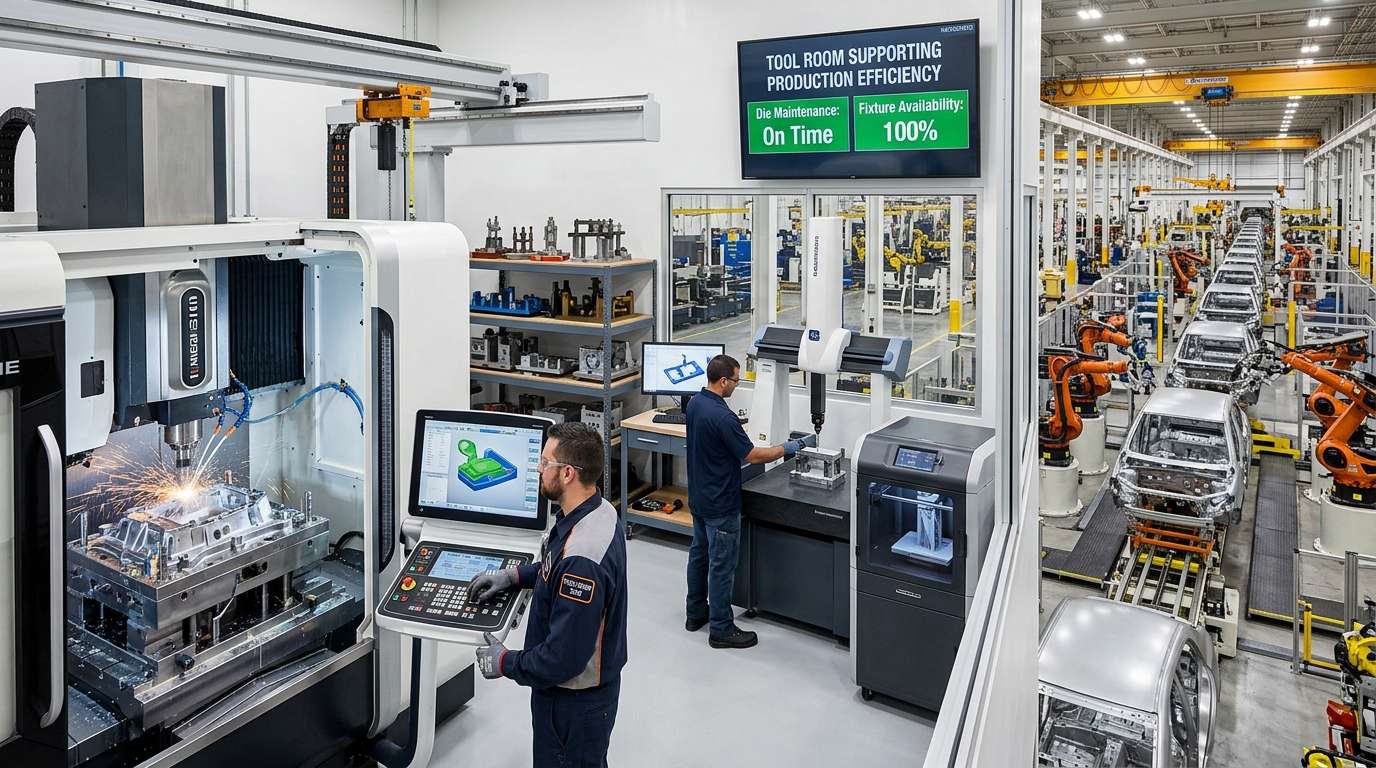
A modern CNC machining center can handle multiple operations in a single setup, cutting down on manual intervention and boosting repeatability. That versatility is why CNC machining shows up across:
- Aerospace components
- Defense components
- Automotive parts
- Medical devices
- Injection moulds
- Industrial machinery parts
- Jigs and fixtures
- Complex precision components
Orbitol works across aerospace, defence, medical, automotive, injection moulding, and industrial engineering and its 5-axis capability in particular suits turbine blades, impellers, implants, moulds, and fixtures that need multi-axis machining to get right.
7. Orbitol CNC Machining Capabilities
Orbitol Intelligence Pvt. Ltd. is a precision engineering and advanced manufacturing company built around high-accuracy components, tooling, moulds, and mission-critical parts. Its manufacturing setup spans,
- 3-axis CNC/VMC machining
- 5-axis CNC machining
- Swiss-type sliding-head machining
- CNC turning
- Die-sinking EDM
- Wire-cut EDM
- Surface grinding
- Cylindrical grinding
- Heat treatment
8. Conventional precision machining
That range means a part can move through multiple processes depending on what its design and tolerances actually require.
5-Axis VMC Machining The DMG MORI DMU 50 brings a 20,000 RPM spindle, a 20-tool magazine, an 80 mm max tool diameter, a SIEMENS 840D controller, a 500 × 400 × 400 mm job clamp area, and stated accuracy down to ±5 microns. It handles one-setup machining, freeform surfaces, compound angles, and undercuts making it a strong fit for complex aerospace, medical, automotive, and mould-and-die work.
3-Axis VMC Machining The DMG MORI 635 V ECOLINE pairs a 20-tool magazine and SIEMENS 840D controller with a 12,000 RPM spindle and a 650 × 550 × 450 mm job clamp area well suited to precision moulds, mould bases, jigs, fixtures, and aerospace, medical, and automotive components.
9. How to Maintain CNC Machine Parts
- None of this holds up without regular maintenance. A few practices that make the biggest difference:
- Keep it clean – chips shouldn’t be left sitting on the table, guideways, or work area.
- Monitor the coolant – regularly check its condition and amount since dirty or inadequate coolant can significantly impact productivity.
- Check tooling – worn or damaged tools should be replaced or repaired before they lead to complications.
- Check the spindle – unusual noise, vibration, or heat is worth investigating right away.
- Maintain the axis systems – guideways, ball screws, and servo systems should follow the manufacturer’s inspection schedule.
- Calibrate regularly – this is how you confirm the machine is still holding its positioning accuracy.
Staying ahead of maintenance is what keeps downtime from turning into a surprise.
Conclusion
Once you fully comprehend the functions of each element of a CNC machine, the entire process would stop to be a mysterious puzzle of sorts. The controller directs the process, the drive operates the axes, the spinning tool is driven by the spindle, the part is immobilized by the worktable, and the whole structure maintains necessary rigidity needed for precision machining.
When the task at hand requires utmost precision in manufacturing, the choice of a machining service provider plays as important a part as the choice of a machine. Orbitol Intelligence has the combination of different types of CNC and VMC, lathe, Swiss-type machining, EDM technology, heating treatment and grinding that allows the fulfilment of different manufacturing needs in aerospace, defence, medicine, automotive industry, tool production and many other spheres.
If you are searching for CNC machining services that offer precision for complicated parts and prototypes and the manufacturing of producing parts, the right combination of machine capabilitie.