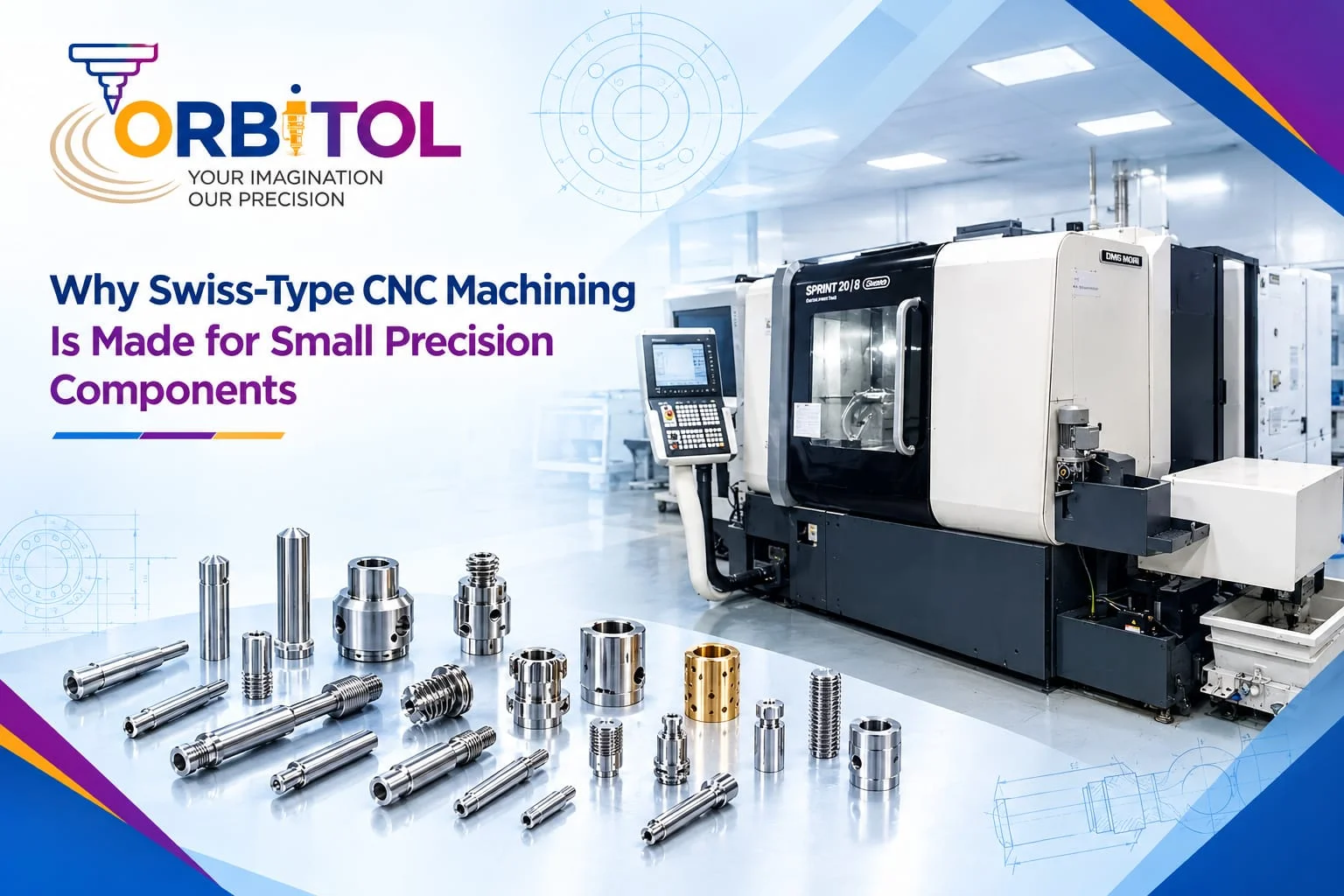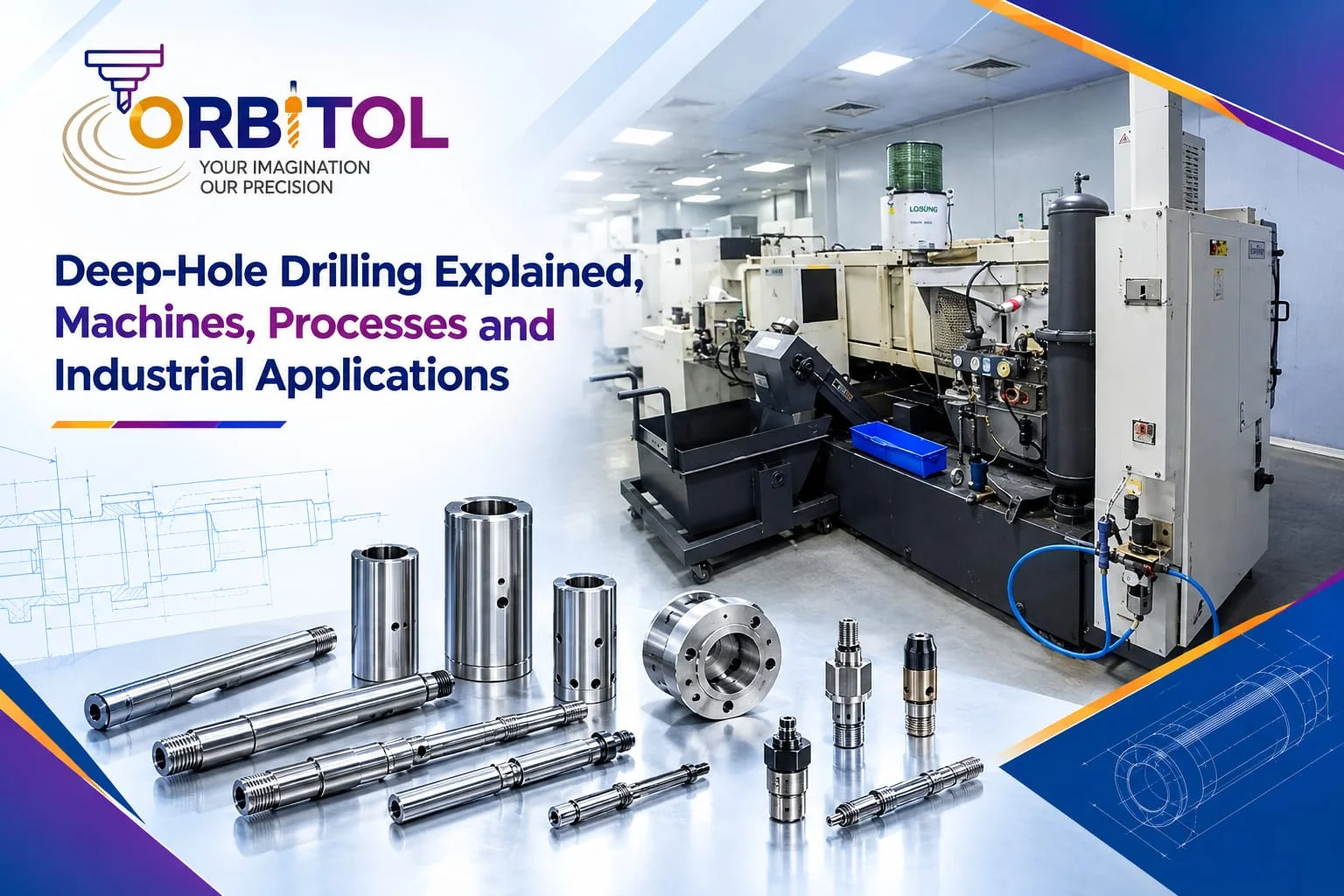
Precision Components, Swiss-Type CNC Machining Small parts have a way of being more trouble than they look. A component might be just a few millimeters across, but pack in multiple diameters, threads, cross holes, grooves all squeezed into tolerances that leave almost no room for error. Make that part long and thin, and things get trickier still, because the material itself starts working against you, flexing or shifting the moment the tool touches it.
That’s really the problem Swiss-type CNC machining was built to solve. Instead of letting a long piece of bar hang out unsupported while it’s cut, the stock gets guided right up next to the cutting zone. Simple idea, but it changes everything about stability and control.
If you’re making Precision Components, that difference shows up fast. Swiss-type machining holds up where it counts dimensional consistency, surface finish, repeat accuracy, feature placement and depending on the machine, you can run turning alongside drilling, milling and threading in a single cycle instead of bouncing the part between machines.
So in this one, we’ll walk through how Swiss-type machining actually works, why it suits small parts so well, where it typically gets used, and what’s worth checking before you pick a Swiss Machining Services partner.
Table of Contents
- What Is Swiss-Type CNC Machining Precision Components ?
- How Swiss-Type Machining Handles Small Components
- Why Swiss Machining Is Suitable for Precision Parts
- Processes and Features in Swiss Machining
- Applications of Swiss-Type Machining
- Choosing the Right Swiss Machining Partner
1. What Is Swiss-Type CNC Machining Precision Components?
Swiss-type CNC machining is a specialised kind of turning, built around small, detailed, often slender parts. The thing that actually separates it from a regular lathe isn’t the tooling it’s how the work piece is held and moved while it’s being cut.
On a normal lathe, the bar sits in a chuck or collet while the tool travels along it. Fine for short, rigid parts. But stretch that part out, or thin it down, and the unsupported length starts to become a problem on its own.
A Swiss-type machine sidesteps this by feeding the bar through a guide bushing, so the cut happens right next to where it’s supported. Less bar hanging in open air means less deflection that’s really the whole trick.
The sliding headstock pushes the bar along its axis while tools do their job. Newer machines usually add live tooling, sub-spindles, multiple tool stations enough that a part can go from raw bar to finished component without ever leaving the machine.
That matters more than it sounds. Fewer setups mean fewer chances for something to shift out of alignment along the way. And it’s not a niche process either pins, shafts, sleeves, connectors, bushings, threaded parts, medical components, all kinds of small, accuracy-critical items go through Swiss machines every day.
2. How Swiss-Type Machining Handles Small Components
Here’s the core of it: support close to the cut. That’s what makes Swiss machining work so well on small-diameter or long, thin parts.
Try to picture machining a thin rod while gripping it from just one end. The tool pushes, the rod bends just a little, but enough. That tiny bit of movement can throw off diameter, straightness, surface finish, or where a feature lands. On a part with tight tolerances, that’s not a small issue, that’s the whole job failing.
A Swiss-type machine keeps the guide bushing right where the cutting is happening, so the unsupported length stays short. The material simply doesn’t get the room to move. That’s basically the entire reason this process handles slender parts so much better than a standard lathe. There’s flexibility here too. As the bar feeds through the bushing, different sections can be worked in sequence turning, drilling, threading, milling, cross-work, often all in the same cycle.
For small parts with several features that all need to line up with each other, that’s huge. Pull a part off the machine and put it back on, and you’re rolling the dice on alignment every time. Keep it in one setup, and you’re not. But and this is worth saying Swiss machining isn’t automatically the answer just because a part is small. A short, rigid part with simple geometry might run cheaper and faster on a conventional CNC lathe. Geometry, material, batch size, tolerances, what operations are actually needed all of that decides which way to go, not size alone.
3. Why Swiss Machining Is Suitable for Precision Parts
Precision Components, doesn’t just mean small parts. It means dimensional consistency, feature location, surface finish, concentricity, repeatability part after part, batch after batch. Swiss machining earns that label because it keeps the work piece under tight control right at the cutting point. Less unsupported bar, less movement during the cut especially useful on slender geometries where even a small deflection ruins the part.
Then there’s the multi-operation side of it. One component might need an OD turned, a hole drilled through the center, a thread cut, a slot machined, a cross hole added. A well-set-up Swiss machine can knock most of that out in one cycle. That’s not just good for consistency it’s good for the schedule too. Fewer operations mean less handling, fewer machines to set up, less time lost moving parts around the shop.
But let’s be clear the machine alone doesn’t do the work. Programming, tooling choice, bar quality, which guide bushing you’re running, cutting parameters, inspection all of it adds up to the final result. Anyone promising Swiss Machining Services based on “we own the machine” is skipping half the story. Material plays its part too. Stainless, aluminum, brass, titanium, engineering plastics they all cut differently, and tooling has to change with them.
That’s why a good machining team reads the whole drawing before deciding how to make a part, not just the diameter.
4. Processes and Features Possible in Swiss Machining
Swiss machines get picked when a part needs a handful of operations done in one tight cycle. Turning is the backbone external diameters, shoulders, tapers, grooves but it doesn’t stop there. Drilling and boring handle the internal work. Threading, internal or external, comes down to whether the machine and tooling can support the spec.
Live tooling is where things really open up cross drilling, slotting, milling, off-axis features, all without the part ever leaving the machine. Big win for anything with features on more than one face. Some machines also run a sub-spindle, which picks up the part after the main operation so the opposite end can be finished before it’s finally parted off the bar.
End result: fewer secondary operations, less manual handling, simpler production planning. It’s a big reason Swiss machining comes up so often for cnc machining parts that are small but feature-heavy. That said, it’s not set-and-forget. Small tools wear out faster, and the wrong cutting conditions hit tool life and part quality fast. Someone needs to be checking tools and dimensions regularly through the run this part doesn’t run itself.
5. Applications of Swiss-Type Machining
Swiss-type machining shows up wherever small, detailed parts need to come out the same, run after run. Industries differ, but the ask is always similar: control, at a small scale.
Automotive Components
Fuel systems, sensors, connectors, valves a lot of small turned parts live in automotive assemblies, usually needing precise diameters, threads, holes, grooves. With production volumes this high, repeatability isn’t optional.
Medical Components
Medical and healthcare gear often runs on miniature parts where accuracy and finish really matter. Small shafts, pins, connectors, instrument components all candidates for Swiss machining. Specs here tend to be unforgiving, so inspection has to keep pace.
Aerospace and Defence
Complex geometry, tight tolerances, weight and material constraints stacked on top of each other that’s aerospace and defence in a nutshell. Swiss machining fits when the geometry needs that close support and several operations have to come together in one setup.
Electronics and Connectors
Pins, contacts, sleeves, terminals tiny diameters, fine detail, and often several features packed close together. Doing it all in one setup matters a lot here.
Industrial and Engineering Components
Shafts, bushes, pins, nozzles, spacers industrial machinery runs on small turned parts like these. Depending on design and volume, Swiss machining can be the more efficient route.
For machining parts manufacturers, the choice still comes down to the part itself. Swiss machining is strong when the geometry calls for it not just because the part happens to be small.
6. Choosing the Right Swiss Machining Partner
Swiss-type machine doesn’t make someone the right Swiss Machining Services partner. What matters is whether they actually understand the drawing material, tolerances, volume, finish, inspection requirements, all of it.
Start with machine capability can it handle the bar diameter, part length, number of operations, tooling, and geometry you need? That’s the first filter.
Programming and process planning come right after. A sequence that’s thought through properly cuts down wasted movement and secondary ops, while still protecting the dimensions that actually matter.
Tooling management is easy to overlook but shouldn’t be. Small tools wear fast, and on tight tolerances, a worn tool can quietly drift a part out of spec before anyone notices.
Inspection matters just as much the right measuring equipment, a clear process for checking diameters, threads, holes, finish, against the drawing, not just at the end but through the run.
And honestly, communication counts for more than people expect. A partner who can look at a tricky drawing, flag problems early, and suggest a better way to machine it that’s worth more than a slightly lower quote. So if you’re comparing machining parts manufacturers, look past machine count and price. Look at the whole capability.
Conclusion
Swiss-type CNC machining earns its place when a part is small, slender, detailed, or just plain hard to keep steady on a conventional lathe. The sliding headstock and guide bushing keep the work piece supported right where it’s being cut that’s the whole foundation of the process.
It can also fold turning together with drilling, milling, threading and more, depending on the setup, which makes it a strong fit for Precision Components with several features and no patience for repeated setups. The real skill is matching the process to what the part needs. Get the geometry, material, tolerances, volume and features lined up, and Swiss-type machining gives you consistent, precision turned components run after run.
At Orbitol Intelligence, our precision machining capabilities support small and complex components for demanding industrial work. With the right planning, controlled machining and careful inspection along the way, Swiss machining can deliver exactly the accuracy and consistency these parts call for.