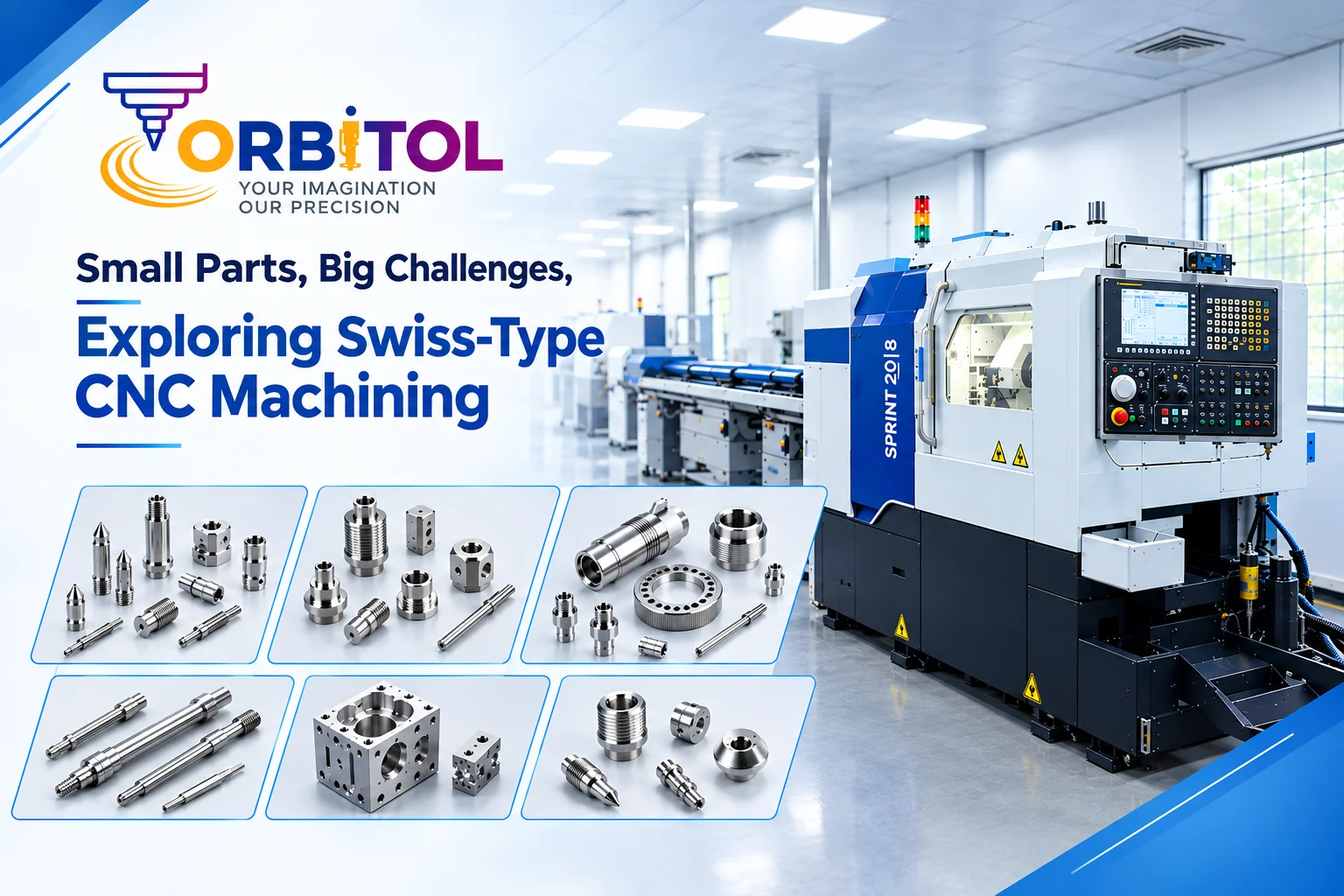
Small Parts Machining, may look simple, but machining them accurately. Be surprisingly challenging. Even a can involve tight tolerances, fine details, slender shapes, and strict dimensional requirements. Maintaining this level of accuracy consistently takes careful control throughout the machining process. This is where Swiss-type CNC machining can make a real difference.
With regard to, Swiss-type machines are constructed to maximize stability in fast moving parts. By employing a sliding-headstock mechanism. Swiss implementations keep long and narrow parts stable during operations. Which helps reduce vibration and increase accuracy. Since many different machining tasks can often be achieved in just one machine settings. The overall process can be made more efficient.
Swiss machining is used widely for manufacturing parts in many industries, especially automotive and medical. Where precision and repeatability matter.
Table of Contents
- Understanding Small Parts Machining and Its Challenges
- How Sliding Head Machining Works
- Why Swiss Machining Is Suitable for Small Precision Parts
- Materials and Components Suitable for Swiss-Type Machining
- Industrial Applications of Small Parts Machining
- Choosing the Right Machining Partner for Precision Components
- Conclusion
1. Understanding Small Parts Machining and Its Challenges
Swiss Type Machining may appear uncomplicated, but manufacturing them to the required quality is not that easy. If a part has a small diameter, fine grooves, delicate threads or a slender pattern, even a tiny mistake. Influence the quality of the piece. Because of that, is both difficult and delicate as it involves taking into consideration machine setting, tooling and cutting parameters.
In the case of small products, the working space almost non-existent. Features are placed much closer to each other. Slight change of the cutting parameters. Cause a change in one of the critical dimensions.
Common Challenges in Small Part Production
Traditional CNC turning can manufacture many small components successfully. Nevertheless, slender shapes might be more susceptible to vibration and deflection. When the length of the unsupported section of a work piece increases.
Even small elements require several processes to be performed. Within a small area. Single piece undergo such processes as turning, drilling, threading, grooving, and milling. The same time, and performing these processes properly calls. For good machine features and accurate process planning.
That is why Swiss-type machining has become very popular for small and slender elements. The configuration of such a method allows to support the material close to the machining zone. Which contributes to better control of the work piece during machining.
2. How Sliding Head Machining Works
Understanding the Sliding-Headstock Principle
Sliding Head Machining is a CNC turning method particularly suited to many small and slender components. In a Swiss-type machine, the bar stock passes through a guide bushing. While the headstock moves the material along its axis.
The guide bushing supports the material close to the cutting area. Used to cut down on the degree of unsupported material subjected to cutting forces. Although the exact details of the machines vary. the idea is the same. They provide adequate support. For the work piece during the cutting process.
Multiple Operations in One Setup
One advantage of Swiss-type machines is the possibility of performing several operations. Within the same cycle, depending on a particular machine configuration.
Thus, turning can be combined. With operations such as drilling, threading, grooving, and milling. Minimizing the number of setups. Can help reduce the complexity of handling and alignment operations but the actual degree of efficiency depends. On the shape of the object being machined. As well as on the machine used for it.
Importance of Tooling
In the machining process of smaller components, tooling is essential. Cutting tools must touch and process. One part but not interfere. With another part nearby. Tooling, tool condition and cutting parameters influence the outcome of the operation.
3. Why Swiss Machining Is Suitable for Small Precision Parts
One of the reasons that Swiss Machining is typically associated. With small precision parts is due to how the Component is held in place during the entire cutting process. Long and thin Component may be affected by cutting forces more. Than short and thick ones. Supporting the material. As close to the cutting zone as possible can preserve the machining stability.
This comes in handy when there are different diameters. When the long turned section of the Component has to be machined. The process can be organized in a way. That a part will always result in the same forms.
Combining Operations in Machining Process
Machined not just through the turning process. One part can have different holes, screws, grooves, and flat surfaces. Thanks to the machine configuration. Swiss machines can perform different operations. Without the necessity to reset the piece every time.
This can simplify production for suitable components and reduce unnecessary handling. It can also help maintain the relationship between different features. When they are produced within the same controlled setup.
Maintaining Dimensional Consistency
Small components leave less room for dimensional variation. A difference that may appear minor on a larger part. Can become significant. When the overall component is very small.
For this reason, process control and inspection. Are important parts of Small Parts Machining. Critical dimensions should be checked. According to the component drawing and the quality requirements of the application.
4. Materials and Components Suitable for Swiss-Type Machining
Common Materials
The Swiss-style machine can be used to work. With various engineering materials only if the machine itself. The tool and cutting parameters are in harmony. With the Component. Different materials like stainless steel, carbon steel, alloy steel. Aluminum, brass and copper are often. Used in manufacture of precise turned parts. The more difficult material may need special tools and precise machining conditions.
The behavior of the material influences. How the chips are formed. What the wear of the tool will be. What cutting forces and what surface finish will be achieved. Hence, it is unreasonable simply to apply the same machining conditions. For every material.
Small Components Commonly Produced
Swiss-type machining is suitable for many components. Where small dimensions and controlled features are important.
Examples include
· Small Part
· Pins
· Bushes
· Sleeves
· Connectors
· Precision fittings
· Threaded components
· Miniature mechanical parts
Whether the process is suitable or not depends on the design of the part itself. Before the machining method is selected, diameter, length, material, tolerances and required processes need to be taken into account.
Need for Additional Machining
Some parts can require some features beyond the basic turning process. Such as milling, drilling and cross-holes. In those cases, utilization. Of a Swiss-type machine. With appropriate tools installed. With extra machining axes. Provide more flexibility. The goal is to find the setup. That matches the geometry of the part. Rather than select unnecessary functions of the machine.
5. Industrial Applications of Small Parts Machining
Automotive Components
he car industry requires numerous precision parts such as bushings, sleeves, connectors, etc. In a lot of situations, these parts are produced in repeated quantities. Thus repeatability means a lot in such cases. In situations. Where component geometry and manufacturing requirements fit. Swiss-type machining needs. This technique may be employed.
Medical Parts
Medical and dental industries may involve very small and intricate components. such as screws, pins, connectors, etc. may be required to have specific measurements and specific materials. Due to the size and complexity of components. The stability of machining and inspection plays a crucial role.
Electronics and Electrical Components
Electronic devices may require small pins, contacts, connectors, and other parts. These components. Can have narrow dimensions and closely positioned features. For suitable parts. Swiss-type machining provides a way to produce multiple features. Within a controlled machining cycle.
Aerospace and Industrial Components
Small machined components might. Also be seen inside aerospace and industrial apparatus. The procedure consists of different steps, depending. On the type of processing. There are essential items to check. Before the approach is selected, such as. What material is machined, tolerances, surface treatment requirements. And inspection elements.
Why should consistency be so important?
Whether they are small components of bigger assemblies or separate components. Small pieces impact on the whole assembly. As well as the performance of the entire system.
6. Choosing the Right Machining Partner for Precision Components
To find the right machining partner. The process should start from the drawing. Not the type of equipment. Characteristics of the components. Define the approach engineers choose for machining. There should be a possibility of evaluating each component. In terms of the required machining operation.
Consider Production Volume.
The amount of production impacts the selection of a machine. A part that is needed from time to time may require a different manufacturing process than a part that is ordered in a large quantity and repeatedly. Therefore, tooling, setup, machining time, and working capacity. Have to be taken into account together. The right solution is not necessarily the machine. With the widest range of functions.
Check Machine and Process Capabilities
Before choosing a contractor, manufacturers need to take. Into account the types of machines available. The range of sizes of the components, the tooling functions. and the inspection processes.
For small and slender components. Sliding Head Machining. Can be particularly useful. When the component benefits from supported. Machining close to the cutting area. The supplier’s experience. With similar Machined Components. Is also valuable because small parts often require careful process planning.
Orbitol Intelligence for Precision Component Manufacturing
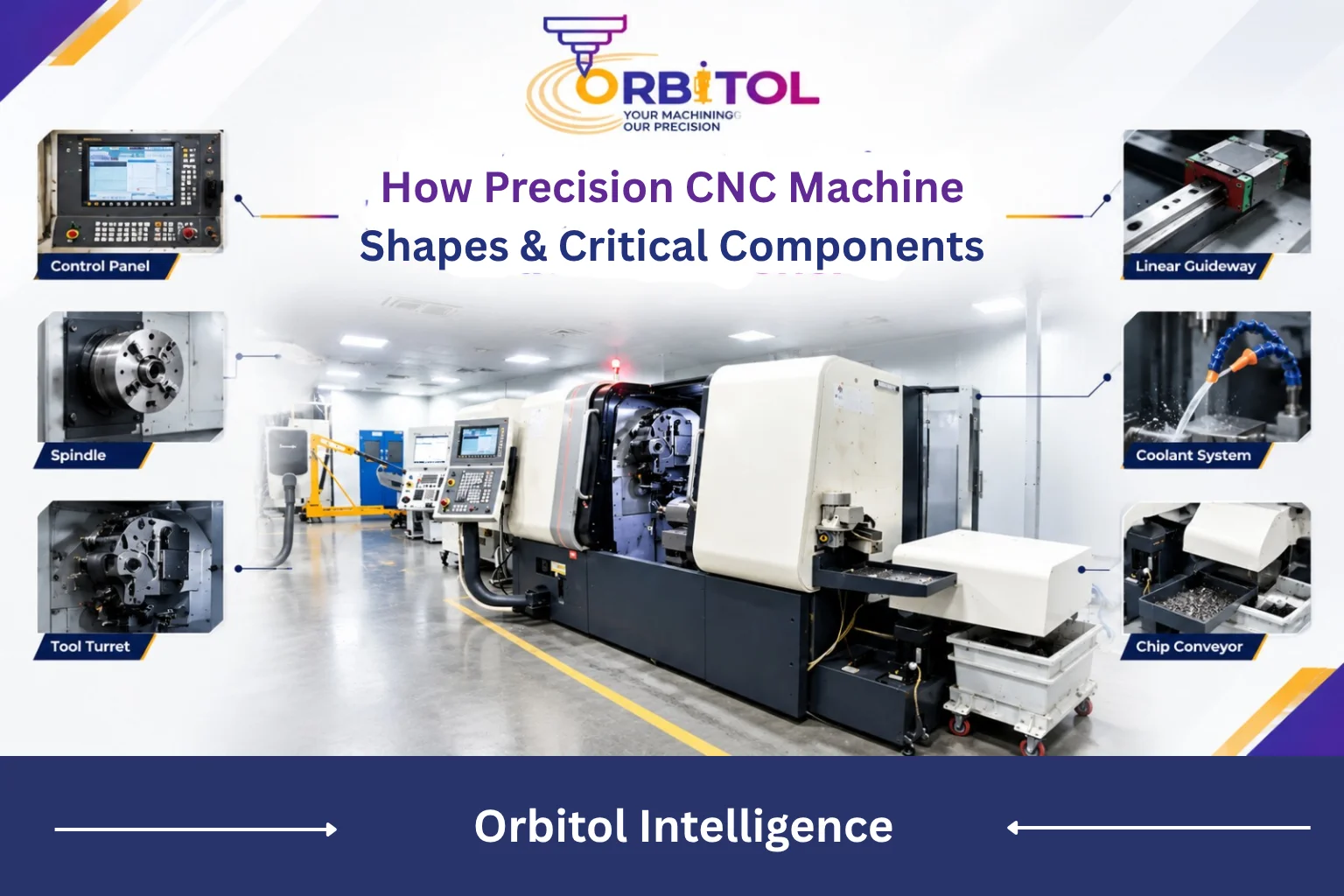
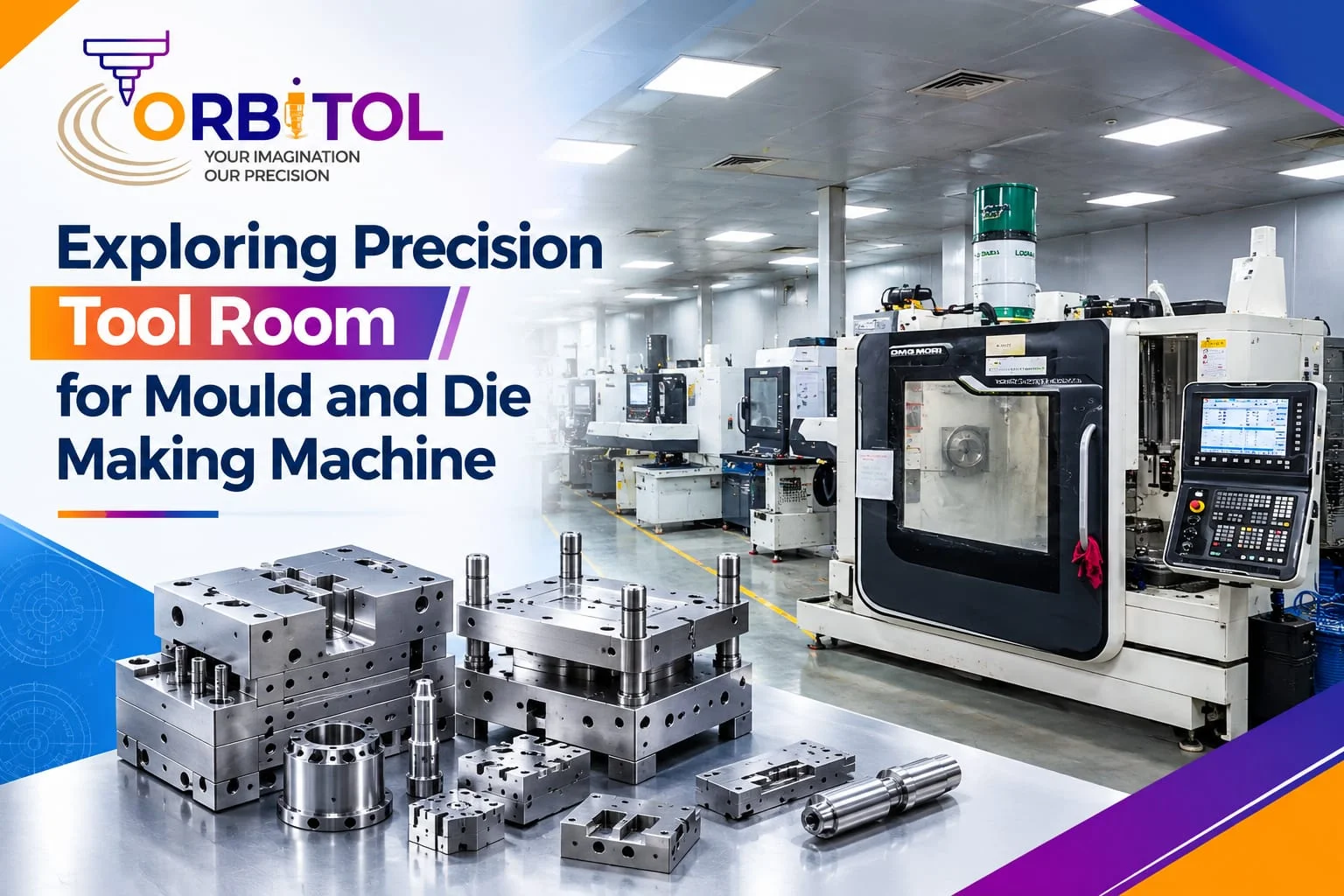
At Orbitol Intelligence. Machining solutions are planned around the requirements. Of the component. The organization is engaged in the business. Of CNC and VMC machining. Swiss type machining. Manufacturing of molds and dies. Solutions of tool room. And manufacturing of precision parts.
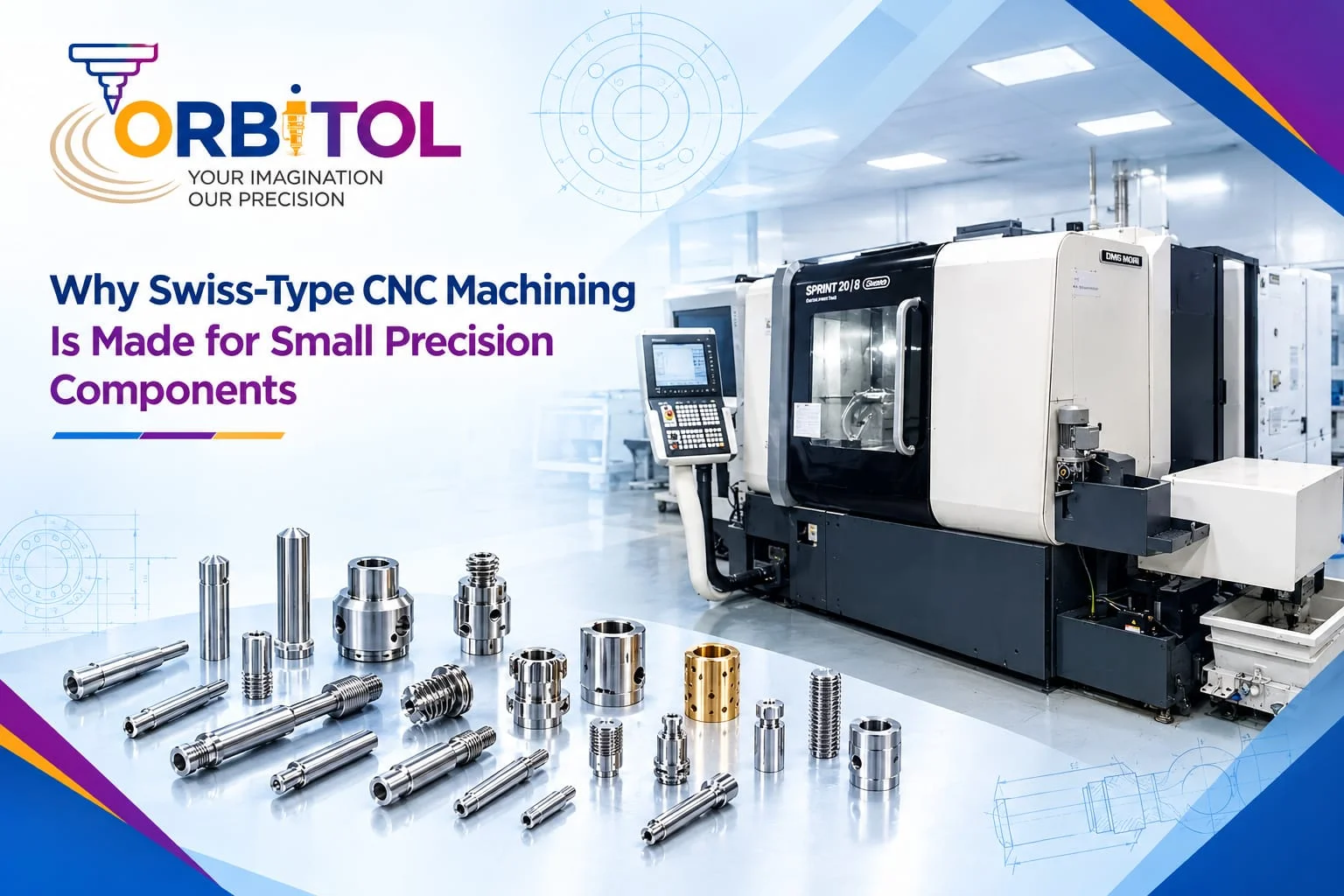
Orbitol Intelligence owns DMG MORI SPRINT 20/8. And TORNOS SWISS ST 26. Facilities to meet all needs. Of Swiss type and sliding head machining. These machines are relevant to small and precision components .Where controlled turning operations and suitable. Process planning are required. Focus is not only on accurate cutting machine technology. But the successful outcome of the work. Depends on the total process including material choice. Programming, tooling. Setup of the machine. Cutting conditions and inspection.
If there are manufacturers interested in precision machining services. They should share the full technical drawing. With the details. Of production process in order to make sure. That they receive the rightest solution. From the start.
Conclusion
Small parts can pose some of the most significant machining problems. Their small form factor. Thin shape, intricate characteristics, and requirement. For high precision means that engineering is very limited. the Swiss-type method. Can be very suitable for particular components. When the Component needs to be held firmly. During turning and various machining processes. Sliding Head Machining is particularly appropriate. For the vast multitude of extremely thin products due to its machine setup. Where the part is being held tightly. If the correct tools are selected, and the process is programmed properly, it can yield high-quality parts required. For critical precision applications.
At Orbitol Intelligence, Swiss-type machining. Is part of a broader precision manufacturing capability. That includes CNC and VMC machining. Mould and die manufacturing. Tool room solutions. And precision components. By matching the machining process. With the actual component requirements. Manufacturers can achieve. A more practical and controlled production process.
For more information about Orbitol Intelligence and its machining capabilities. visit orbitol.in.