EDM Machining, Modern manufacturing is no longer only about removing material quickly. Many industries now require components with intricate profiles, narrow slots, small internal features, tight tolerances and consistent dimensional accuracy. Producing these features can become challenging when conventional cutting methods reach their practical limits.
This is where EDM Machining becomes valuable.
EDM or Electrical Discharge Machining makes use of the property. Of electrical discharges in order to take away metals from electrically conductive parts. Unlike mechanical method of cutting, this technology employs the method of eliminating metals through sputtering. This makes this process especially effective for hard materials, complex shapes, and where conventional cutting methods. Have an impact on the product.
As far as manufacturing is concerned, EDM technology offers. An alternative in terms of producing complex shapes in components and ensuring precision and longevity.
Table of Contents
- What Is EDM Machining?
- How EDM Machining Shapes Complex Components
- Why EDM Machining Works for Difficult Geometries
- Key EDM Components That Support Precision
- Wire EDM Machine vs Conventional Machining
- Where EDM Machining Fits in Precision Manufacturing
- How Orbitol Intelligence Supports EDM Machining
- Conclusion
1. What Is EDM Machining?
The process of Electrical Discharge Machining (EDM) is a type of machining. Where in the material is removed via controlled electrical discharges taking place between the conductive Component and an electrode. Thus heat is generated in the discharge zone from. Which removal of a small amount of the material occurs.
This process is very different from standard machine processes like milling or turning since. There is no cutting contact made between Component and the electrode. This reduces mechanical cutting forces and makes EDM useful. For features that may be difficult to produce. With conventional tools. There are two types of electrical discharge machining. wire EDM and die-sinking EDM. The wire EDM process uses a continuously rotating electrode. That follows a programmed path of the Component.
Therefore, the EDM method gives the capability to create accurate geometries. At the desired conductive materials with specific features.
2. How EDM Machining Shapes Complex Components
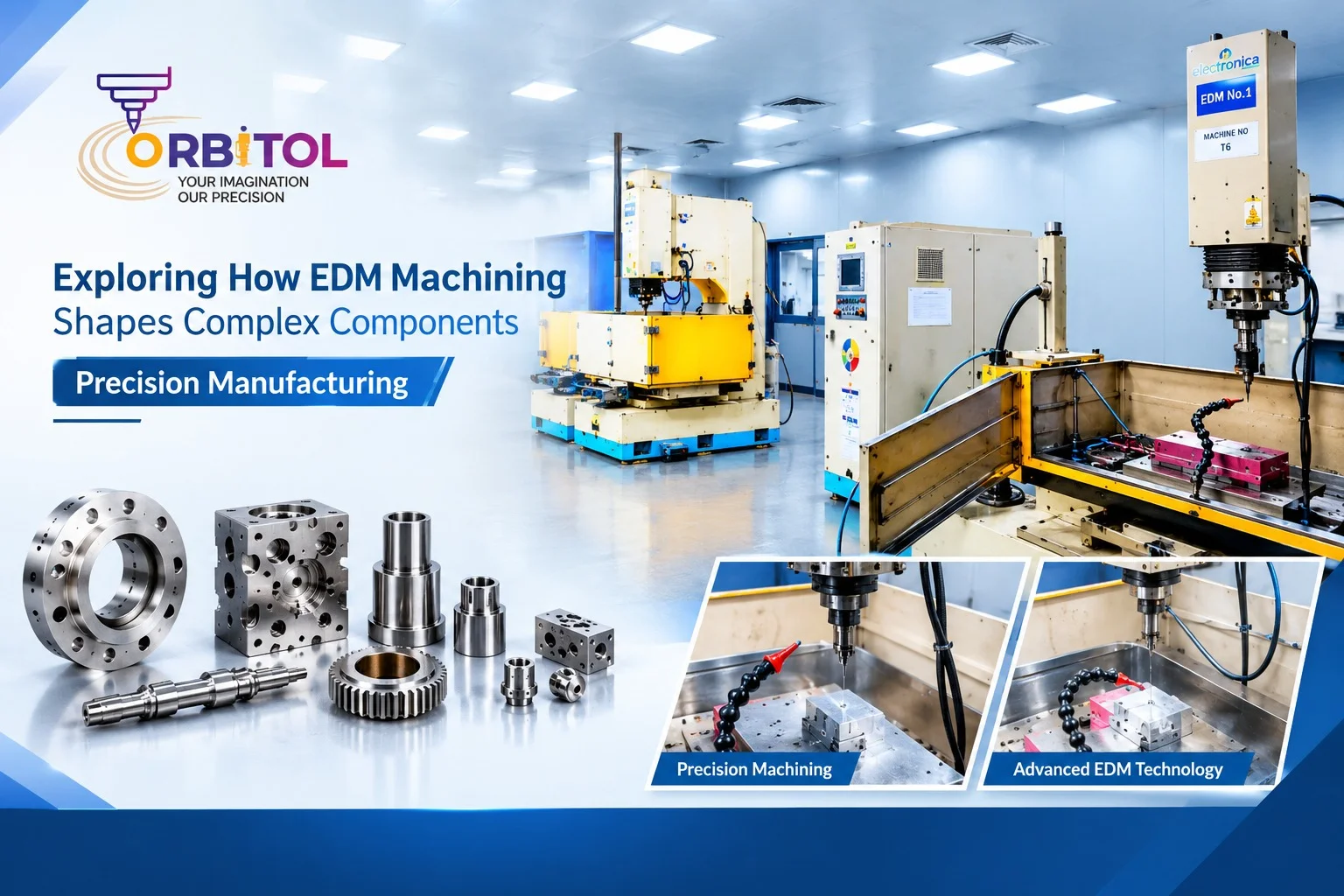
One of the main benefits of EDM Machining is its capacity to form shapes that might otherwise be impossible with regular cutting tools. An ordinary EDM process starts with the design of a component digitally and a program to perform the machining. The part is placed in a certain position before the EDM mechanism starts operating the wire on the part.
During wire EDM, the wire is very thin and is passed through Component continuously. Electrical sparks get fired between the thin wire and component material in a controlled manner to eliminate material as per the design.
This approach is useful for producing
· Intricate profiles
· Narrow slots
· Precision punches and dies
· Complex internal contours
· Small-radius features
· Hardened tooling components
When it comes to the intricate elements, controlling the cutting path. Without having to exert loads of mechanical cutting force is crucial. In some cases, thin sections or sensitive features that would deform with conventional cutting loads are better made using EDM.
3. Why EDM Machining Works for Difficult Geometries
It is not always possible to make the part using standard milling or turning operations. For example, a hardened tool part with a slim slot, a complex internal shape, and several small features would be processed with the help of conventional cutting methods using special tools, numerous setups or extra operations.
EDM Machining approaches the problem differently.
Since EDM utilizes electric discharges for removing material rather than cutting, there are instances. When the hardness of a product does not determine its suitability for EDM if the material of the work piece is conductive. Therefore, EDM can make use of many hardened steels and other conductive materials. Another important advantage of EDM is its geometric accuracy. With the use of a CNC Wire EDM machine, the accuracy of a product contour is very high. The process provides for multiple finishing passes as well, thus improving surface quality of the product being machined.
Nevertheless, it is not always true that EDM is the best process for any workpiece to be manufactured. When choosing the process, it is essential to take various factors into account. Such as its essence, the type of conductivity of a material, shapes and sizes of the element, layer thickness, tolerances, surface finish, and quantity of the product.
The reason for this is that in order to make the EDM process work properly, the comprehension. Of the element is a priority over choosing the right machine.
4. Key EDM Components That Support Precision
The efficiency of an EDM installation is determined by more than just electric discharge. This process involves the cooperation of different machine. Parts to carry out the process in a stable and controlled manner.
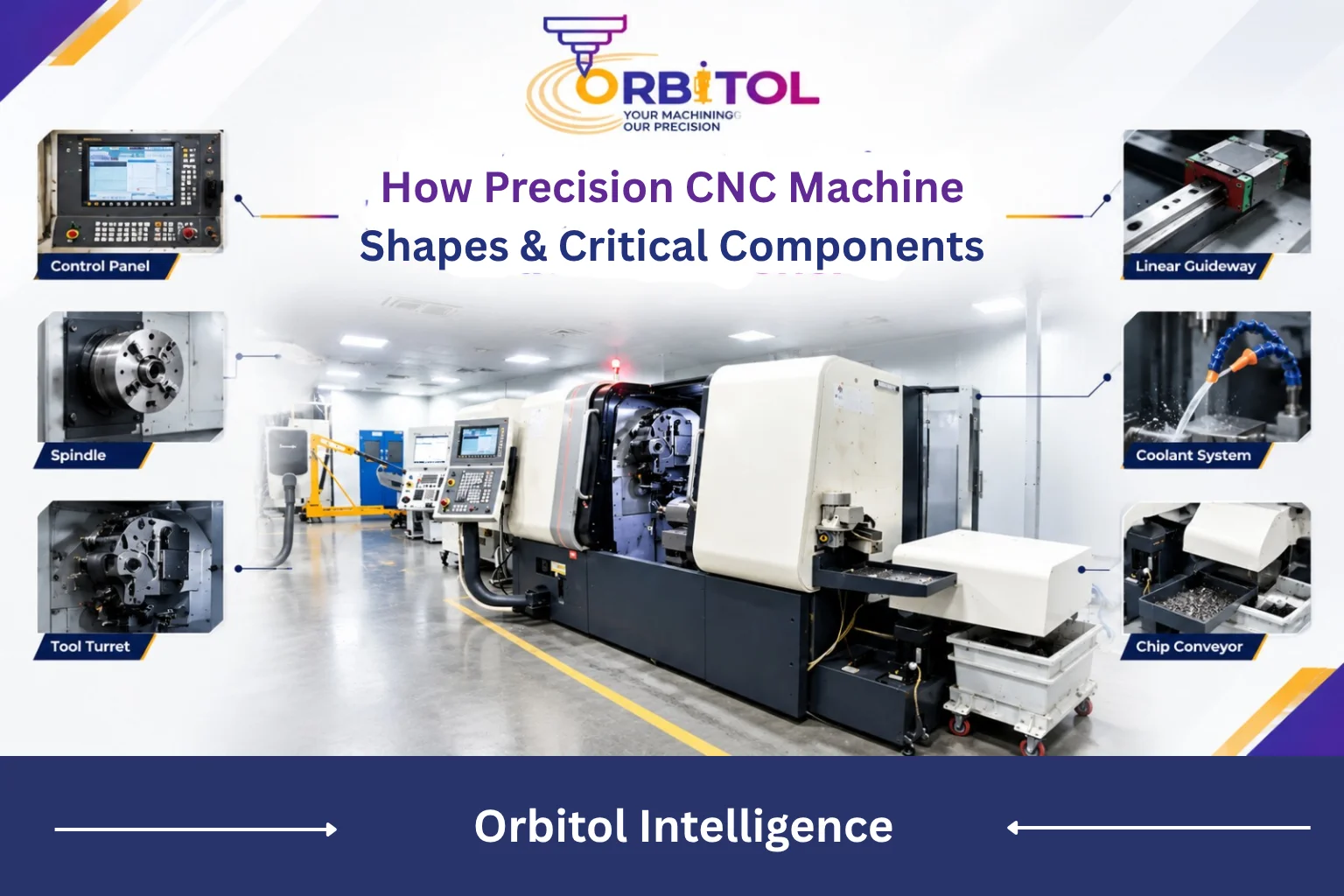
Wire Electrode
In the process of the wire EDM method, the wire serves as the electrode. That is constantly moving through the machining area in order to remove material from the part. Diameter of the wire, as well as the parameters of the process. Will determine the characteristics of the final product and the performance of the cutting. The smaller the diameter of the wire, the more intricate details. Can be obtained; however, the speed of cutting should also be taken into consideration.
Dielectric System
The utilization of dielectric media makes sure that sufficient electrical conditions are present. At the spark gap and ensures removal of the particles removed. Deionized water is commonly used in wire EDM applications. As the dielectric medium. Proper flushing is essential since debris at the work site can disrupt the stability of discharge and affect machining.
CNC Motion System
Modern EDM technology utilizes controlled movement of the machine axes to steer the electrode along the required geometry. With accurate motion control, wire EDM machine can follow even the most complex programmed shapes.
Power and Control System
The electrical power system is responsible for controlling the discharge conditions while the machine control system is responsible. For parameters such as motion, conditions and other machining techniques used.
In this way, the machine components ensure process stability and repeatability.
5. Wire EDM Machine vs Conventional Machining
Conventional CNC machining and EDM are not competing technologies in every situation. In many manufacturing environments, they complement each other.
CNC milling is useful for removing larger amounts of material in various machining processes. EDM becomes useful only when some component contains features. That cannot be machined easily using cutting techniques. For instance, a machining process. Can start with VMC machining to get the general form of the part and then EDM can be applied to get a very precise slot. Of the part or an intricate profile with a complicated internal detail.
Wire EDM Machine is useful for complicated geometries that need very detailed 2D profiles and through cuts. The machine can produce very narrow kerfs and complicated shapes. While requiring very little mechanical force during the cutting process.
The combination of the two techniques. Can minimize the entire manufacturing process. the features can be assigned to the preferred technique.
6. Where EDM Machining Fits in Precision Manufacturing
EDM Machining is widely used to achieve accuracy and create complex geometry across different industries.
Tool and Die Manufacturing
Molds, dies, punches, and other tooling components generally. Have intricate profiles and hardened materials which make their fabricating with EDM a viable solution requiring little or no compromise on cutting strategy.
Aerospace Components
Aerospace manufacturing is among the industries predominantly concerned with the dimensional accuracy, repeatability, and material performance of those components. Therefore, EDM finds its application in specific precision features in suitable conductive materials.
Medical and Precision Components
Such small components may have very fine features which in turn may be quite difficult to manufacture using traditional means. The select control of EDM allows it to be useful in certain high precision applications.
Industrial Engineering
Industrial equipment may require custom tooling, fixtures, inserts and other EDM Components with detailed profiles or tight dimensional requirements.
EDM should be chosen based on engineering hindrances of the component. Factors like geometry, material choice, tolerance and surface finish will impact the decision made regarding the manufacturing process.
7. How Orbitol Intelligence Supports EDM Machining
Orbitol Intelligence views EDM as a part of a comprehensive ecosystem of precision manufacturing processes and technologies.
It can carry out Wire EDM and Spark Erosion processes, as well as 3-axis and 5-axis CNC/VMC machining, Swiss machining, grinding and many others. Such wider capabilities are important for complex projects since it is often necessary to use several manufacturing methods for one component.
For example, a component may first require CNC machining for its primary geometry, followed by EDM operations to achieve more complex shape and then one or several finishing operations. Before it can be considered complete. By utilizing several processes, it is possible to organize the production process in a more efficient way.
Orbitol Intelligence specializes in precision engineering. For applications in aerospace, defence, heavy equipment and tooling. Consequently, for customers seeking High Precision Machining. The issue at hand is not just the presence of EDM machinery.
8. Conclusion
With growth of the component designs, manufacturers require machining processes. With abilities to do more than cutting. Using the controlled electrical discharges, one can remove the material from the conductive Component with the help of EDM Machining. The non-contact nature as well as ability to deal with hardened materials and create complex profiles. make the aforementioned technology useful in precision manufacturing.
Wire EDM Machine is used for narrow features, detailed profiles and complex through geometries, while other EDM processes are used for cavities and other special features. Nevertheless, one must recognize the great power of electrical discharge machining in the context of the suitable manufacturing plan.
At Orbitol Intelligence, EDM capabilities work alongside CNC, VMC, Swiss-type machining and other precision manufacturing processes to support the production of demanding components and tooling. When the component requires accuracy, repeatability and complex geometry, selecting the right process can make the difference between a difficult manufacturing challenge and a controlled, reliable production result.