Introduction
Sliding Head CNC Machine Small parts create big problems on the wrong equipment. A tiny pin, a miniature shaft or a connector barely a few millimeters in diameter might sound simple to produce. But hold it to a tight tolerance and it becomes one of the harder jobs in a machine shop. Standard turning centers often struggle here – the part deflects under cutting pressure, or repeated repositioning. Introduces just enough variation to push it out of spec.
This is exactly where a sliding head CNC machine earns its place. Built specifically around small slender high-precision components. This class of equipment approaches the problem differently from a conventional lathe and it is why Swiss type turning has become the standard for industries. Where every micron counts, and why demand for reliable multi-axis CNC machining keeps growing alongside it.
This guide takes a close look at how sliding head machining works. Why the TORNOS SWISS ST 26 stands out as a benchmark machine in this space and how Orbitol Intelligence applies. This technology to deliver consistent high-precision components for demanding applications.
What Is a Sliding Head CNC Machine?
A CNC machine with a sliding head, which is also called a Swiss lathe, clamps the product in a guide bushing, so that the bushing. Supports the work right above the cutting point. In the meantime, the material moves through it as the cutting process takes place. This is fundamentally different from a traditional lathe. Which clamps the product tightly in a chuck, and processes it with the help of the rotating tool.
That sliding motion is the whole point. By supporting the bar stock immediately next to the cutting zone deflection is minimized even on long thin parts. That would flex and lose accuracy on conventional equipment. It is a design built specifically for the kind of tight-tolerance, small-diameter work. That shows up constantly in medical devices, electronics and precision instrumentation.
Understanding Swiss Type Turning
Swiss type turning gets its name from its origins in the Swiss watchmaking industry. Where components had to be produced with extraordinary accuracy at very small scale. The core principle hasn’t changed since then – machine a part close to its support point and you dramatically reduce the vibration and flex that would otherwise limit precision.
Modern Swiss type turning has evolved well beyond watch parts, though. Today is machines combine that original guide-bushing concept with live tooling. Multiple spindles and full CNC control, allowing a single setup to complete turning, milling, drilling and even thread-cutting. Operations on the same part without ever repositioning it.
TORNOS SWISS ST 26, A Closer Look
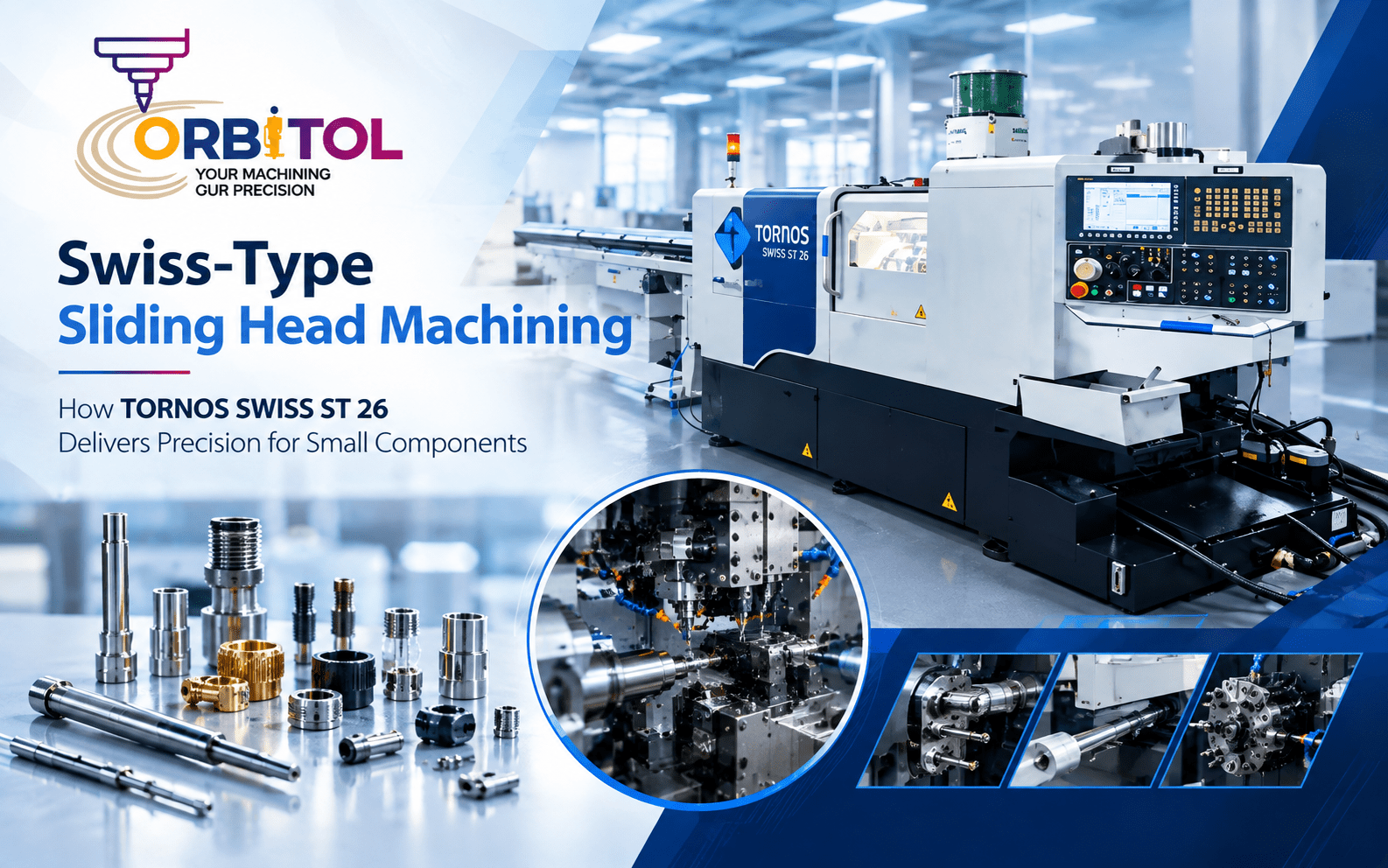
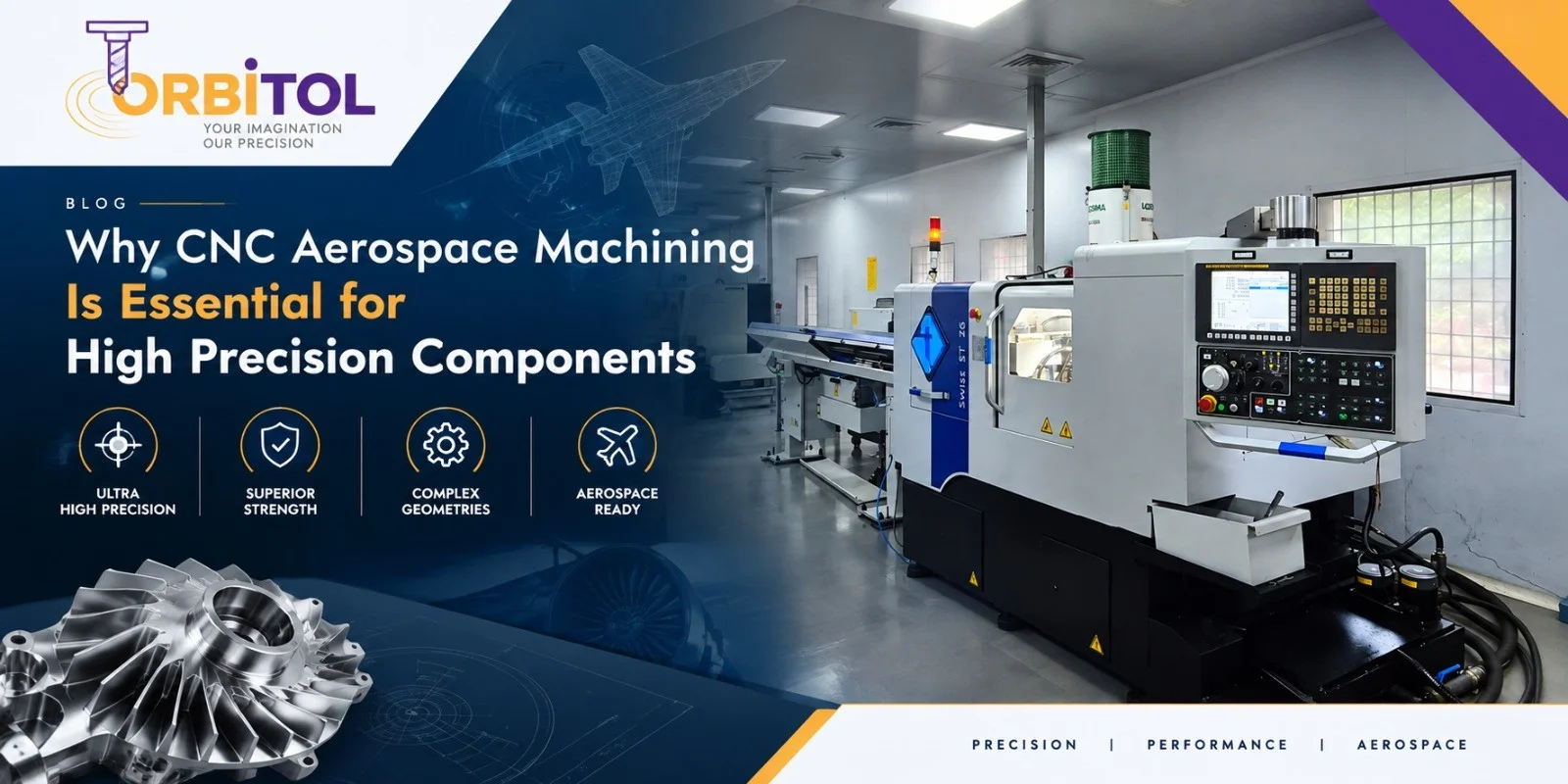
The TORNOS SWISS ST 26 is one of the more capable sliding head CNC machines available today. Purpose-built for producing small, complex parts with genuinely tight tolerances. Through true Swiss machining principles. It’s a machine designed around the idea that a single setup should be able to carry a part. From raw bar stock to a finished multi-featured component.
What makes the ST 26 particularly valuable is its combination of a rigid guide-bushing system with extensive live tooling capability. Allowing turning, milling, drilling and cross-machining operations to happen in the same cycle. For manufacturers producing high volumes of small precision parts. That translates directly into shorter cycle times and far less handling between operations – both of which matter enormously when tolerances are measured in microns rather than millimeters.
How Swiss Machining Differs from Conventional Turning
Swiss machining and conventional turning solve the same basic problem. Removing material to produce a cylindrical or complex-profile part – but they go about it quite differently.
On a conventional lathe, the work piece is fixed in a chuck, and length limits. How much unsupported material extends toward the tool before deflection becomes a problem. On a sliding head CNC machine, the guide bushing eliminates most of that unsupported length. Entirely, since the bar stock is supported almost exactly where the cut is happening.
This separation is especially necessary for long, thin sections with a high ratio of length to diameter, in cases. When conventional turning would introduce significant inaccuracy. This is where Swiss machining easily accommodates such geometries, prompting its growing popularity in the production of small and complex components. Used in many precision-related industries utilizing CNC precision machining.
Why Multi-Axis CNC Machining Matters for Small Parts
Small components frequently involve more than a simple round profile. Flats, cross-holes, slots, and secondary features are common, and producing all of them without multiple setups. Requires genuine multi-axis CNC machining capability.
A sliding head CNC machine equipped for multi-axis CNC machining can position live tooling around the work piece from several directions. While the main spindle and guide bushing continue supporting the part. That means a component can move from turning to milling to cross-drilling within a single continuous cycle – genuine multi-axis. CNC machining in action – rather than being removed, re-fixtured, and risked to alignment error between each step.
For manufacturers producing complex small parts at volume. This capability is often the difference between a process that’s technically possible and one that’s actually efficient enough to be profitable.
Applications of Sliding Head CNC Machines
The precision and small-part capability of Swiss-type equipment has made it a staple across several demanding sectors.
- Medical devices – surgical instrument components, implant parts, and connectors requiring extremely tight tolerances and biocompatible materials.
- Electronics – connector pins, small housings, and precision contacts where dimensional consistency affects electrical performance.
- Watchmaking and precision instruments – the original application, still relevant for miniature mechanical components.
- Automotive – small fasteners, sensor housings, and fuel system components requiring repeatable accuracy.
- Aerospace – small structural fittings and connectors where reliability cannot be compromised.
- Defense and industrial equipment – precision pins, bushings, and specialized fasteners built to tight specification.
Materials Suited to Swiss-Type Machining
Sliding head CNC machines work across a wide range of materials though the technique particularly suits smaller-diameter bar stock.
- Stainless steel – valued for corrosion resistance in medical and food-grade applications.
- Brass and copper alloys – which are widely used in electrical connectors.
- Titanium – which is needed whenever weight-to-strength ratio is important, especially in medical devices and space industry
- Aluminum – lightweight and easy to machine for a wide range of small components.
- Engineering plastics – selected for electrical insulation or chemical resistance in specific applications.
Each material behaves differently under the cutting tool, and getting feed rates, speeds, and tooling right for each one through disciplined CNC precision machining is part of what separates a genuinely capable CNC milling service provider from one simply running the equipment.
Benefits of CNC Precision Machining on the ST 26
Exceptional dimensional accuracy. The guide-bushing design minimizes deflection allowing the ST 26 to consistently hold tolerances that would be difficult to achieve on conventional turning equipment.
Reduced setup time. With live tooling and multi-axis capability built in, a part can move through several operations without being removed from the machine, cutting down considerably on handling and repositioning.
Better surface finish. Reduced vibration during cutting translates directly into cleaner, more consistent surface quality on the finished part.
Higher throughput on complex small parts. Completing multiple operations in a single cycle means more finished components per hour, which matters enormously for high-volume production runs.
Consistency across long production runs. Once a program is validated, the ST 26 repeats the same sequence reliably, part after part, without the drift that can creep into manual or less rigid setups.
Choosing the Right CNC Milling Service Partner
Not every manufacturer offering a CNC milling service has genuine experience with sliding head equipment, so a few things are worth checking before committing to a partner for high precision CNC machining work.
- Equipment capability – confirm they actually operate machines like the TORNOS SWISS ST 26, not just conventional turning centers labeled as precision equipment.
- Programming expertise – Swiss-type work demands specialized CAM knowledge, since coordinating the guide bushing with live tooling isn’t the same as standard lathe programming.
- Material experience – ask whether they’ve worked with your specific material, especially for anything demanding like titanium or hardened alloys.
- Quality inspection – verify they have appropriate measurement equipment on-site to confirm tolerances on small, intricate features.
- Scalability – make sure the provider can support you from prototyping through full production volume without a drop in consistency.
How Orbitol Intelligence Uses Swiss-Type Technology
Orbitol Intelligence has built its manufacturing capability around exactly the kind of demanding tight-tolerance work that Swiss-type equipment excels at. Alongside its 3-axis and 5-axis CNC/VMC machining EDM, and grinding capabilities Orbitol Intelligence operates sliding head CNC machine technology to handle small, complex components that conventional turning simply can’t produce efficiently.
This combination allows Orbitol Intelligence to match each project to the right process rather than forcing every part through the same equipment – Swiss-type machining for small, intricate components, and multi-axis VMC machining or 5-axis capability for larger or more geometrically complex parts. For customers across medical, electronics, automotive, and industrial sectors, that flexibility means Orbitol Intelligence can support a genuinely wide range of precision manufacturing needs under one roof.
The Future of High Precision CNC Machining
Demand for smaller more intricate components shows no sign of slowing down particularly as medical devices electronics and precision instrumentation continue trending toward miniaturization. That trend is pushing high precision CNC machining, including Swiss-type equipment toward even tighter tolerances and greater automation.
Advances in CAM software are making programming for sliding head CNC machines faster and more accessible, while improvements in tooling and coolant technology continue to extend what’s achievable on smaller-diameter, thin-walled parts. As industries keep demanding more from less material, manufacturers who’ve invested in capable Swiss machining equipment, like Orbitol Intelligence, will be well positioned to meet that demand reliably.
Conclusion
Swiss-type sliding head machining solves a problem conventional turning was never built to handle efficiently. producing small, slender, tightly tolerance parts without sacrificing accuracy or throughput. The TORNOS SWISS ST 26 represents this technology at its most capable, combining a rigid guide-bushing design with extensive multi-axis CNC machining functionality to complete complex small parts in a single, continuous cycle.
For manufacturers and buyers seeking a genuinely capable CNC milling service for small precision components understanding what a sliding head CNC machine actually offers makes it much easier to evaluate potential partners. At Orbitol Intelligence this technology sits alongside a broader range of CNC precision machining capabilities, giving customers access to the right process for every part – whether that is Swiss type turning for a miniature connector or 5-axis machining for a complex aerospace bracket.
When the part is small and the tolerance is tight the right machine makes all the difference – and that is exactly what sliding head technology backed by experienced engineering at Orbitol Intelligence, is built to deliver.