CNC and VMC Machine Every manufacturer eventually runs into the same basic challenge. How do you produce hundreds or thousands of identical parts. Without a single one being slightly off? Nine times out of ten, the answer involves a CNC and VMC Machine somewhere along the line. From tiny electronic housings to full-size aerospace brackets, these machines. Have quietly become the go-to method for turning raw metal or plastic into something exact enough to actually use.
Table of Contents
- Introduction of CNC and VMC Machine
- What Makes CNC and VMC Machine Technology Essential Today
- Breaking Down the CNC Machine and VMC Machine
- Inside the Machining Workflow
- The Case for High Accuracy Machining
- Benefits of CNC Machine Components and VMC Machine Components
- Materials That Work Best with CNC and VMC Processes
- Where These Components End Up, Industrial Applications
- Ensuring Quality Inspection and Standards
- Orbital Intelligence Approach to Precision Machining
- Conclusion
Introduction of CNC and VMC Machine
This blog takes a closer look at what’s really happening inside CNC and VMC machining. Why it’s earned so much trust across such different industries, and how a manufacturing partner like Orbital Intelligence. Brings together the right equipment and the right process discipline to get consistent, repeatable results.
What Makes CNC and VMC Machine Technology Essential Today
Let’s start with what CNC actually means Computer Numerical Control describes any machine tool. That runs off programmed digital instructions rather than someone manually turning dials. The precision comes from taking human guesswork out of the picture entirely. The computer repeats the exact same movements, at the exact same speeds and depths, every single time. Try doing that by hand consistently across a thousand parts, and you’ll quickly see the appeal.
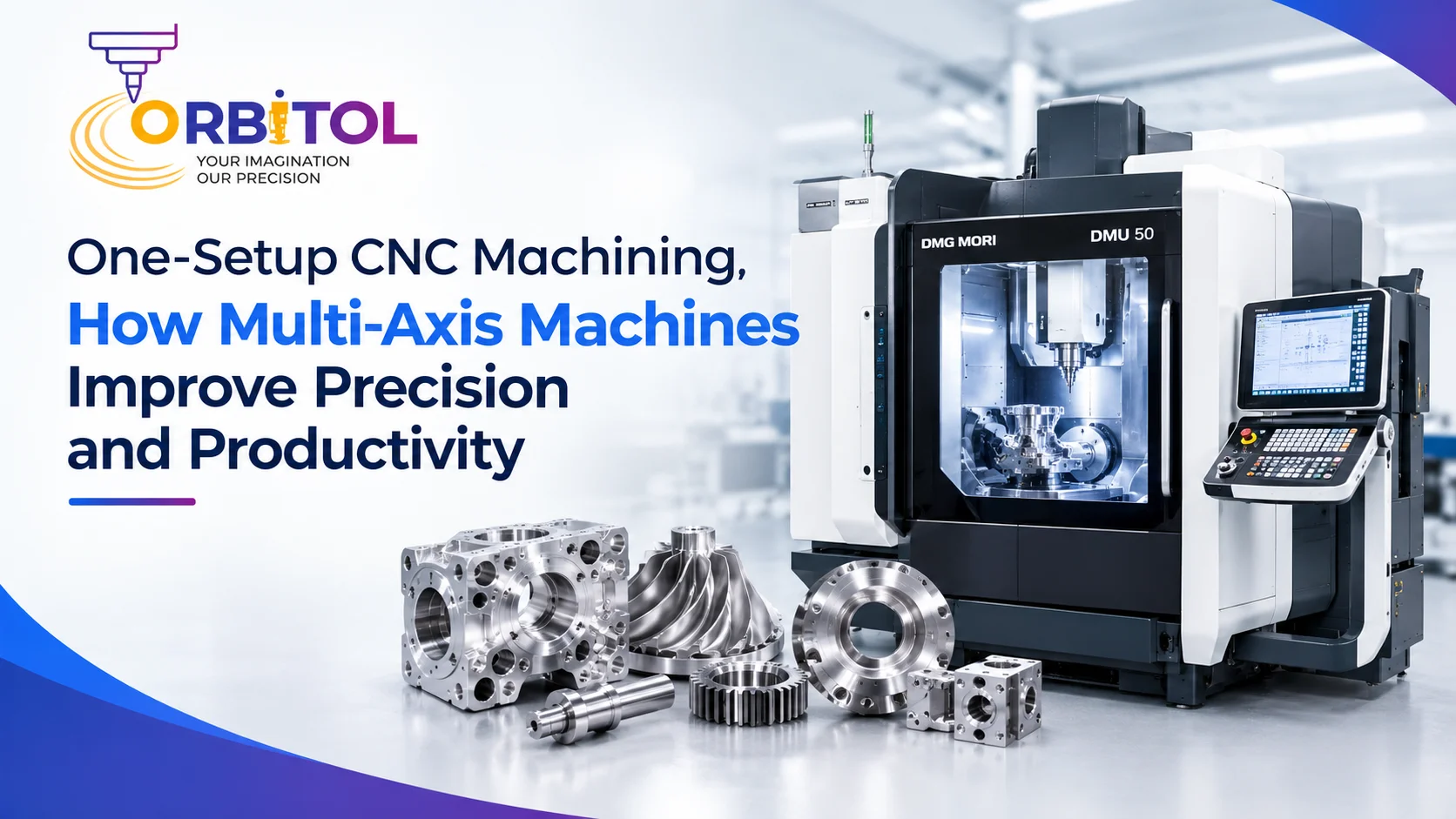
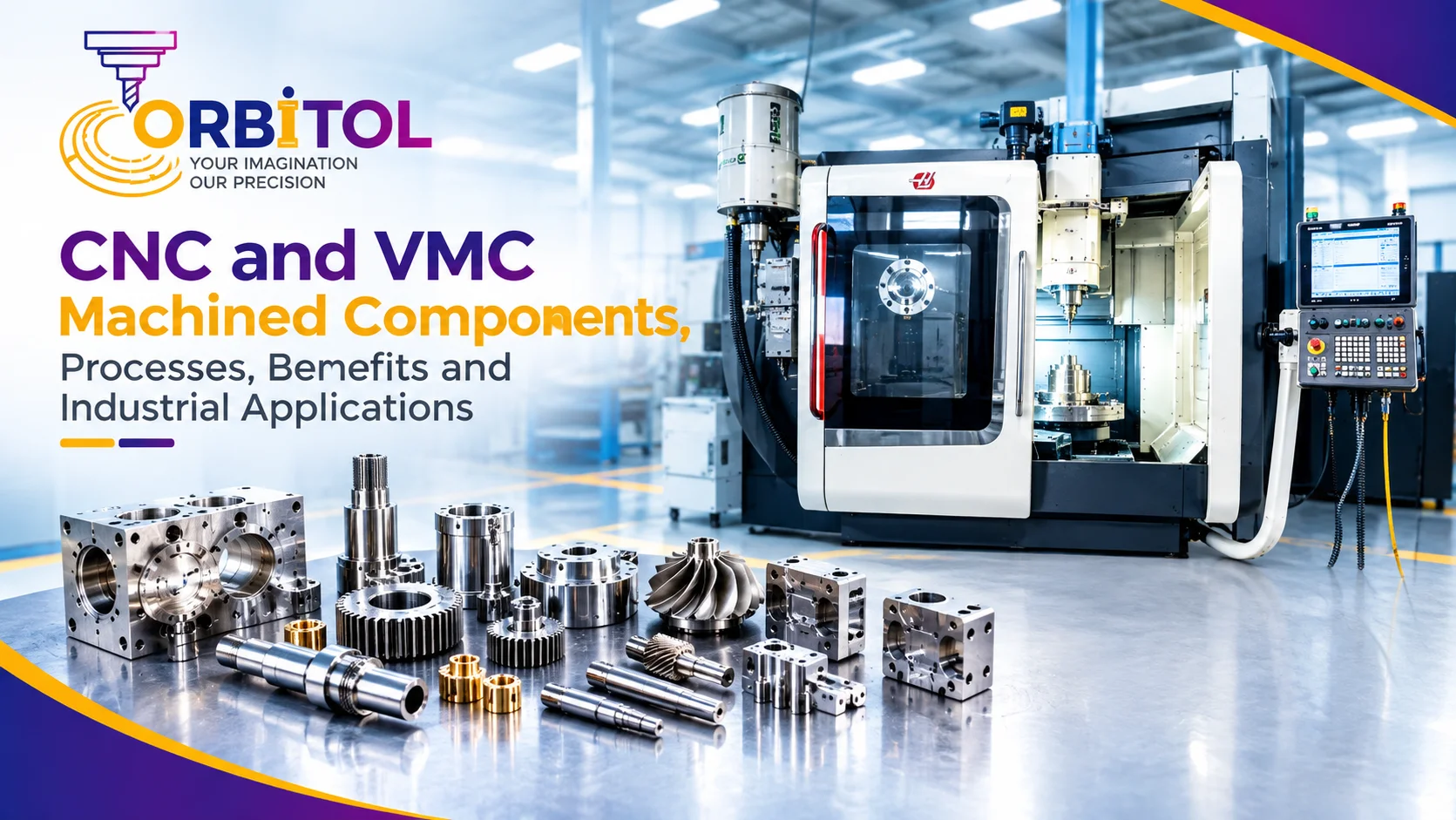
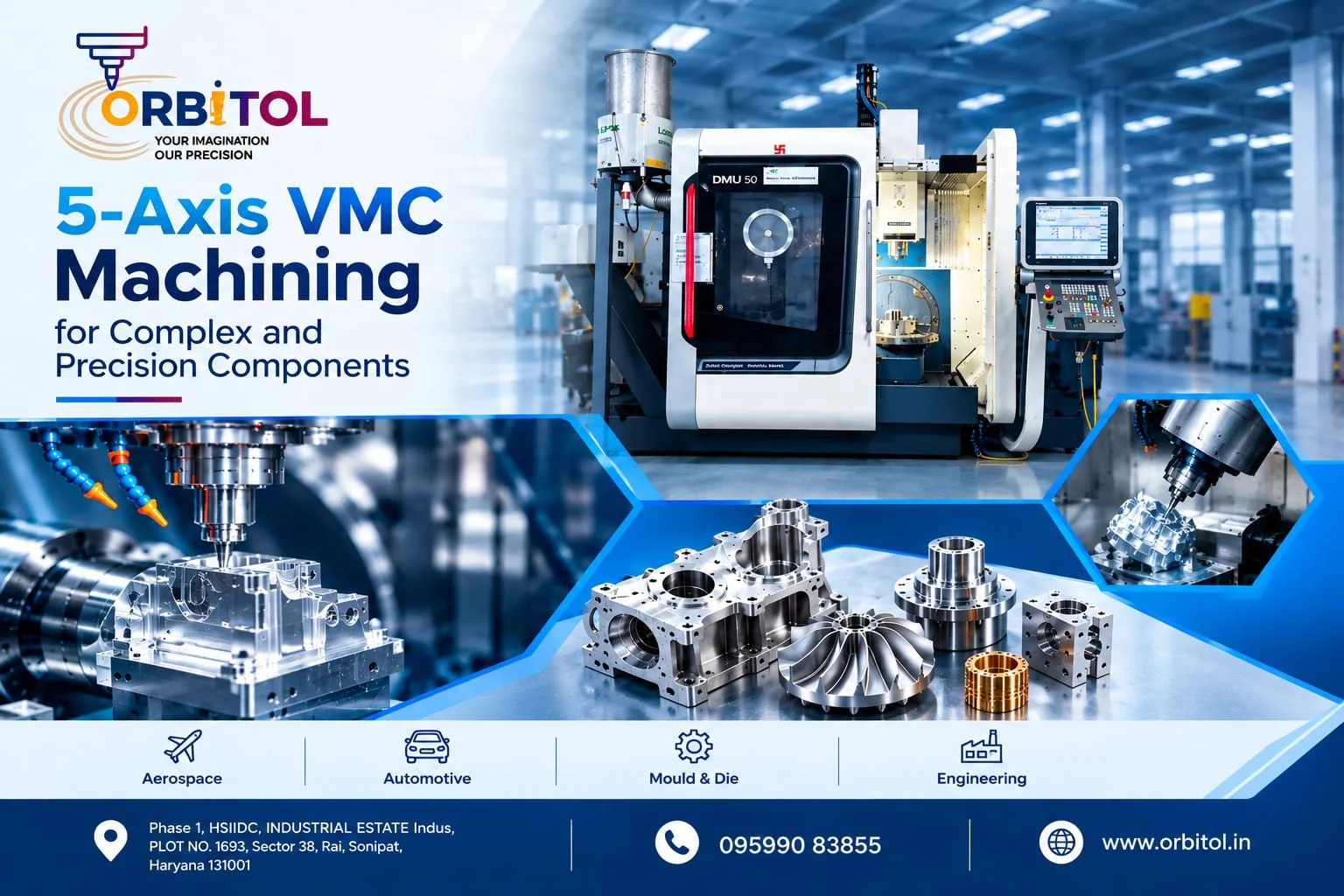
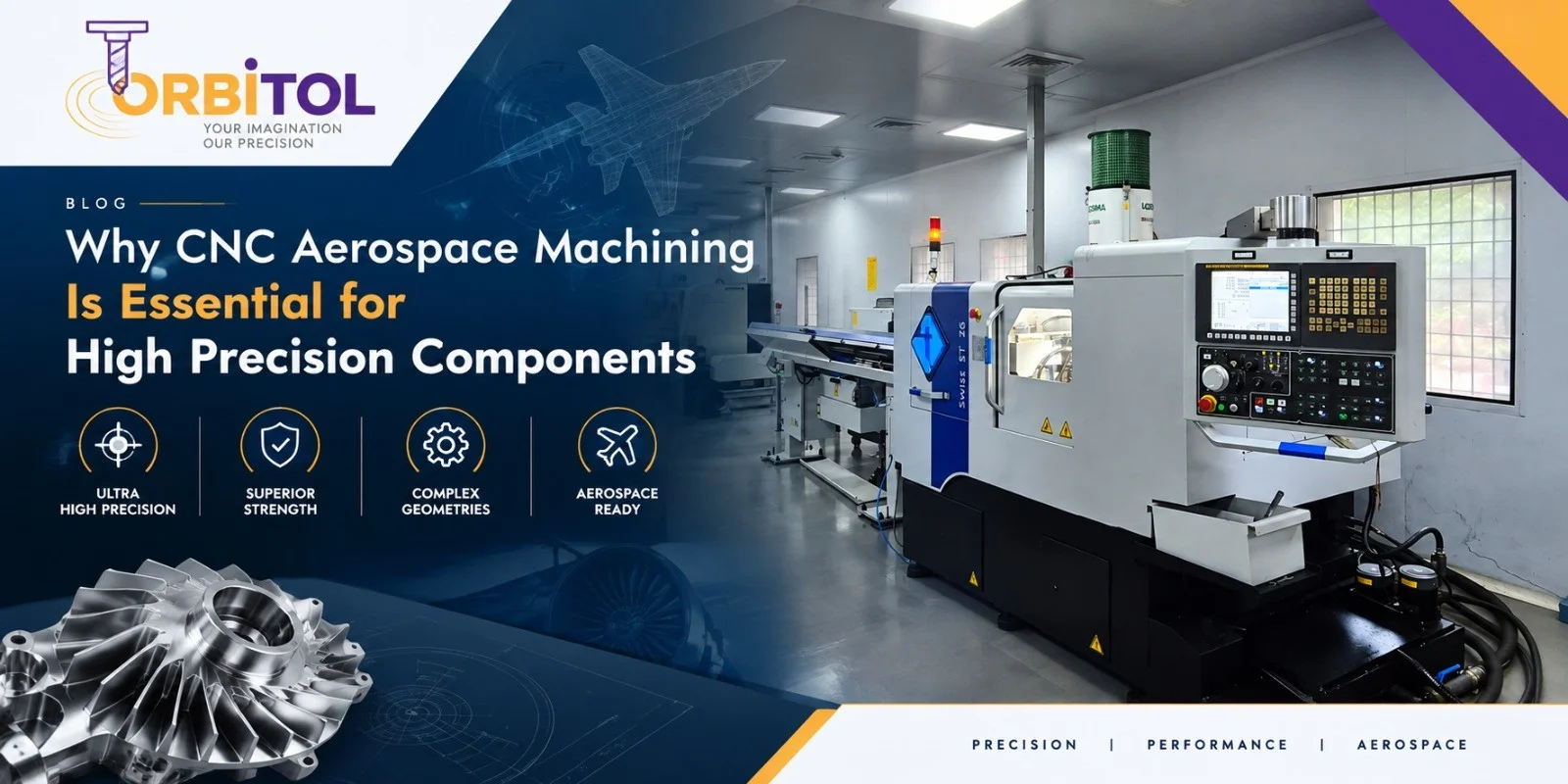
A VMC Machine, or Vertical Machining Center, is a more specific category within that CNC world. What sets it apart is pretty simple. The spindle sits vertically, so the cutting tool comes straight down into the material from above. That orientation works particularly well for milling: cutting slots, drilling holes, shaping contoured surfaces. Most VMC machines also come with automatic tool. Changers built in, which keeps production moving without someone having to step in and swap tools by hand between operations.
Put a CNC Machine and VMC Machine together in the same shop, and you get a level of flexibility and repeatability that’s genuinely hard to match any other way.
Breaking Down the CNC Machine and VMC Machine Relationship
There is a common mix-up worth clearing up here. A VMC machine isn’t some rival technology competing against CNC it’s actually part of the CNC family. Every VMC is a CNC machine, though not every CNC machine is a VMC. Lathes, routers, grinders. All of these fall under the same CNC umbrella too, each one just better suited to different kinds of parts.
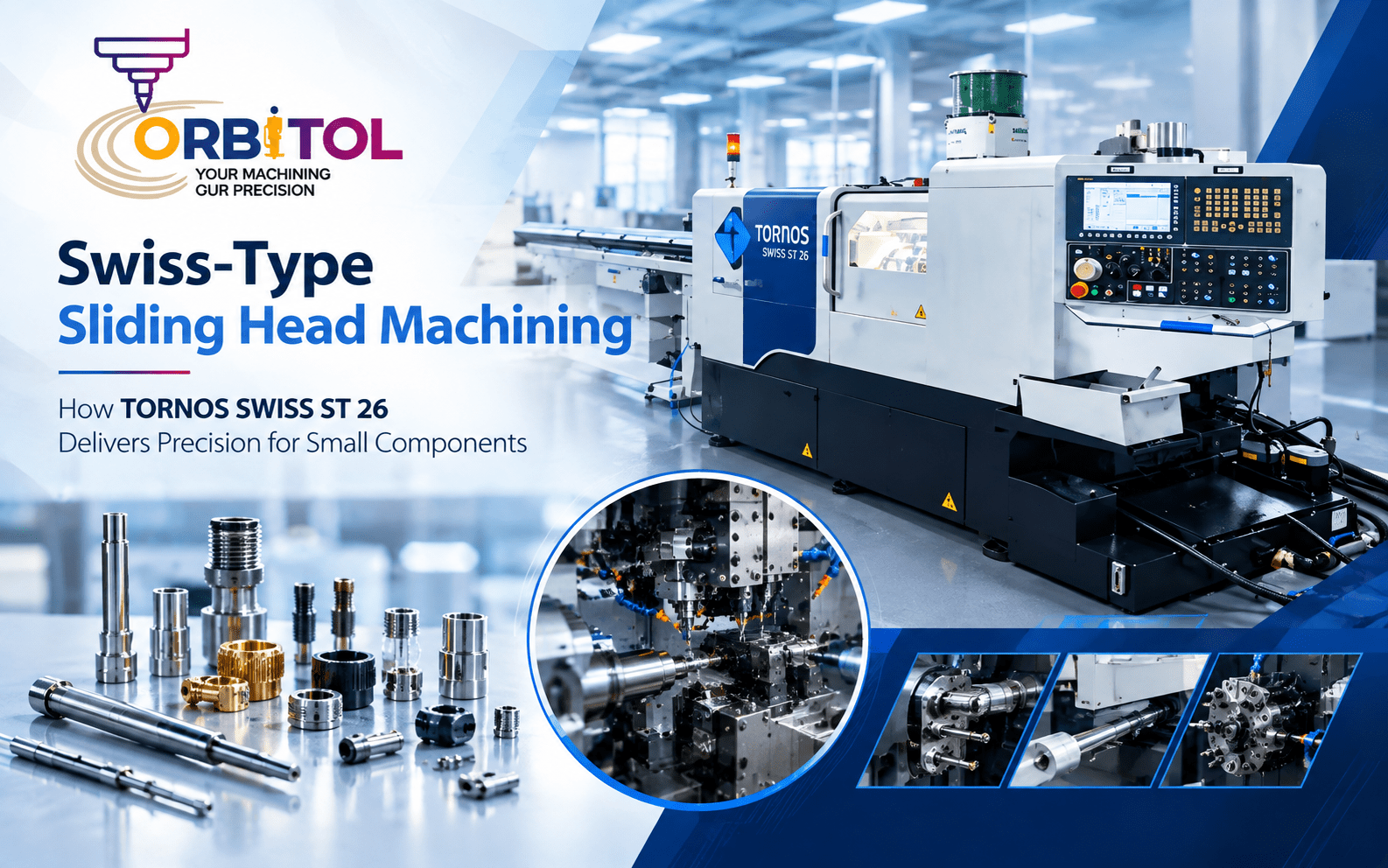
In a real shop, it’s totally normal to see both types working on the same job. For example, while a CNC lathe is utilized to carry out turning work on a circular component, a VMC machine performs milling, drilling, and contouring operations on the same component. It is this combination that enables a workshop to deal with intricate components with different geometries. Without requiring the assistance of other companies.
Inside the Machining Workflow
Although it might vary from one workshop to another. The process of getting from a design document to a finished component is always similar.
The process begins with the creation of a CAD model that reflects the specifications of a component’s geometry. This CAD model is then converted into a series of tool paths that can be understood by a machine using CAM software. Which will also determine things like feed rate and cutting tool. After that, the raw material gets clamped properly to prevent any movements that might bring about inaccuracy during the cutting process. Then the machining process starts, which first comprises removing. The bulk of the material unduly and therefore it is done in the first stages and follows with fine cuts of the part according to the specifications. After the cutting is finished, the part undergoes deburring and cleaning and subsequently it is subjected to final checks of compliance.
Each step really does depend on the one before it. Rush the fixturing, or write a sloppy program, and that mistake tends to surface later as a defect nobody saw coming.
The Case for High Accuracy Machining
In plenty of manufacturing contexts, tolerances aren’t just a nice-to-have. They are the whole point of the job. A bracket that’s off by even a fraction of a millimeter might not seat properly during assembly. And a part headed into a medical device or an aircraft? “Close enough” just isn’t in the vocabulary there.
This is exactly why High Accuracy Machining isn’t optional. It is the baseline. CNC and VMC machines get there through a combination of things rigid frame construction. That resists flexing under cutting pressure, high-precision servo motors, and real-time feedback loops constantly checking the tool’s actual position against. Where the program says it should be. Thermal compensation plays a role too, correcting for the small dimensional shifts that naturally happen as a machine heats up over a long run.
For manufacturers, the payoff is simple fewer rejected parts, less time wasted on rework, and components. That actually fit together correctly the first time they’re assembled.
Real Benefits of CNC Machine Components and VMC Machine Components
There is a reason this technology has stuck around and kept getting better instead of being replaced by something newer. Repeatability is probably the biggest win once a program is proven out. Part number 500 looks basically identical to part number one. Speed matters a lot too, since automated tool changes and continuous cutting cycles leave manual machining far behind.
Complex shapes that would be genuinely difficult, or flat-out impossible, to make by hand become entirely achievable once the right toolpaths are in place. Material waste tends to shrink as well, since cutting paths get planned and optimized in advance rather than figured out mid-job. On top of all that, CNC Machine Components and VMC Machine Components often come with lower labor costs per part. One operator can frequently keep an eye on several machines running at once. And because programs are saved digitally, reordering the exact same part a year later is as simple as pulling up the file, not starting the whole process over.
Materials That Work Best With CNC and VMC Processes
Part of what’s made this technology so widely used is just how many materials it can handle well. Aluminum is still the material of choice due to its lightweight and easy to work. With nature, as it is still used in automotive and aerospace applications. Steel and stainless steel is the materials of choice when either strength or corrosion resistance plays a more important role than the ability to shed weight. Titanium, in spite of being difficult to work with, is nevertheless extensively used in aerospace and medical applications due to its strength to weight ratio. Brass and copper are also frequently used in electrical and plumbing. And engineering plastics. Delrin, nylon, PEEK, that kind of thing are increasingly machined for parts that need to stay lightweight, resist chemicals, or avoid conducting electricity.
Where These Components End Up: Industrial Applications
Honestly, the range of industries relying on CNC and VMC Machine components is pretty remarkable. Aerospace manufacturers depend on them for structural brackets, engine parts, and housings built to survive serious stress. The automotive industry uses this technology for everything from engine components to quick-turnaround prototypes. Medical device companies lean on VMC Machine Components. For implants, surgical instruments, and diagnostic equipment, often machined down to tolerances measured in microns. Electronics manufacturers turn to CNC processes for enclosures and heat sinks that need fine detail work. Industrial equipment producers use it for pump housings, gearboxes, and valve bodies with intricate internal features. Even the energy and defense sectors lean heavily on precisely machined components where there simply isn’t room for failure.
Ensuring Quality, Inspection and Standards
Cutting an accurate part is only half the battle proving it’s accurate is the other half. Most serious manufacturing operations use Coordinate Measuring Machines (CMMs) to confirm. That finished components actually match design specs within the required tolerance range. Depending on the industry, other certifications often come into the picture too ISO 9001 for general quality management, AS9100 for aerospace work specifically, or ISO 13485 for medical device manufacturing.
Skip proper inspection, or treat it as just a formality and you end up with the classic problem: a part that looks right but causes real trouble later, either during assembly or once it is actually in use.
Orbital Intelligence Approach to Precision Machining
At Orbital Intelligence, every project starts the same way by actually understanding the part. What it’s for which tolerances genuinely matter and which material makes the most sense for the application. From there, the choice between a CNC lathe, a VMC Machine, or some combination of both comes down to the parts real geometry, not just whatever process happens to be easiest.
That kind of attention to matching the process. With the part is exactly what lets Orbital Intelligence consistently deliver CNC Machine Components and VMC Machine Components. That pass inspection the first time around, whether it’s a single prototype or a full production run. It’s this blend of technical capability and genuine care in planning that’s earned Orbital Intelligence. Trust from manufacturers who simply can’t afford to cut corners on precision.
Conclusion
CNC and VMC Machine technology has quietly turned into one of the most important tools in modern manufacturing. And once you understand what is actually happening behind the scenes, it’s not hard to see why. The mix of consistency, speed, and the ability to hold tight tolerances solves problems. That would otherwise be nearly impossible to manage at any real scale through manual methods alone. Whether the job is an aerospace bracket, a medical implant, or an automotive part. Working with a team that genuinely understands both CNC Machine and VMC Machine processes makes a real. Measurable difference in the outcome. Partnering with an experienced provider like Orbital Intelligence means that decision-making happens right. From the very start resulting in parts that meet spec. Stay on schedule, and avoid the kind of costly rework that comes from rushing process selection.