Tool and Die Making Machine If you have ever walked through a manufacturing unit and watched a machine punch out a perfectly. Shaped metal component in seconds, you’ve seen the result of good Tool and Die work. Nobody notices tool and die until something goes wrong – a part doesn’t fit, a die cracks mid-production, or tolerances drift and an entire batch gets rejected. That is when it suddenly dawns upon everyone how really important this quiet, unfashionable corner of manufacturing is.
Choosing the right piece of machinery in the field of tool and die making is not an easy choice that you make once for all. It shapes your shop’s capability for years – sometimes decades. Get it right, and you build a Tool Room that can take on almost any job that comes through the door. Get it wrong, and you end up fighting your own equipment every single day, watching cycle times creep up and quality slip.
In this blog, we’ll walk through what actually matters. When picking a tool and die machine, why it affects everything from die manufacturing to die mould production, and how to think about this investment the way an experienced shop owner would — not just going by a spec sheet, but by what actually happens on the floor.
Why Tool and Die Making Machine Still Matters
Every product you touch in daily life – a phone casing, a car door panel. A plastic bottle cap, an electrical connector — was shaped by a die or a mould at some point. Tool and die is the backbone that makes mass production possible. Without precisely made dies, none of the parts coming off a press or an injection moulding machine would be consistent.
That’s the whole point of tool and die making creating tools. That can repeat the same shape, thousands or millions of times. Without drifting out of tolerance. It sounds simple when you say it out loud, but achieving that kind of repeatability requires machines that are built for accuracy first and speed second.
This is also why the Tool Room in any serious manufacturing setup is treated almost like a separate business within the business. It has its own culture, its own standards, and usually its most experienced people. The machines inside that room decide what kind of work the whole factory can eventually take on.
What Goes Into Tool and Die Making Machine
Before jumping into machine selection, it helps to understand. What actually happens during tool and die making. It typically involves.
- Designing the tool or die based on the final part geometry
- Selecting the right tool steel or alloy
- Rough machining to remove bulk material
- Precision die machining to achieve final dimensions and surface finish
- Heat treatment to harden the tool
- Fine finishing, polishing, and fitting
- Trial runs and adjustments before full production
Different machines with different capabilities are needed at each of these stages. A die may seem perfect in theory or in a drawing but it may fail during production because of machining process failure or poor surface finishing. Which can result in uncontrolled wear.
At this stage, the choice of machine shifts from being merely a technical aspect to becoming a business decision.
Types of Machines Utilized in Tool and Die Engineering
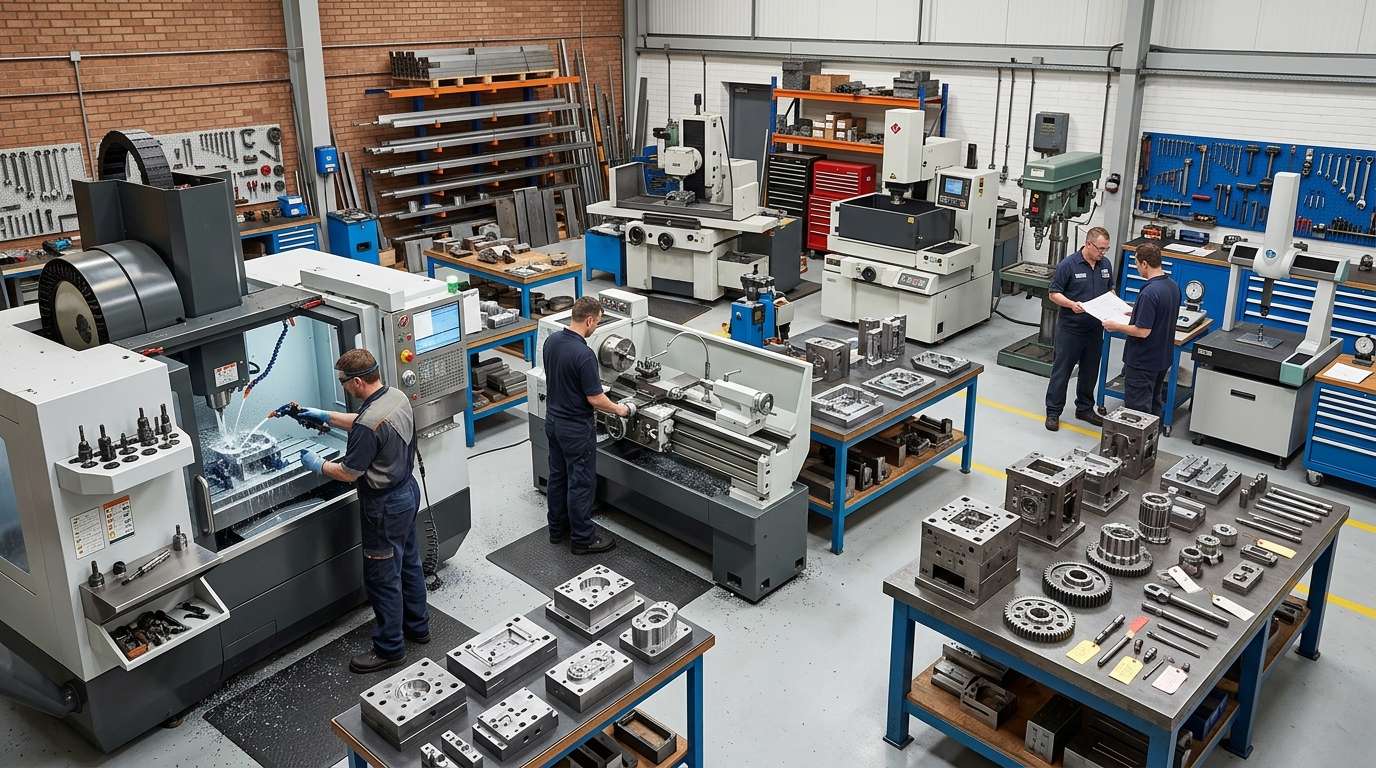
There is no universal machine that does it all. A Tool Room has a range of machines that make it possible to make a die.
1. CNC Milling Machines
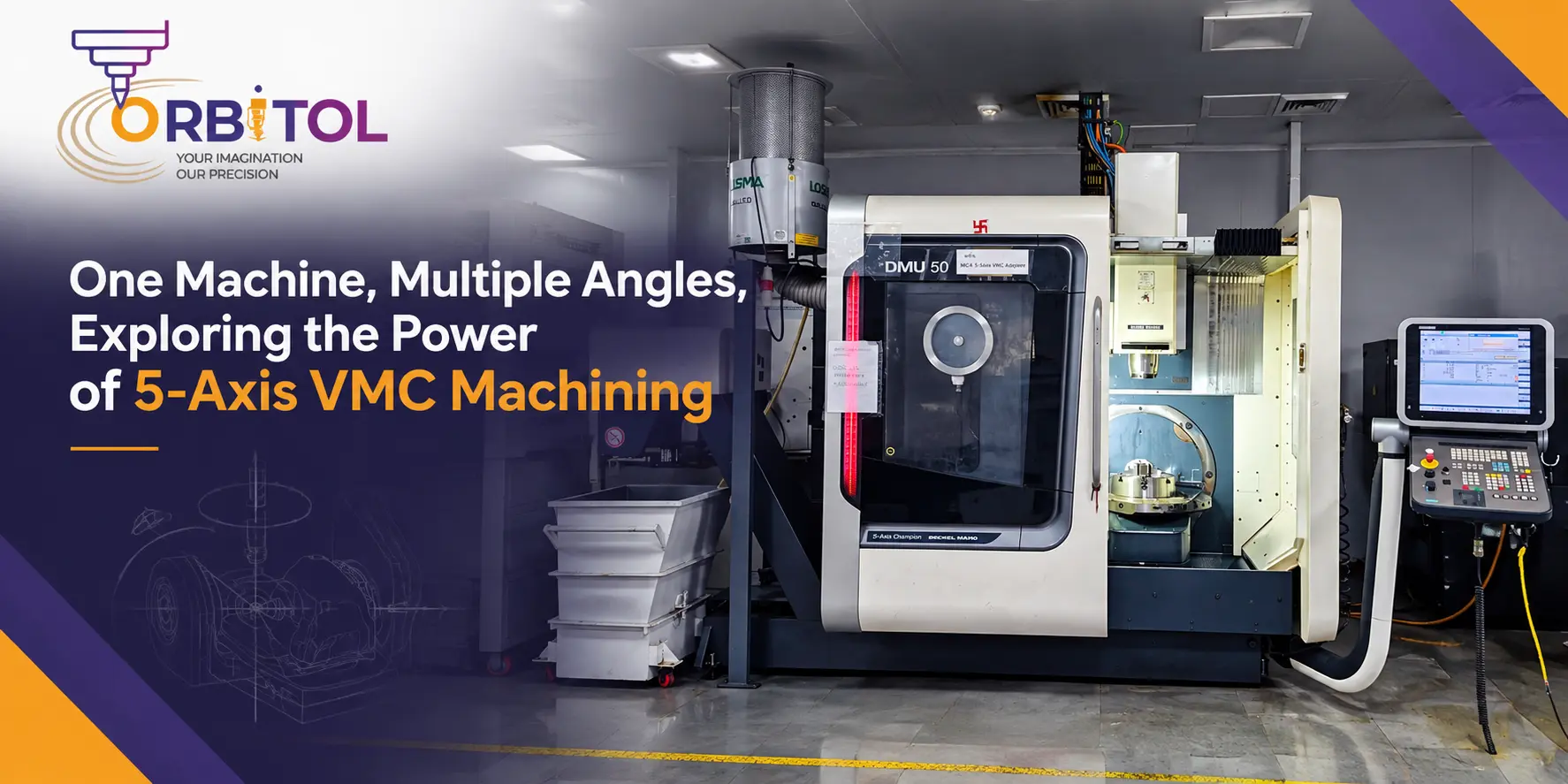
These are the workhorses of any tool room. CNC milling handles rough shaping, cavity cutting, and a lot of the general-purpose work involved in die manufacturing. Advanced technology enables the current CNC milling machines. (namely the 3-axis and 5-axis) to make complicated shapes with multiple axes at the same time. In the field of die cavity fabrication, this means a lot.
2. CNC EDM (Electrical Discharge Machining)
CNC EDM technology comes into play when hard tool steel has to be machined or shapes. That traditional tools cannot be used for need to be created. Even though the process is comparatively slow, it is the best way to tackle the issue of fine detail machining such as sharp internal corners or very small holes. EDM has become the main tool for finishing punches and dies for most of the shops. Specializing in tool manufacturing because it can maintain accuracy at the microns level.
Wire-cut EDM technology is the best option to make a punch or die with precision that needs to be kept very strictly.
4. CNC Surface and Jig Grinders
Grinding machines are what give a die its final, mirror-like finish and dimensional accuracy. In die machining, grinding is often the last step before the tool goes for trial, and even a small error here can undo hours of earlier work.
5. Precision Lathes
Not every die is a flat cavity – many press tools and mould components have round features that need turning. A good precision lathe rounds out. The capability of a tool room and reduces dependency on outsourcing.
Each of these machines plays a role, and a serious die manufacturing setup. Usually needs access to most, if not all, of them – either in-house or through trusted vendors.
Key Factors to Consider Before Buying a Tool and Die Machine
Now here’s the part that actually matters when you are standing in front of a machine dealer, trying to decide what to invest in.
1. Match the Machine to Your Actual Work, Not Your Dream Work
It’s tempting to buy the most advanced 5-axis machine on the market because it looks impressive. But if 80% of your work is 2.5D cavity milling for die mould production. That advanced machine might sit underused while eating up your maintenance budget. Be honest about the kind of jobs that actually come through your door, and buy for that — with a bit of room to grow, not a lot.
2. Precision and Repeatability
This is non-negotiable in tool and die work. Look closely at the machine’s positioning accuracy and repeatability specs, not just its maximum speed. A machine that’s slightly slower but consistently accurate will save you more money over time than a fast machine that needs constant recalibration.
3. Rigidity of the Machine Structure
Tool steels are tough and machining dies creates a considerable load of stress on the machine structure. It is important to ensure that both rigid machine bed and spindle are in place. To eliminate vibrations responsible for poor surface quality of the finished item and premature tool wear.
Structural rigidity is an important factor to take into consideration when machining tough materials.
4. Compatibility with CAD-CAM Software
Modern tool and die making is heavily reliant on the use of CAD-CAM. Before making a purchase check whether the machine controller is compatible. With the pack of software used by your design team. A mismatch here can quietly waste hours every week in file conversion, post-processing errors, and manual adjustments.
5. Tooling and Automation Options
Automation minimizes the need for manual involvement, minimizes the chance of human error, and allows one operator to work with multiple machines. This is crucial especially when skilled machinists are difficult to come by.
6. Availability of After-sales Services and Spare Parts
This point is often neglected, and it shouldn’t be the case, A machine that breaks down and takes three weeks to get a spare part is a machine that’s costing you money every single day it sits idle. Ask about local service support, average response time, and spare parts stock before you sign anything.
7. Total Cost of Ownership, Not Just Purchase Price
The initial price tag is only part of the story. Include power consumption, tooling, maintenance agreements and anticipated down time. A cheaper machine that needs regular servicing can end up costing more than a slightly more expensive machine that simply runs reliably for five years.
8. Skill Availability
There’s no point buying a highly advanced machine if you don’t have — or can’t train — operators who can actually run it well. Sometimes the right choice is a slightly simpler machine that your existing team can master quickly, rather than a complex one that sits underutilized for months during the learning curve.
Tool and Die Machines for Press Tool Manufacturing
Press Tool Manufacturing deserves a special mention because it has its own set of demands. Progressive dies, compound dies, and transfer dies used in stamping operations require an extremely high level of alignment accuracy between different stations. A slight error in one station can throw off the entire strip layout.
For this kind of work, wire-cut EDM and precision jig grinding become especially important, since the punches and matching die cavities need to align within microns across multiple stages. Shops that specialize in press tools often build their machine lineup specifically around this requirement — prioritizing dimensional consistency over raw cutting speed.
Building a Tool Room That Grows With Your Business
A good Tool Room isn’t built in one purchase. It’s built gradually, based on the kind of work you take on and where you want your business to go. Some practical advice that experienced shop owners often share:
Start with core capability — a solid CNC mill and one EDM machine can handle a surprising range of work early on.
Add wire-cut EDM once your work starts involving more precision punches and inserts.
Invest in grinding equipment as soon as surface finish becomes a recurring customer complaint or requirement.
Don’t rush into automation before your processes and quality checks are stable — automating a broken process just breaks things faster.
Keep upgrading your CAD/CAM skills alongside your machines; the software side often lags behind hardware investment in smaller shops.
At Orbitol, we’ve seen firsthand how the right machine choice can transform a tool room’s output — and how the wrong one can quietly hold a business back for years. Whether you’re setting up a new Tool Room from scratch or upgrading an existing one for more advanced die mould and die machining work, the goal should always be the same: match the machine to your real production needs, not just to what looks good in a brochure.
Precision manufacturing rewards patience and planning. Take the time to evaluate your actual job mix, talk to machine operators who’ll be using the equipment daily, and think in terms of total cost of ownership rather than just the invoice amount. That’s how the best tool and die making shops are built — not overnight, but one well-considered machine at a time.
Conclusion
Choosing the right tool and die making machine isn’t just a procurement decision — it’s a strategic one that shapes what kind of work your shop can win, how consistently you can deliver it, and how profitable that work ends up being. From CNC milling and EDM to wire-cut machines and precision grinders, every piece of equipment in your Tool Room should earn its place based on the real demands of die manufacturing and Press Tool Manufacturing work you handle.
Be patient, ask difficult questions, and remember that the most advanced machine in the market is not necessarily the best for you, but rather the one that best suits your operation, your team, and your plans for growth.
Ultimately, tool-making and die-making are as much a craft as they are an engineering discipline. While machines may give you the capability, it is the people who operate those machines — including toolmakers, die setters, and quality checks — that put this capability into practice to produce parts of good quality. That combination is what separates an average tool room from one that customers keep coming back to, project after project. In the end, the machine you choose today becomes the foundation your die manufacturing capability is built on for years — so choose it the way you’d choose a long-term partner, not just a piece of equipment.