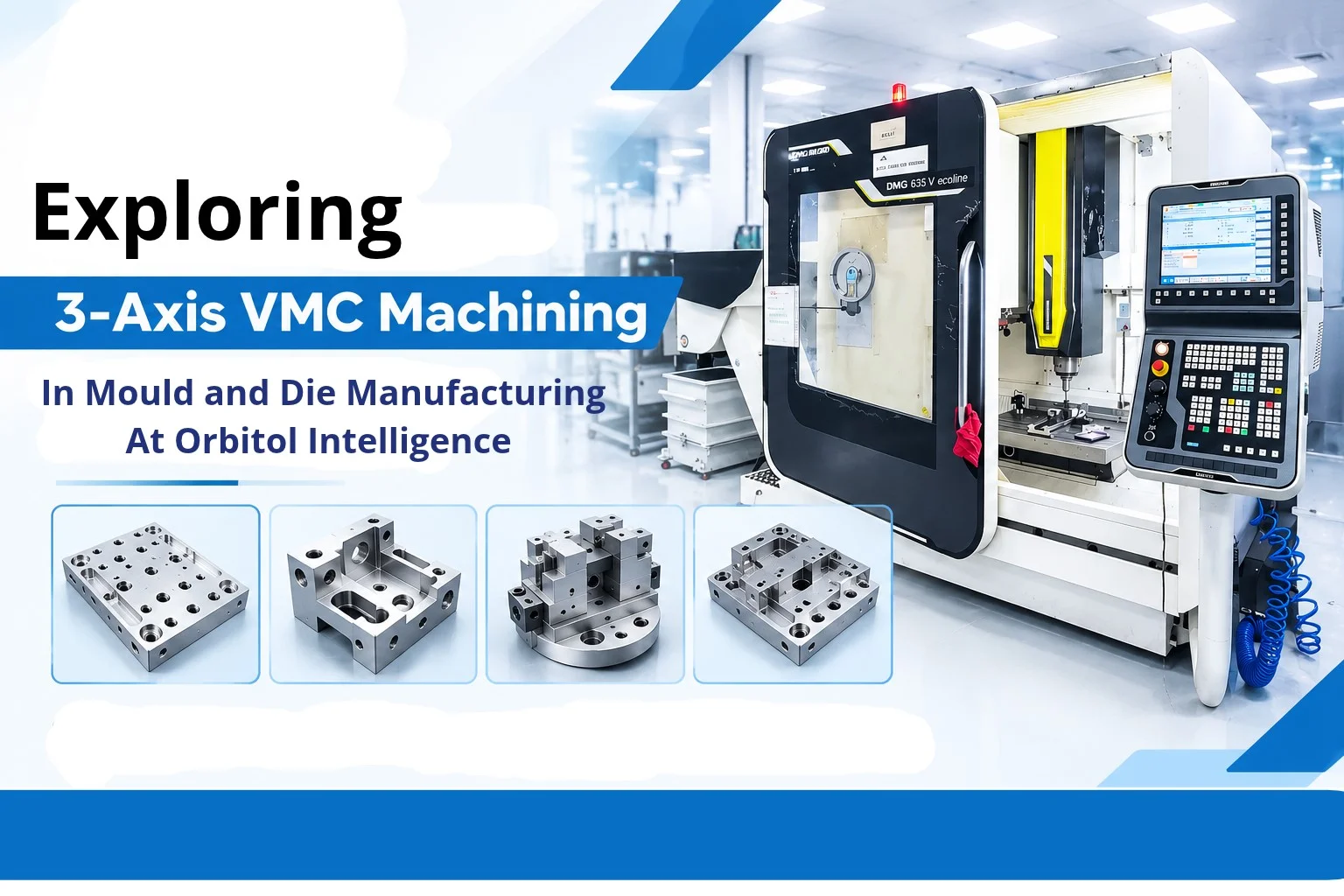
3 Axis VMC Machining, In mould and die manufacturing, accuracy is essential. Even a small variation in a component’s dimensions can affect the fit, surface finish, and overall performance of the final mould. This is why selecting the right machining process is an important part of every manufacturing project.
One of the widely used technologies for producing accurate metal components is 3 Axis VMC Machining. It enables manufacturers to perform cutting, drilling, milling, and finishing operations using computer-controlled equipment. This technology is suitable for producing flat surfaces, slots, holes, pockets, and other features commonly required in mould and die components.
A Vertical Machining Center (VMC) is a CNC-controlled machine that uses a vertically oriented spindle to perform various machining operations. In 3-axis machining, the cutting tool moves along three linear axes: X (left to right), Y (front to back), and Z (up and down). These coordinated movements allow the machine to produce accurate and consistent components.
At Orbitol Intelligence, we understand the importance of machining quality in modern manufacturing. In this blog, we will explore how 3-axis machining works, its advantages in mould and die production, and the key factors businesses should consider when selecting a VMC machining partner.
Table of Contents
- Understanding How the 3-Axis Milling Process Works
- Role of 3-Axis VMC Machining in Mould and Die Manufacturing
- Key Benefits of Using 3-Axis VMC Machines
- Materials and Components Used in Mould and Die Production
- 3-Axis vs. 5-Axis Machining: Understanding the Difference
- How to Choose the Right VMC Machining Services
- Conclusion
1. Understanding How the 3-Axis Milling Process Works
The first thing to know about three-axis machinery is how it functions before talking about its significance for molds.
To understand the role of 3-axis VMC machining in mould and die manufacturing, it is important to first understand how the milling process works. The machine uses controlled movements along three axes to remove material from a workpiece and achieve the required shape and dimensions.
Once a CAD model or engineering drawing is prepared, the design is converted into a CNC machining program using CAM software. This program defines the toolpaths, cutting parameters, and machining sequence required to produce the component according to the specified dimensions.
After the workpiece is securely fixed on the machine table, the operator selects the appropriate cutting tools and machining parameters. The VMC then follows the programmed instructions to perform the required machining operations with accuracy and consistency.
Depending on the component’s design, several milling operations may be performed during the machining process. Face milling is used to create smooth and flat surfaces, while end milling is suitable for producing slots, pockets, recesses, and profiles. Drilling and tapping operations may also be performed to create holes and internal threads.
The quality of the finished component depends on several factors, including cutting tool selection, spindle speed, feed rate, workpiece clamping, CNC programming, and machine maintenance. Proper machining planning becomes especially important when working with hard materials or components that require tight dimensional tolerances.
In mould and die manufacturing, additional finishing operations may be required to achieve the desired surface quality and dimensional accuracy. The selection of the machining method depends on the component’s geometry, material properties, and intended application.
2. Role of 3-Axis VMC Machining in Mould and Die Manufacturing
Moulds and dies are essential for manufacturing a wide range of products across industries such as automotive, consumer goods, packaging, electronics, and industrial equipment. Depending on the application, these components require specific levels of dimensional accuracy, surface finish, and structural strength.
3 Axis VMC Machining is commonly used to manufacture various mould and die components, including mould bases, plate inserts, mounting surfaces, pockets, slots, and other precision features. It helps manufacturers produce these components according to the required engineering specifications.
For instance, a mold base may need a number of accurately placed holes and flat surfaces For example, a mould base may require accurately positioned holes and flat surfaces to ensure proper assembly and alignment. A VMC machine can perform these operations through programmed tool movements, helping maintain dimensional consistency and accuracy across multiple components
A 3-axis VMC can also machine cavities and profiles that are accessible from the selected tool approach direction. With suitable CNC programming and cutting tools, manufacturers can produce the required shapes while maintaining dimensional accuracy and surface quality.
small-diameter cutting tools and requires precise control over spindle speed, tool runout, feed rate, and workpiece stability to achieve the desired machining accuracy.
However, a 3-axis VMC cannot machine every mould feature in a single setup. Components with complex angled surfaces, undercuts, or multiple machining orientations may require additional setups, specialised fixtures, or 5-axis machining capabilities.
3. Key Benefits of Using 3-Axis VMC Machines
One of the key benefits of 3-axis VMC machines is their versatility. They can perform various machining operations, including milling, drilling, facing, and pocketing, across different types of components. This reduces the need to use separate machines for every machining operation and helps streamline the production process.
Dimensional consistency is another important advantage of 3-axis VMC machining. Once the CNC program is properly developed, the machine can repeat the same machining operations across multiple components. This is particularly useful in mould and die manufacturing, where different components must fit and align accurately during assembly.
3-axis VMC machining can also help improve production planning and scheduling. CNC programming allows operators to follow predefined machining sequences, making repeat production easier to manage. With appropriate cutting tools and machining parameters, manufacturers can reduce unnecessary machining time and minimise material wastage.
The technology also supports a wide range of component designs. A 3-axis VMC can perform operations such as drilling, pocketing, facing, and slot milling. This makes it suitable for manufacturing both individual components and small production batches.
3-axis VMC machines can also meet different surface finishing requirements when the appropriate cutting tools, machining parameters, and finishing techniques are selected. This helps manufacturers achieve the surface quality required for specific mould and die applications.
For businesses involved in mould and die manufacturing, these advantages make 3-axis VMC machining a practical solution for producing many standard components. However, selecting the right machine and machining process according to the component’s design and technical requirements is essential for achieving the desired results.
4. Materials and Components Used in Mould and Die Production
Material selection plays an important role in determining the machining process and the overall quality of a mould or die. Factors such as hardness, strength, wear resistance, and corrosion resistance influence the material’s suitability for a particular manufacturing application.
Tool steel is widely used in mould and die manufacturing because of its strength, hardness, and wear resistance. Depending on the application, manufacturers may also use alloy steel, stainless steel, and aluminium to produce different mould and die components.
Aluminium is often selected for applications where low weight and ease of machining are important. In contrast, steel grades are generally preferred for components that must withstand repeated use, heavy loads, and demanding operating conditions.
The selected material also influences machining parameters. Harder materials generally require suitable cutting tools, carefully selected cutting speeds, and controlled feed rates. Although softer materials are usually easier to machine, proper tool selection and machining conditions remain important for achieving the required dimensional accuracy and surface finish.
Common mould and die components produced through machining include
- Mould bases and support plates
- Core and cavity inserts
- Die blocks and punches
- Guide plates and mounting components
- Slots, pockets, and precision holes
- Fixtures and other tooling components
Before machining begins, manufacturers should review the material grade, engineering drawings, dimensional tolerances, and surface finish requirements. This information helps determine the appropriate machining process, select suitable cutting tools, and reduce the risk of production errors.
5. 3-Axis vs. 5-Axis Machining: Understanding the Difference
Both 3-axis and 5-axis machining play important roles in modern manufacturing. However, each technology is designed to handle different component geometries, machining requirements, and production challenges. Understanding their capabilities helps manufacturers select the most suitable machining process.
A 3-axis Vertical Machining Center (VMC) operates along the X, Y, and Z axes. It is suitable for machining flat surfaces, drilling holes, cutting slots, creating pockets, and producing components with relatively simple geometries. These capabilities make 3-axis machining a practical choice for many standard mould and die manufacturing applications.
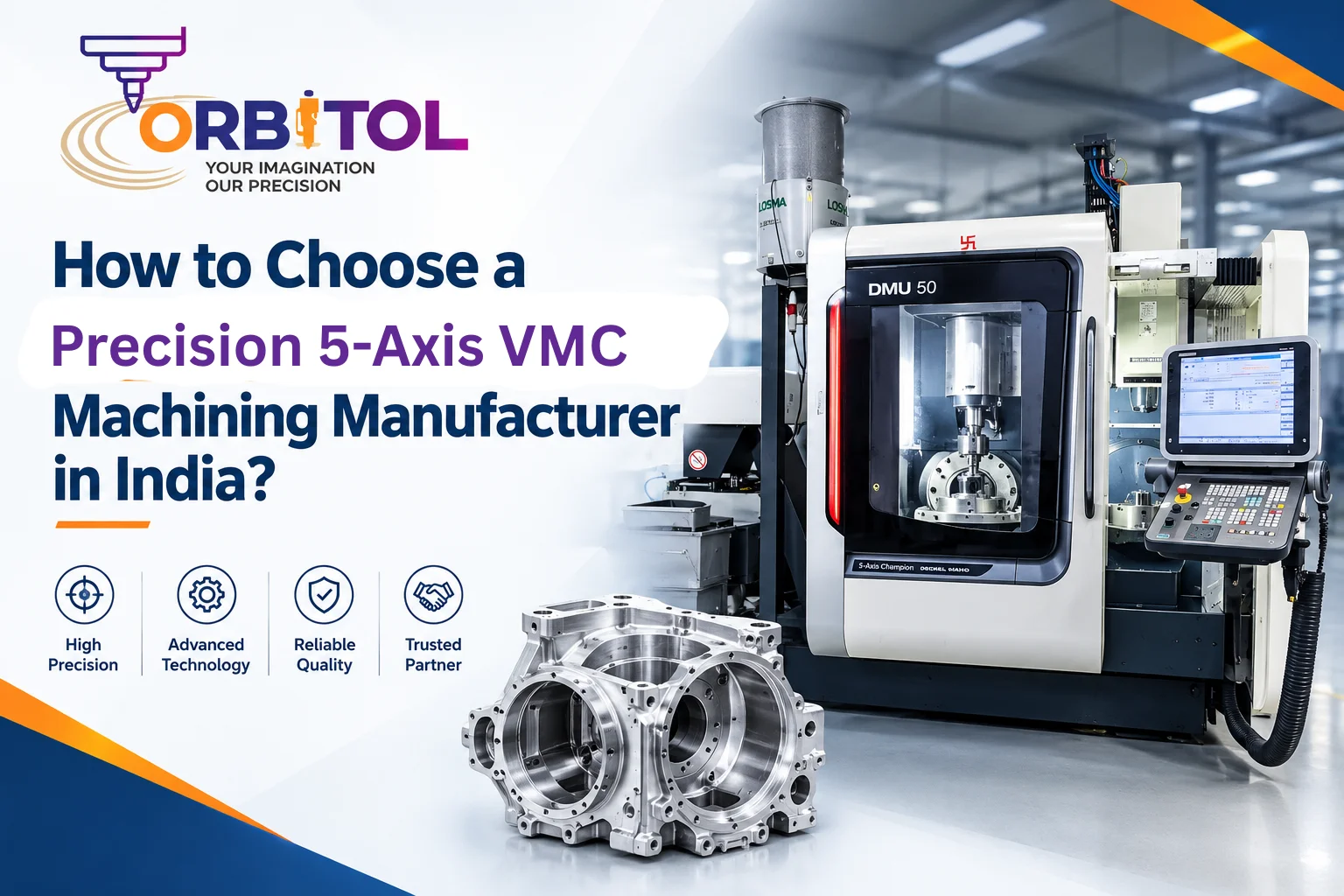
One of the major advantages of 5-axis machining is its ability to reduce the number of setups required for complex components. It can also provide better access to angled and multi-sided surfaces that may be difficult to machine using a conventional 3-axis VMC.
Thus, the number of setups can be significantly cut down in the case of complex parts. The five-axis machine is much more effective for getting a part with complicated surfaces containing angles because a five-axis machine allows working with those surfaces which are difficult to reach for a three-axis machine.
However, 5-axis machining is not necessary for every manufacturing project. For components with relatively simple geometries and accessible machining surfaces, a 3-axis VMC may provide the required accuracy and production efficiency at a lower overall machining cost.
The choice between 3-axis and 5-axis machining should depend on the component’s geometry, dimensional tolerances, production quantity, and overall machining cost. An experienced machining partner can evaluate these requirements and recommend the most suitable manufacturing approach.
6. How to Choose the Right VMC Machining Services
Selecting the right manufacturing partner is an important step in mould and die production. Factors such as machining capabilities, technical expertise, quality control procedures, and delivery timelines can significantly influence the final product quality and overall project performance.
When evaluating a machining service provider, start by understanding the capabilities of its machines. Check important specifications such as spindle capacity, machine working area, available cutting tools, and compatible materials. The selected machine should be capable of handling the dimensions, complexity, and precision requirements of your components.
Industry experience is another important factor when choosing a VMC machining service provider. An experienced manufacturer understands material behaviour, machining challenges, tool selection, and dimensional accuracy requirements. This expertise helps minimise production errors and maintain consistent component quality.
Quality control is one of the most important factors to consider when selecting a machining partner. Ask how the supplier measures and verifies component dimensions during production and whether inspection reports are available when required. A well-equipped manufacturing facility should have precision measuring instruments such as micrometers, height gauges, and bore gauges to verify component accuracy.
Effective communication is equally important throughout the manufacturing process. A reliable supplier should review engineering drawings, clarify technical specifications, discuss possible manufacturing limitations, and provide realistic delivery timelines. Clear communication helps prevent misunderstandings and ensures smoother project execution.
When comparing VMC Machining Services, businesses should not base their decisions solely on the lowest quotation. It is important to understand what the quoted price includes, such as raw materials, machining operations, finishing, quality inspection, and packaging. Comparing suppliers using the same engineering drawings and technical specifications provides a clearer understanding of their capabilities and overall value.
At Orbitol Intelligence, we believe that successful manufacturing decisions begin with a clear understanding of technical requirements. Evaluating machine capabilities, machining expertise, quality control procedures, and overall project value can help businesses select a suitable manufacturing partner for their mould and die requirements.
7. Conclusion
Three-axis VMC machining remains a vital part of mould and die production. From fabricating mould bases and inserts to machining holes, slots, pockets, and any other functional elements, it is able to handle multiple tasks at the same time.
The main benefits of this process are its versatility, repeatability and capability to produce components with high precision, provided that the right equipment and software for checking the quality of the component are applied. As for more complex designs, they may require special additional setups.
Choosing the right machining process and supplier requires careful attention to component design, material, dimensional requirements, production quantity, and budget.
At Orbitol Intelligence, we encourage businesses to take a practical approach to manufacturing decisions. Understanding the capabilities of 3 Axis VMC Machining and working with a technically capable machining partner can help improve production consistency and support reliable mould and die manufacturing.