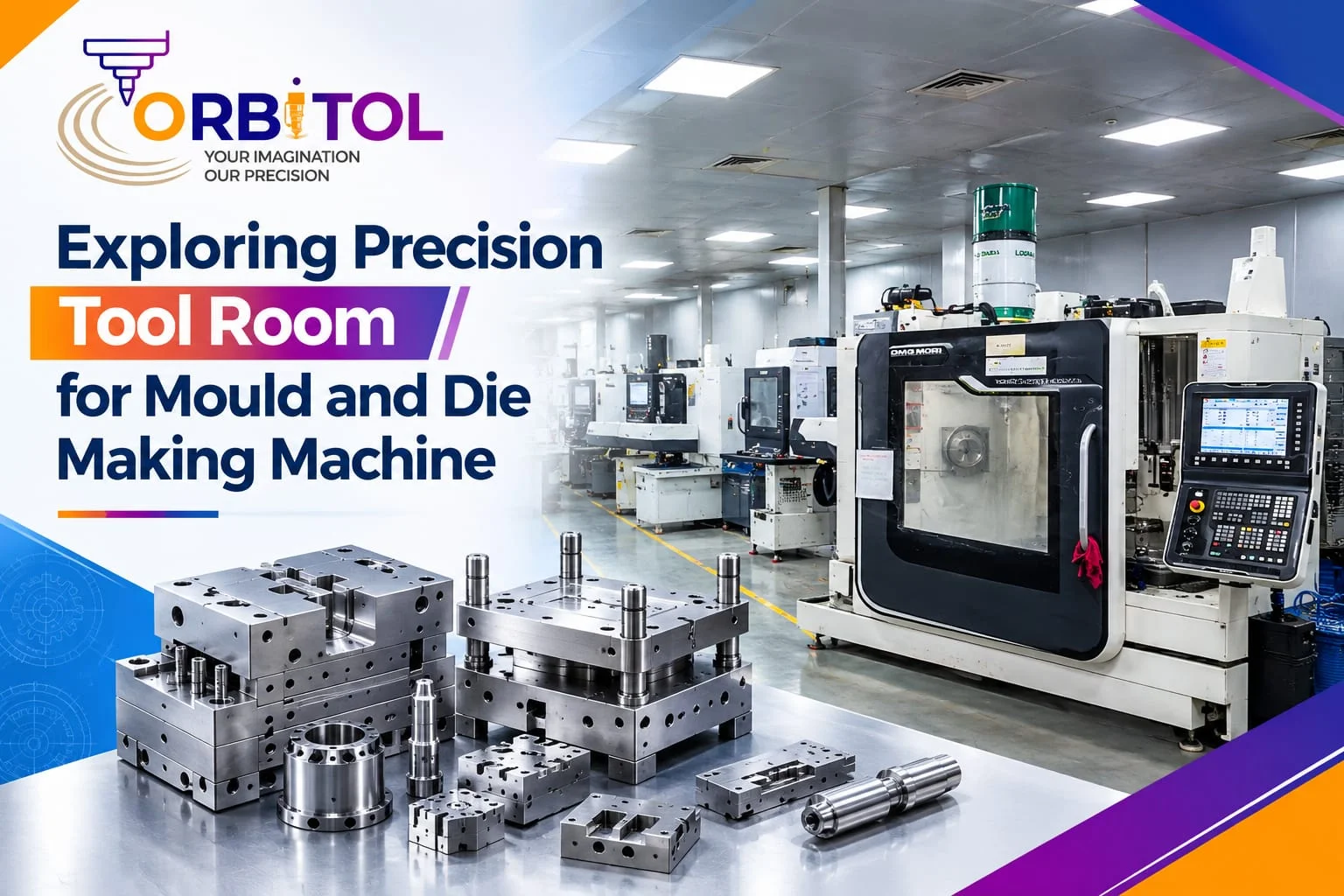
Tool Room in today manufacturing industry. Product quality depends not only material used but also on the accuracy of tools that shape it. For example automotive components and electrical housings to industrial plastic parts. Mould and die play an important role in producing component. With consistent dimensions and surface quality. Behind these tools is a specialized manufacturing facility known as a Tool Room.
A well-equipped Tool Room integrates knowledge in engineering. CNC, VMC, precision measurement, and working skills required to manufacture tool. According to particular design requirements. This ensures that manufacturers get good mould and die to ensure effective production and quality of components.
In the case of Injection Molding Manufacturers, the quality of the mould matters. When it comes to making the manufacturing process of plastics effective.
Accurate cavity dimensions, correct alignment, good surface finish. And well-manufactured mould components obtain importance in conditions of efficiency.
At Orbitol Intelligence. CNC and VMC capabilities assist in the precision manufacturing of tooling. Mould, dies, and customized engineered components.
Knowing how a Precision Tool Room works. Helps manufacturers in making good decisions. When it comes to the quality of tooling and the requirements for machining.
Table of Contents
- Understanding Precision Tool Room Manufacturing
- CNC and VMC Machining in Precision Tool Room Manufacturing
- Precision Tool Room Mould and Die Components
- Importance of Accurate Mould and Die Components
- How Orbitol Intelligence Supports Precision Manufacturing
- Conclusion
1. Understanding Precision Tool Room Manufacturing
The tool room is a production area in which tools. Moulds, dies, and components are produced. Unlike ordinary manufacturing companies. That produce similar types of products. A tool room focuses on the creation of customized products, and precise dimensions and designs are used for production.
Different tool rooms operate under different designs, dimensions, specifications, and therefore proper planning and techniques. Become very important during production.
Importance of a Precision Tool Room
A precision tool room helps to translate engineering drawings into products. The tool shape directly affects the shape. Of the products produced from this tool.
For instance, a mold used for plastics must possess very accurately drilled holes. Any small change in some important technical features of a mold. Can lead to changes in the shape of the final product.
A precision-focused tool room supports
Accurate manufacturing of mould cavities, cores, and tooling inserts.
Consistent dimensional control across critical mould and die components.
Better alignment and fitting of assembled tooling.
Reliable surface finishing for functional and appearance-related requirements.
Reduced effort required to maintain and modify molds. When design requirements change, which is crucial for injection molding industry since accuracy in making molds and the entire process affects the accuracy. Of final products made from plastic.
Good tooling process helps avoid unnecessary machining. Mistakes and incorrect operations in the future when manufacturing is almost finished.
From Engineering Drawings to Finished Tooling
Every job with the molds and dies starts with an agreed design of the part. That needs to be produced, including drawing, dimensions, material, function, etc. The engineers study the design and assess. Which machining processes have to be done to produce a mold or a die.
CAD/CAM data makes it possible to transform a design approved by the client into a direct instruction. On how to execute machining and tool selection.
During production, it is vital to check the important dimensions and surfaces in process every now and then.
The overall objective of a Precision Tool Room is to maintain the relationship. Between the original design, machining process, and final tooling requirements.
2. CNC and VMC Machining in Precision Tool Room Manufacturing
CNC and VMC machines are important manufacturing technologies for producing accurate tooling and complex machined components. They allow machining operations to be carried out according to programmed tool paths, engineering drawings, and specified dimensions.
In Mould and Die Manufacturing, CNC machining is used for operations such as milling, profiling, drilling, and producing accurately defined features. VMC machines are particularly useful for machining flat surfaces. Pockets, slots, cavity profiles, and other features on mould blocks and tooling components.
CNC Machining for Complex Tooling Features
CNC machining helps manufacture components. With controlled dimensions and repeatable machining movements. The machining program determines the tool path. Cutting sequence, and other operating parameters required for the job.
For mould and die applications. CNC machining may be used to manufacture:
Mould plates and cavity blocks.
Core inserts and precision tooling components.
Mounting features, pockets, and slots.
The components are produced by special order according to specifications of customers.
The machining strategy is based on the type of material used. Geometry of the component, finish of the surface of the component, and geometric tolerances of the component.
The choice of tool and cutting conditions is crucial for the outcome of machining. Incorrect tool selection or unsuitable cutting conditions can cause tool wear, surface irregularities, or dimensional variations. Therefore, careful process planning is essential when manufacturing critical tooling features.
VMC Machining for Mould and Die Components
Vertical machining centers (VMC) are commonly used for machining parts. Made of metallic blocks, plates, and geometrically complex components.
In mould manufacturing, VMC machining supports. The production of cavity features, core geometries, pockets, and mounting surfaces. Accurate work holding and proper machining references help maintain the relationship. Between different features on the component.
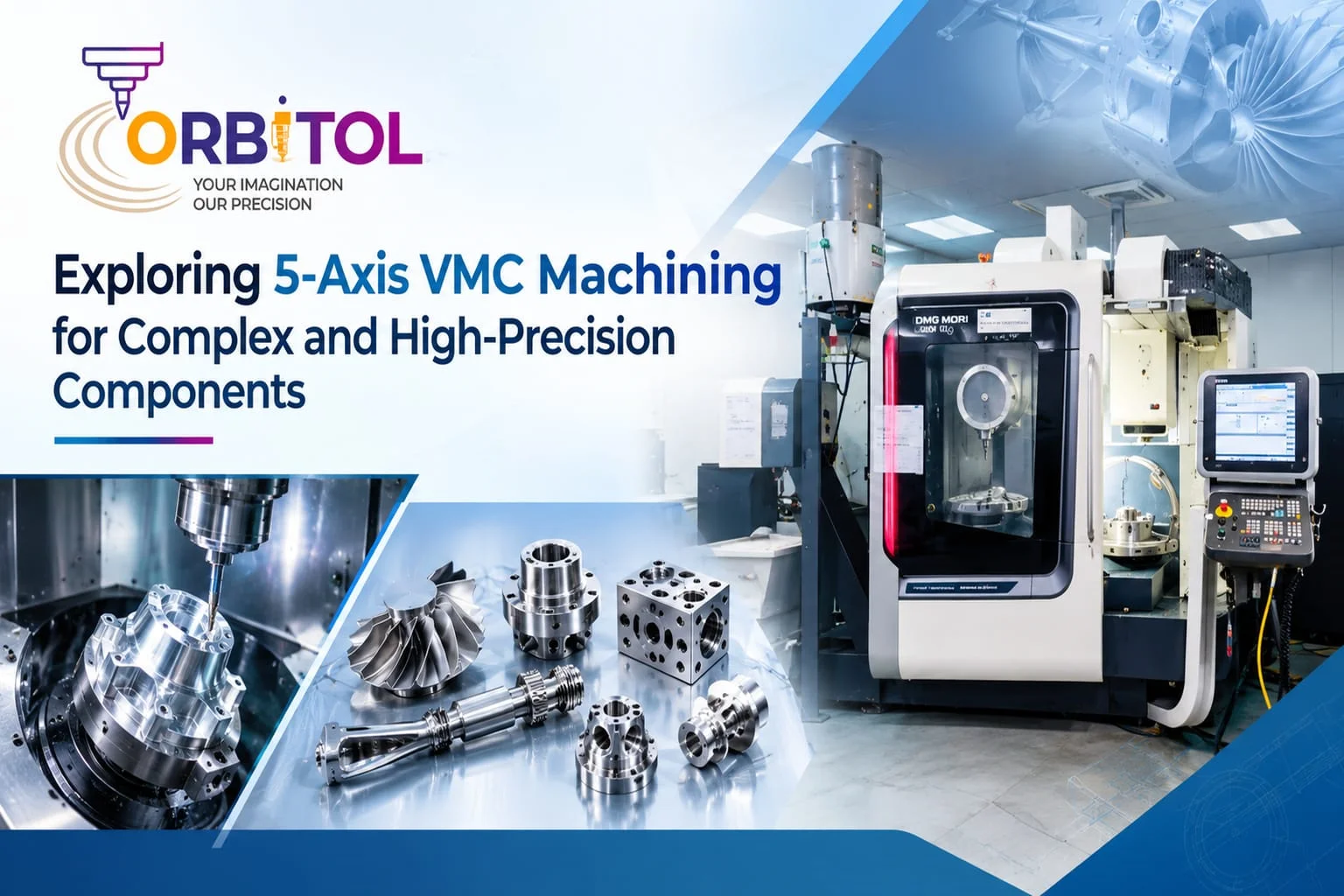
Orbitol Intelligence utilizes CNC and VMC machining capabilities for precision components. And tooling-related manufacturing requirements. The VMC DMG MORI DMU 50 is designed for machining geometrically. Complex shapes while the VMC DMG MORI 635 V ECOLINE is used for conventional machining.
With the help of a 5-axis VMC it is possible to rotate the tool and workpiece this being able to machine. Complex surfaces and shapes in one setting. Reducing the number of setups will improve the accuracy of machining.
This is especially good for making complicated shapes. Which have angles or have to be machined from several directions.
However, the accuracy of machining depends also on the way the workpiece is set up. The condition of the tool, the programming, calibration of the equipment, and material properties. Selecting suitable machining equipment is only one part of achieving the required result.
Supporting Operations
In the manufacturing of molds and dies, CNC and VMC machining are not the sole processes involved. Based on the design of the mold, the manufacturing process may also involve electrical discharge machining (EDM). Wire cutting, grinding, heat treatment, polishing, as well as fitting.
EDM becomes an important process for specific features and geometry. That may make it impossible to machine through cutting tools. Grinding supports the finishing of selected surfaces. Where flatness, dimensional control, or surface quality is important.
Heat treatment may be required to achieve specified material properties, depending on the tooling material and application. Because heat treatment can affect dimensions, subsequent finishing and inspection may be necessary.
The manufacturing sequence must be planned according to the specific tool design rather than following one fixed process for every project.
3. Precision Tool Room Mould and Die Components
Precision Mould Making is an important part of plastic component manufacturing. Plastic injection molds consist of molds having precisely designed cavities and cores that give the shape of the product. When molten plastic is poured into the mold and it cools, the mold design determines the final size of the part and its surface features.
Mould design and precision in machining are critical. For Injection Molding Manufacturers in the production of such parts.
How a Plastic Injection Mould Works?
A conventional injection mould has many features such as the cavity, core, runner system, cooling channels, and the ejection mechanism among others. Each of these parts has its function in the fabrication of the moulded part.
The design of these features depends on the shape of the product. Type of plastic used, its expected quantity, and the type of plastic injection machine.
For instance, a component with convoluted ribs, bosses or internal features may have to use a core. With specific geometry and proper arrangements for ejection. If the mould is not designed and created according to the needs of the product, problems such as dimensional inconsistency, improper filling or difficulty of release could arise.
This is why the design, machining and inspection of the tool. Must work hand in hand throughout the process of development.
Why Mould Accuracy Matters to Injection Molding Manufacturers
Molding manufacturers rely on mould. That can produce components repetitively as per approved drawings and specifications. Accurate cavity dimensions, proper alignment of the mould, and adequate surface finish all play a role in ensuring consistent production of components.
The following factors are especially important:
Dimensional accuracy: Critical mould dimensions must correspond to the component drawing, taking the plastic material’s shrinkage and other process considerations into account.
Surface finish: The finish of the mould surface can influence the appearance and surface characteristics of the moulded product. Polishing and finishing requirements depend on the application and desired result.
Cooling arrangement: Cooling channel placement and design influence heat removal and temperature distribution. Appropriate cooling design can support more consistent moulding conditions and cycle efficiency.
Mould alignment: Correct alignment between the mould halves, cavity, core, and other components. Helps achieve proper closing and component formation.
Ejection system: Properly designed ejector arrangements help release moulded components. While reducing the risk of damage during ejection.
Each factor must be considered according to the material, mould design, and operating conditions. No single machining operation can guarantee mould performance. Without suitable design, assembly, process settings, and validation.
Selecting Tooling for Different Plastic Components
Different industries require plastic components. With different geometries, material properties, and dimensional requirements.
Automotive applications may include interior components, housings, covers, and functional plastic parts. Electrical and electronics applications may require enclosures, connectors, and protective housings. Industrial applications can include machine covers, fittings, and other engineered plastic components.
The mould design and manufacturing process. Must reflect the requirements of the finished component.
A suitable tooling solution begins. With reviewing the product drawing, understanding the intended application, and selecting appropriate mould materials and manufacturing processes. This helps establish a practical machining plan. And supports the development of tooling suited to the intended production requirements.
4. Importance of Accurate Mould and Die Components
A mould or die is an assembly of multiple components that must work together accurately. The performance of complete tool depends not only on main cavity or die profile but also accuracy and fit of its individual components.
Mould and Die Components. Can include cavity blocks, core inserts, guide pillars, guide bushes, ejector pins, plates, inserts, and other functional elements, depending on the tooling design.
Each component has specific dimensional and functional requirements. A guide component, for example, must maintain the required alignment between mould sections. An ejector pin must fit and move correctly within its designated position. A cavity insert must match the approved geometry and fit into its housing as specified.
Even when individual components appear correct, incorrect assembly or misalignment. Can affect the operation of the complete tool.
Dimensional Inspection and Quality Control
Inspection is an essential part of precision manufacturing. Measuring components during and after machining helps confirm. Whether critical dimensions and geometric features meet the drawing requirements.
Depending on the component, inspection may involve precision. Measuring instruments, gauges, micrometers, bore gauges, and other suitable measurement equipment.
Important inspection considerations include
· Checking critical dimensions against approved engineering drawings.
· Verifying hole positions, depths, and feature relationships.
· Inspecting machined surfaces and edges for visible defects.
· Confirming component fit and alignment during assembly.
· The inspection method should be appropriate to the required tolerance and component geometry.
For example, a critical bore or locating feature may require more detailed measurement than a non-functional external surface. Similarly, the inspection of a complex profile may require suitable specialized measurement equipment.
A documented inspection approach helps identify deviations and supports. Consistent manufacturing practices.
Maintaining Tooling Performance
Tooling may experience wear, surface damage, or changes in performance during repeated production cycles. Consistent checking and due maintenance support the detection of problems before. They cause substantial damage to the quality of components.
Maintenance operations depend on the operating condition and the design of the tooling. And may require cleaning, polishing, and changing worn parts as well as repairing damaged surfaces and measuring dimensions.
When the product design is modified or the results of the tests show that changes are necessary, it may be needed to change the mould.
For Injection Molding Manufacturers, maintaining tooling in suitable working condition. Supports production continuity and helps reduce avoidable interruptions. The maintenance interval depends on the mould design, material being processed, production volume, operating conditions, and tool condition.
A well-maintained mould, combined with suitable machine settings and process control, can help maintain consistent output over its intended service life.
5. How Orbitol Intelligence Supports Precision Manufacturing
Orbitol Intelligence focuses on CNC and VMC machining. Precision components, mould and die manufacturing, and tool room-related manufacturing requirements. Its machining capabilities support customers. Who require components manufactured according to engineering drawings, specified dimensions, and application-specific requirements.
With CNC and VMC machining, Orbitol Intelligence. Supports the production of precision-machined components used in tooling and industrial manufacturing applications.
CNC and VMC Machining Capabilities
Orbitol Intelligence operates the DMG MORI DMU 50 5-axis VMC and DMG MORI 635 V ECOLINE 3-axis VMC. These machines support different machining requirements. From conventional milling operations to complex geometries requiring multiple tool orientations.
The DMU 50 supports machining strategies for components. With complex features, while the 635 V ECOLINE is suitable for a range of conventional VMC machining requirements.
These capabilities are relevant to the manufacture of precision components. Tooling elements, and custom-machined parts where dimensional control and suitable surface finishing are important.
Supporting Mould and Die Manufacturing Requirements
Meeting the Demands in Mould and Die Manufacturing. To achieve successful Mould and Die Manufacturing, coordinated efforts in engineering drawings, material choice, machining, and inspection are paramount.
Orbitol Intelligence uses the advantages of precision machining and tooling-based production. For the benefit of its clients searching for machining options concerning moulds, dies, and customized parts.
Every project has its peculiarities. Parts Component geometry, material, tolerances, and intended application determine the machining approach and inspection needs. By considering these factors during manufacturing planning, the aim is to produce components. That meet the specified requirements.
For manufacturers looking for CNC and VMC machining support, Orbitol Intelligence provides a manufacturing resource for precision components and tooling-related applications.
Conclusion
The Tool Room. Which specializes in precision machining, is very valuable for the manufacturing of precise mould, die, and tooling products. The Tool Room takes part in producing the final tool at every stage. Starting from engineering drawings and finishing with dimensional quality evaluation.
In Injection Mold Manufacturing, accurate mould cavities, orientated elements, acceptable cooling systems. And trustworthy ejection systems are extremely significant.
CNC and VMC machining technologies support the production of complex. Tooling features and precision components, while careful inspection and maintenance help maintain tooling performance throughout its working life.
Orbitol Intelligence supports precision manufacturing requirements. Through its CNC and VMC machining capabilities, mould and die-related manufacturing, and precision component production.
By combining suitable machining processes. With engineering knowledge and attention to dimensional requirements, manufacturers can develop tooling solutions. That support dependable production and consistent component quality.