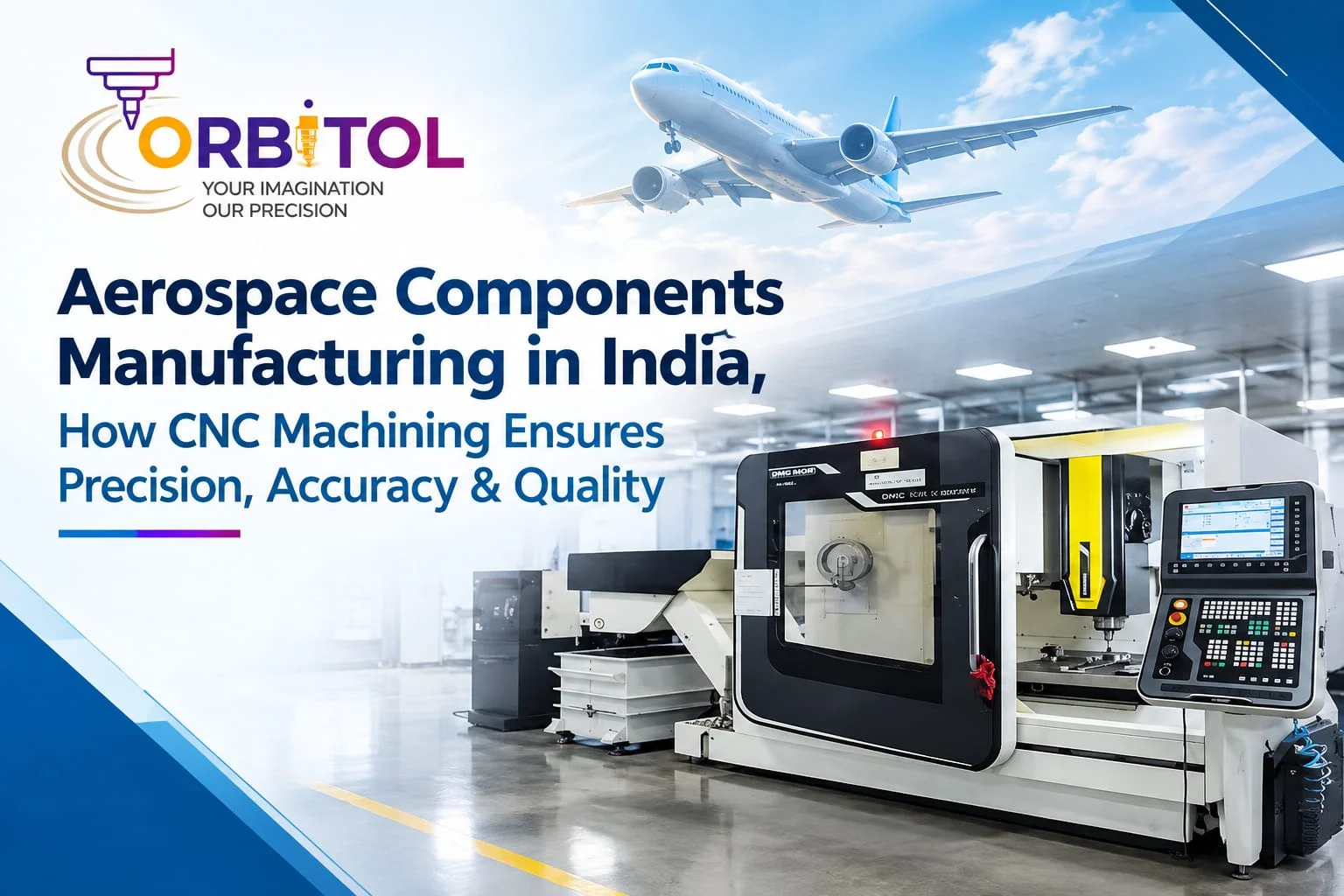
Aerospace Components Manufacturing places great importance on precision as the parts must operate as expected in extreme conditions. In aircraft and aerospace management, many components have complicated shapes. However, they also have to be manufactured according to strict dimensional standards.
A small discrepancy in the dimension of an important component may change the way it interacts. With another component or how force is transmitted. Because of this, Aerospace Components Manufacturing requires carefully controlled machining processes from design and programming through production and inspection.
This is where CNC technology plays an important role.
CNC machining allows machines to make cut through programming. Using the right tools, machine settings, and the right work piece and the inspection, CNC machining can yield aerospace components with complex shapes.
For manufacturers, the goal is not only to create the component based on the drawing. It has to achieve the required shape, tolerance, surface quality, and material condition.
At Orbitol Intelligence, aerospace manufacturing is supported by 3-axis and 5-axis CNC/VMC machining, Swiss-type machining and precision-focused quality processes. The company lists aerospace among the industries served by its manufacturing facility.
Role of CNC Machining in Aerospace Parts Production
CNC machining has become an important manufacturing process for producing components. With complex shapes and controlled dimensional requirements.
Unlike manual machining, CNC equipment follows computer-generated instructions to control tool movement. Spindle operation and machining sequences. Once a machining program and setup have been properly verified, the same process can be repeated across multiple components.
This repeatability is particularly valuable in Aerospace Parts Manufacturing. Where components may need to maintain consistent dimensions throughout a production batch.
Complex Geometry
Curved surfaces, pockets, angled surfaces, thin areas, holes, and other complex geometries may be present in aerospace components.
The production of those features can be a challenge. Especially in conventional machining methods.
CNC machining allows for controlled movements along different axes, letting cutting tools to cut multiple locations of the item depending on the geometry given by programming.
Controlled Material Removal
Aerospace components often need material removed from a solid workpiece while maintaining specific dimensions.
CNC machining allows engineers to define how material is removed through programmed toolpaths. Roughing operations can remove larger amounts of material. Followed by finishing operations designed to achieve the required final geometry and surface condition.
Repeatable Production
Once the process has been established, CNC machining. Can repeat the programmed sequence for additional components.
These movements eliminate inconsistencies between produced items caused by manual positioning.
For Aerospace CNC Machining processes, the point of repeatability is particularly important. When multiple parts should function together in one assembly.
How 5-Axis Machining Handles Complex Aerospace Geometries
Numerous parts and components utilized in the aerospace industry. Have design features that can be quite complicated to produce through regular machining methods applied on a 3-axis milling machine.
Nonetheless, this is where 5-axis VMC machining comes into play.
Generally, a 3-axis CNC milling machine can operate through the movement along the X, Y and Z axes. However, it is the 5-axis VMC machine that supplements the 3-axis machine. With rotation of the workpiece so that it can be processed from different angles.
This can make it easier to machine
Complex profiles
Compound angles
Curved surfaces
Undercuts
Blades and impeller-type geometries
Fewer Setups Can Support Better Accuracy
One of the main advantages of multi-axis machining is that it makes. It possible to perform processing of numerous features without recurrent disassembly of the work piece.
Every additional setup introduces another opportunity for alignment variation.
With suitable 5-axis machining, more features can be produced while the component remains securely positioned.
This is particularly valuable in Aerospace Precision Machining. Where the relationship between multiple surfaces and features can be critical.
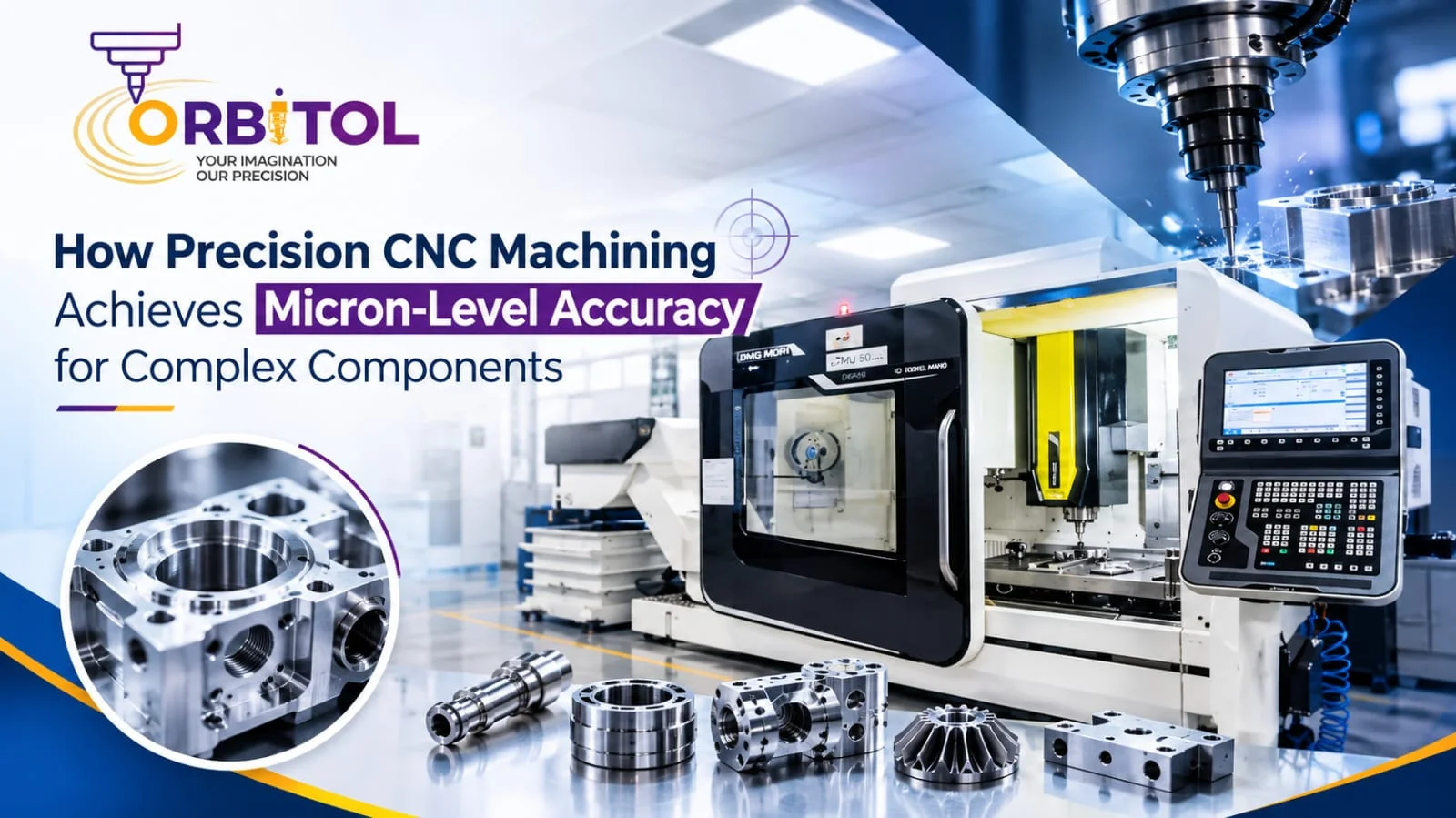
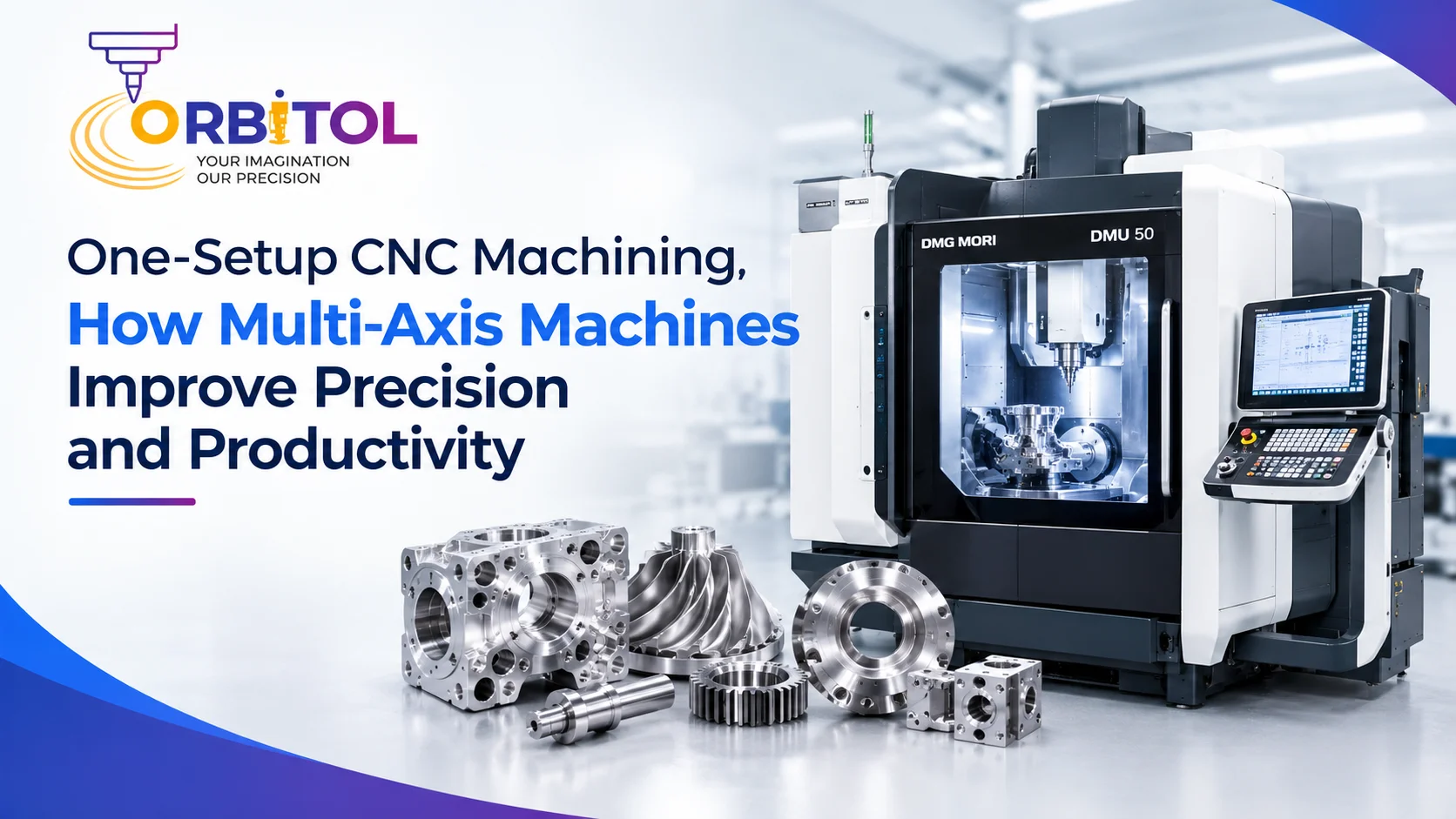
Orbitol Intelligence DMG MORI DMU 50 is listed as a true 5-axis VMC. With capabilities including undercuts, compound angles, freeform surfaces, one-setup machining and high-speed machining. Its listed applications include aerospace, medical, automotive and mould-and-die work. With components such as turbine blades and other complex parts.
The company’s technical capabilities also include 5-axis CNC machining. For one-setup precision on complex geometries.
Materials Used in Aerospace Components Manufacturing
Material selection is an important part of aerospace component production.
Different aerospace applications require different combinations of strength. Weight, durability, temperature resistance and corrosion resistance.
Commonly machined materials can include aluminium, stainless steel, titanium and specialized engineering materials.
Aluminium
Aluminium is widely used where low weight and suitable mechanical properties are important.
Its relatively low density makes it useful for various structural and machined aerospace applications.
However, in order to obtain a required surface finish and dimensioning. It is necessary to select suitable cutting tools and machining parameters.
Titanium
The great advantage of titanium is its strength-to-weight ratio. It is also perfect for production of durable products.
Nevertheless, titanium cutting process requires thorough control. As overheating and wrong conditions may cause rapid wear of the tool.
A suitable machining strategy is therefore important. When manufacturing titanium CNC Aerospace Parts.
Stainless Steel and Other Engineering Materials
Stainless steel and other engineering materials. May also be selected according to component requirements.
Different materials respond differently to cutting forces, heat and tooling. Therefore, Aerospace Machining must be adapted to the material rather than relying on one universal machining strategy.
Orbitol listed 3-axis VMC capability includes aluminium, stainless steel, tool steel, titanium and composites.
How CNC Machining Maintains Accuracy and Repeatability
Accuracy of aerospace manufacturing does not depend only on CNC machinery.
It is the result of multiple controlled factors working together.
Machine Capability
The machining center needs to be appropriate for a given part’s size, shape, material and tolerances.
As an example, intricate aerospace parts may use a 5-axis machine. While suitable prismatic parts can very well be manufactured using 3-axis machining systems.
Orbitol listed DMG MORI 635 V ECOLINE 3-axis VMC. Has a stated tolerance capability of ±5 microns and a listed surface finish of Ra 5 microns.
Tool Selection
Cutting tools directly affect machining performance.
The correct tool geometry, material and cutting edge condition. Can help control cutting forces, heat generation and surface finish.
Tool wear also needs to be monitored because a worn cutting edge can gradually affect component dimensions.
CAD/CAM Programming
Complex aerospace geometries require accurate toolpath generation.
CAD/CAM software translates the component design into machining instructions that control tool movement.
Orbitol lists Solid CAM and Siemens among its programming technologies for advanced machining applications.
Accurate programming helps ensure that the cutting tool follows the intended geometry while reducing unnecessary movements and machining errors.
Work holding and Setup
Even a highly capable CNC machine can produce dimensional variation if the work piece is not positioned securely.
A suitable fixture or work holding arrangement helps maintain component stability during machining.
For complex components, reducing the number of setups can also reduce the possibility of cumulative positioning errors.
Controlled Machining Conditions
Feed rate, spindle speed, depth of cut and other aspects influence the process of machining.
Those parameters must be selected in accordance. With the machine material, tool and geometry.
Together, machine capability, tooling, programming, setup and process control create the foundation. For repeatable Aerospace Components Manufacturing.
Quality Control in Aerospace Precision Machining
Producing a component accurately is only part of aerospace manufacturing.
The finished component also needs to be checked against its engineering requirements.
Quality inspection can verify dimensions, geometry, surface characteristics and other specified parameters.
For precision components, inspection can take place during different stages of production rather than only after the machining process is complete.
In-Process Quality Control
In-process inspection can help identify dimensional deviations before a component reaches the final stage.
This allows manufacturing teams to identify process variation and make appropriate adjustments.
Final Inspection
Final inspection confirms whether the completed component meets the specified requirements.
Depending on the component, inspection can include dimensional measurement, geometry verification and surface-finish evaluation.
Process Consistency
Quality is not simply about inspecting one successful component.
For Aerospace Precision Machining, the manufacturing process should be capable of producing consistent results across the required production quantity.
Orbitol Intelligence states that its facility uses precision inspection capabilities, real-time quality monitoring and controlled manufacturing processes. Its facility information also describes a 20,000 sq. ft. air-conditioned production floor and a precision-oriented manufacturing environment.
The company’s technical capabilities page lists in-process quality control using laser and vision systems as part of its manufacturing approach.
Applications of CNC Aerospace Parts
CNC machining can be applied to a wide range of aerospace components. Depending on their design, material and manufacturing requirements.
Turbine Blades and Complex Blades
Turbine blades contain complex curved surfaces. that require controlled multi-axis tool movement.
5-axis machining can provide access to these surfaces. While reducing the number of setups required.
Orbitol specifically lists turbine blades among the components manufactured. Using its 5-axis DMU 50 capability.
Aerospace Brackets and Structural Parts
Brackets, mounts and structural components may contain pockets, holes, angled surfaces and lightweighting features.
CNC machining can facilitate the removal of materials. With precise accuracy according to the programmed geometric shape and keeping in mind the necessary dimensions.
Jigs and Fixtures
When manufacturing components for the aeronautics sector. You will need highly accurate jigs and fixtures to hold parts when either assembling or machining them.
A precise set of previously machined tools. Can ensure the accurate positioning of an object during production.
Orbitol lists jigs and fixtures among the products supported by its machining capabilities.
Pins and Small Precision Parts
Some aerospace assemblies require relatively small components with controlled dimensions.
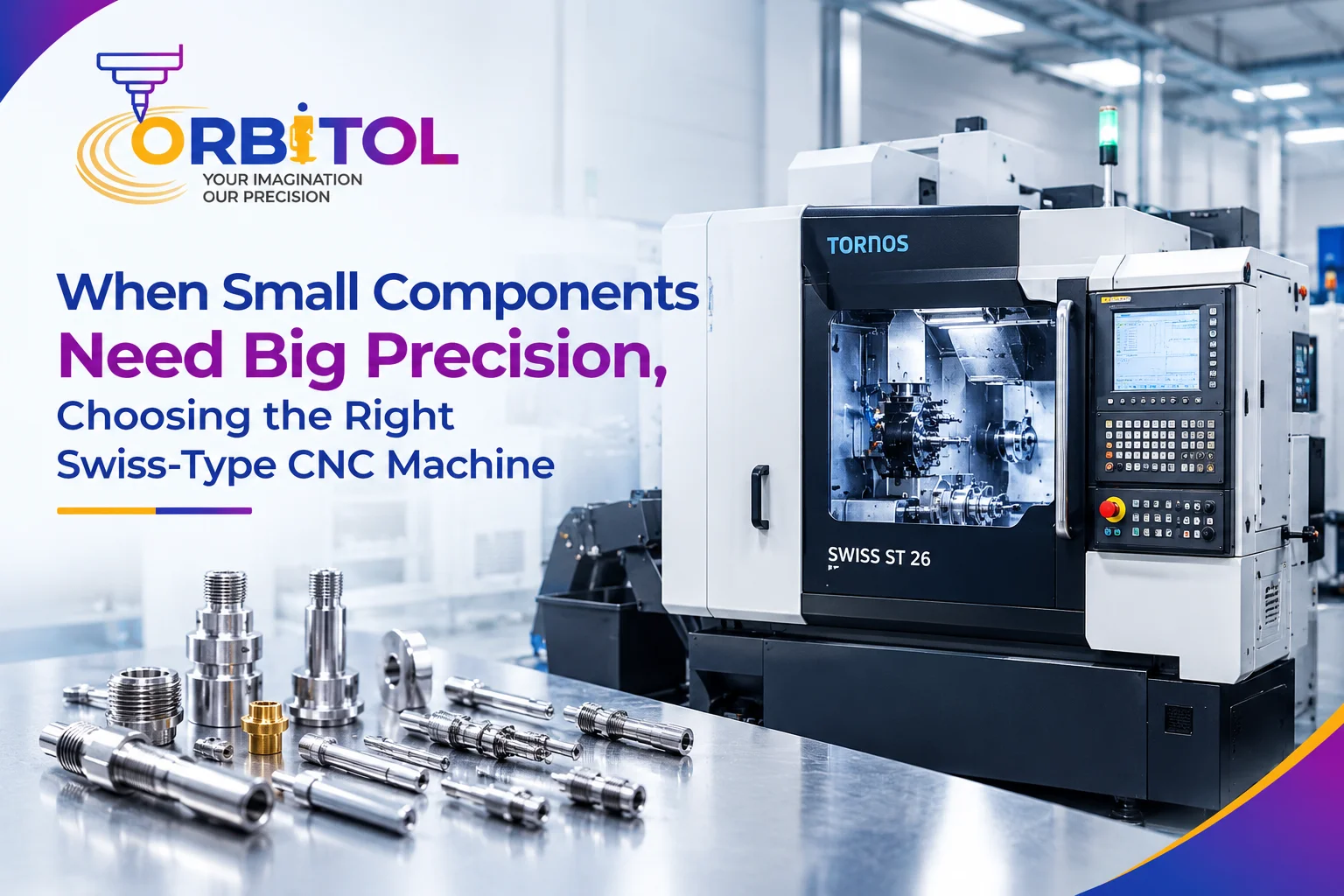
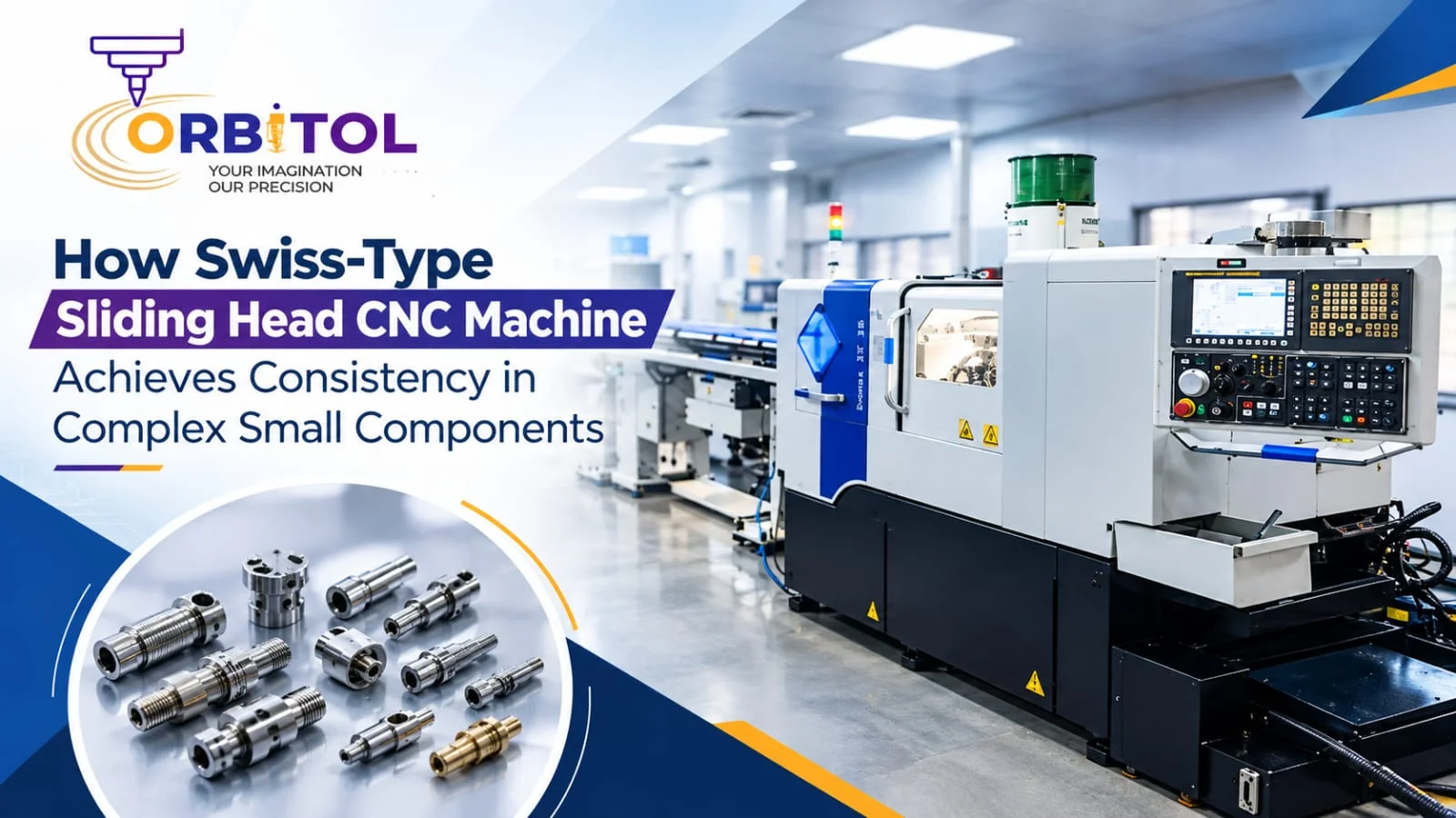
Swiss-type machining can be particularly useful for producing small, cylindrical precision components.
Orbitol DMG MORI SPRINT 20/8 is listed as a Swiss-type sliding-head machine. With applications including aerospace pins and an accuracy capability of 5-micron tolerance.
These examples demonstrate. Why Aerospace Machining cannot be treated as a single machining process. Different components may require different combinations of milling, turning, multi-axis machining and precision inspection.
Aerospace Components Manufacturing at Orbitol Intelligence
Choosing the right manufacturing partner is an important consideration when developing aerospace components.
The manufacturer needs suitable machines, experienced engineering resources, controlled production processes and inspection capabilities that match the requirements of the component.
Orbitol Intelligence owns a precision manufacturing plant that deals. With CNC/VMC, 5-axis, Swiss-type and several other technologies.
The company’s equipment includes the DMG MORI DMU 50 5-axis vertical machine center, DMG MORI 635 V ECOLINE 3-axial vertical machine center, and DMG MORI SPRINT 20/8 Swiss sliding-head lathe.
The DMU 50 allows for carrying out 5-axis machining operations. On complex profiles and complicated angles, undercuts, and freeform surfaces.
The company lists aerospace applications including turbine blades and complex components for this capability.
For suitable components, the 3-axis VMC provides another machining route. The DMG MORI 635 V ECOLINE is listed for aerospace components as well as moulds, dies and other precision applications.
For smaller cylindrical components, Orbitol Swiss-type machining capability. Adds another option. The SPRINT 20/8 is listed with applications including aerospace pins.
Orbitol considers aerospace and defence as one of the most precise manufacturing sectors and states. That its solutions in aerospace include precision dies, tooling for aviation assemblies and core parts.
The facility includes Swiss and CNC machining units complemented by precision inspecting, heat treatment, rapid prototyping and real-time monitoring facilities.
From complex 5-axis components to smaller precision parts. The manufacturing strategy needs to begin with the engineering requirement and then select the appropriate machining process.
Conclusion
Aerospace Components Manufacturing requires a controlling way of work. Since aerospace components include complicated geometries, tough materials and dimensional accuracy.
CNC machining offers the level of control and precision necessary for manufacturing such components.
3-axis VMC machining is used to manufacture precision components, while five-axis machining can be used to make complicated surfaces and shapes such as undercut objects. Swiss-type machining allows smaller components to be produced according to strict standards.
The quality of CNC Aerospace parts doesn’t only depend on the operations of the machines. Cutting tool selection, CAD/CAM, work holding components used, cutting parameters, and cooling methods are considered in terms of achieving high-level quality of aerospace machined components.
The conformance to established tolerances and how all the parts are manufactured should be equal to those of the first one in aerospace machining.
At Orbitol Intelligence, aerospace manufacturing is supported by 3-axis and 5-axis CNC/VMC machining. Swiss-type machining, precision inspection and complementary manufacturing capabilities. The company lists aerospace components, turbine blades, aerospace pins, jigs, fixtures and other complex parts among its machining applications.
As aerospace designs become increasingly complex, the ability to combine advanced machining technology. With controlled production and inspection becomes increasingly important.
The result is a manufacturing process focused not only on producing an aerospace component. But on producing it with the accuracy, repeatability and quality required by its engineering application.