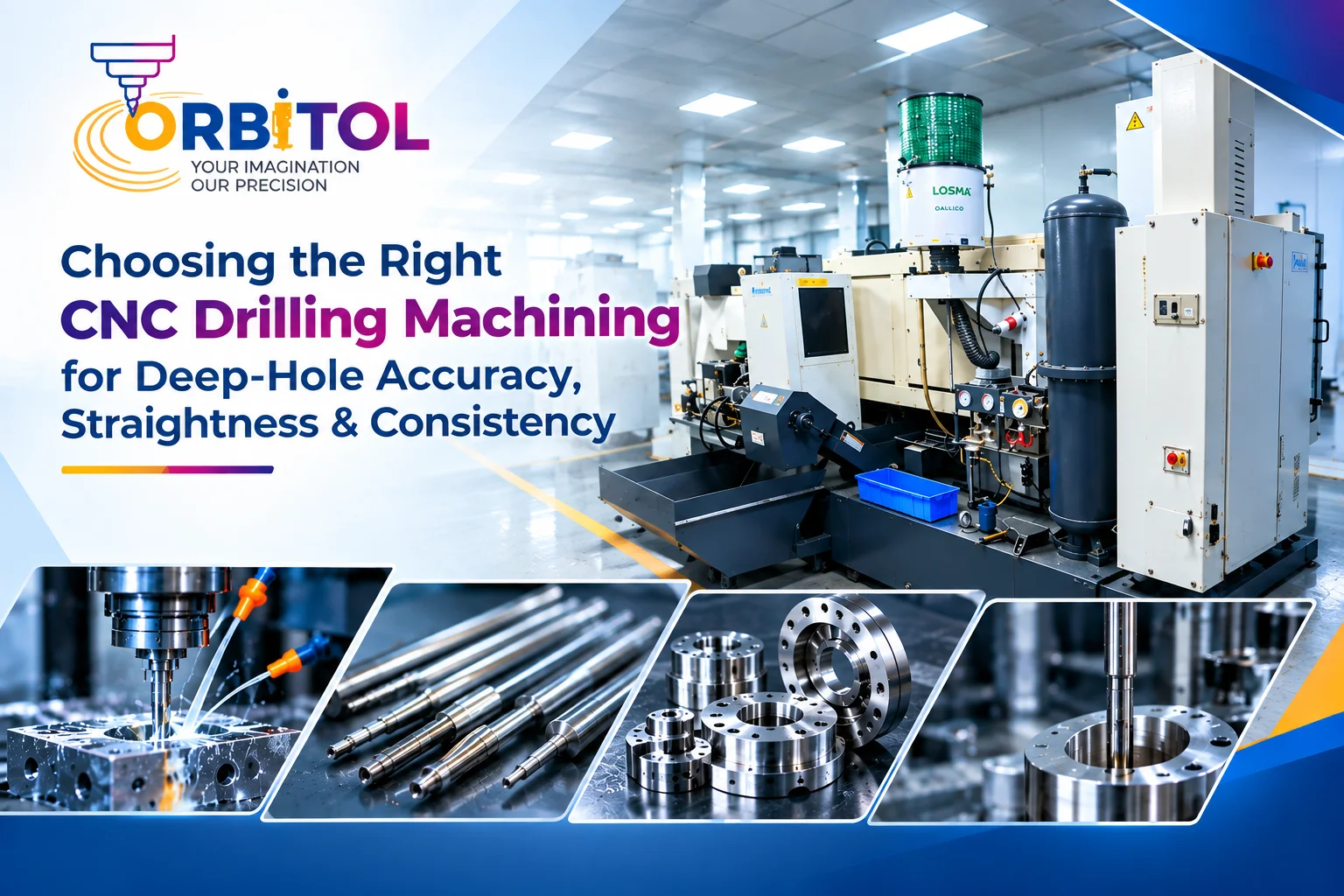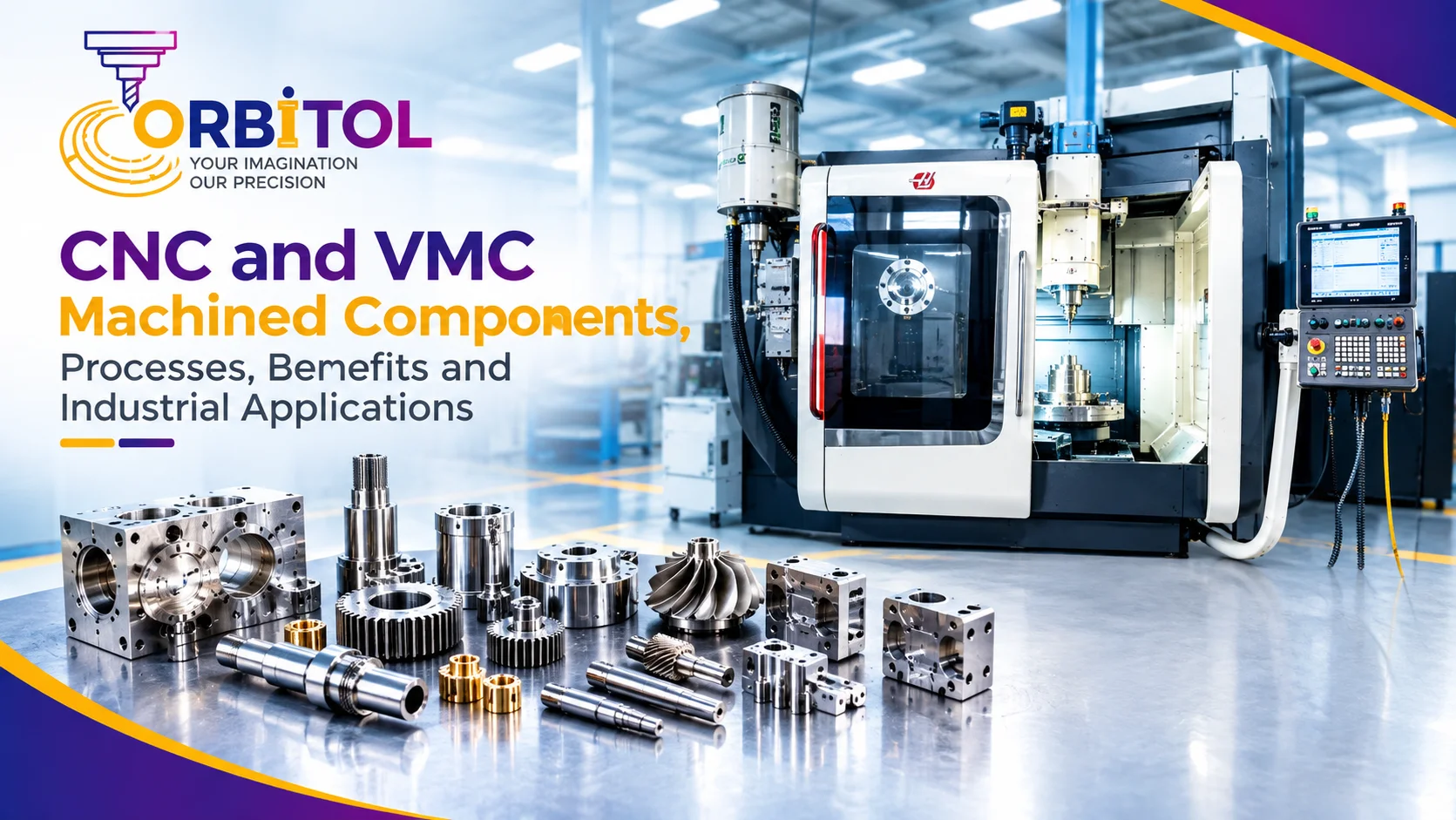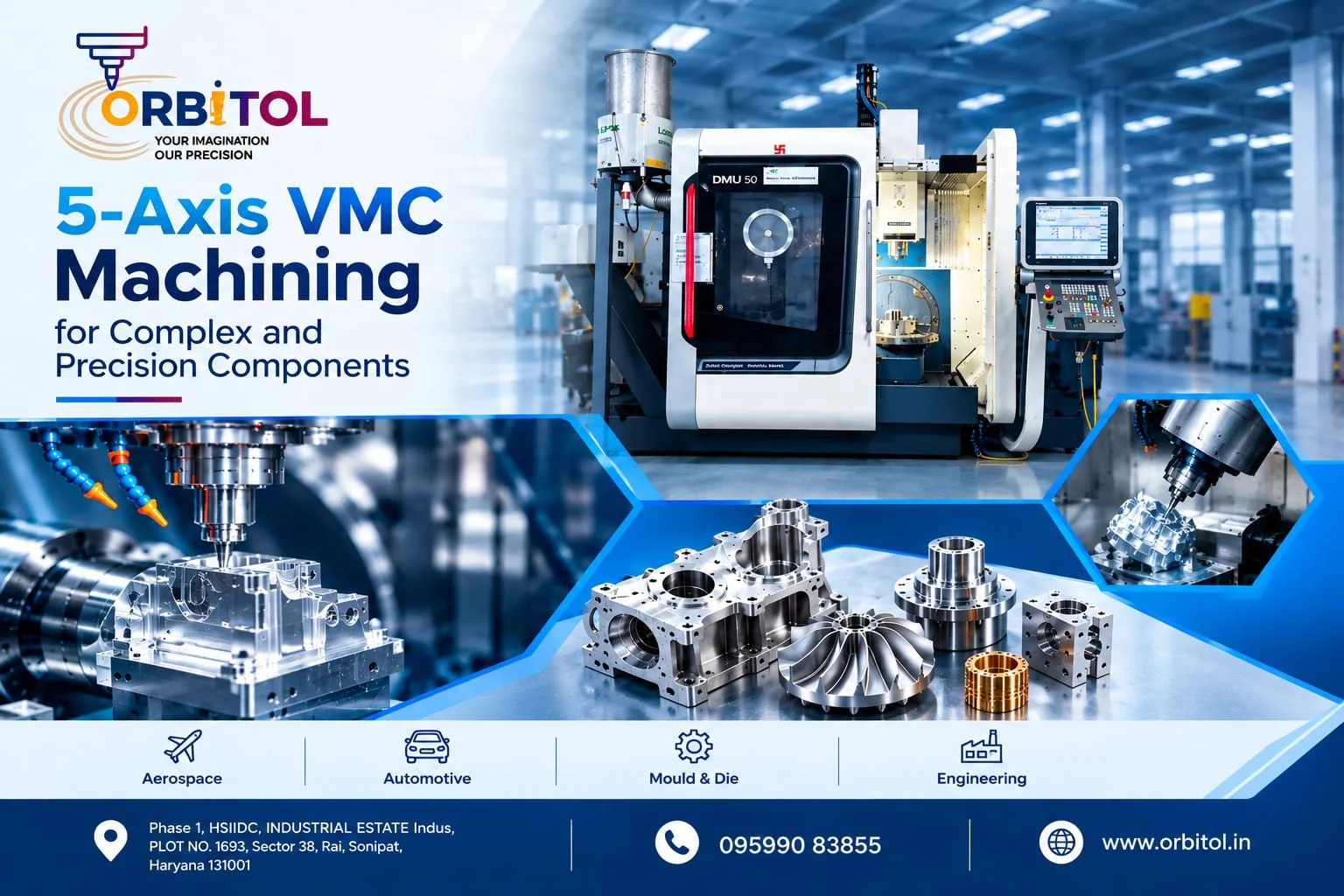
Choosing the right CNC Drilling Machining is essential when manufacturing components that require deep holes with accurate dimensions, straightness and consistent results. Machine capability, spindle performance, tooling, work holding, and cutting parameters all influence the final hole quality.
A suitable CNC Drilling Machining should provide stable cutting conditions and precise tool movement throughout the drilling operation. Proper tooling selection helps control hole diameter, depth, surface finish, and straightness. While effective coolant delivery supports temperature control and chip removal.
Table of Contents
- Why Deep-Hole Drilling Requires the Right Machine
- What Is a CNC Drilling Machining?
- When a Gun Drilling Machine Is the Right Choice
- How CNC Gun Drilling Machine Technology Improves Hole Accuracy
- Key Factors for Deep Hole Machining
- CNC Drilling Machining vs CNC Milling Machine
- Applications of Precision Drilling
- Orbitol Intelligence: CNC Gun Drilling Capability
- Conclusion
1. Why Deep-Hole Drilling Requires the Right Machine
Not every hole can be produced accurately with a conventional drilling setup.
When a component requires a long, narrow hole with controlled diameter, straightness and surface finish, the machining process becomes considerably more demanding. As hole depth increases in relation to its diameter, drill deflection, chip evacuation, heat generation and tool stability become increasingly important.
This is why selecting the right CNC Drilling Machining is essential for applications involving deep and precise holes.
A standard drilling process may be suitable for relatively shallow holes. However, deep-hole applications require a machining system designed to maintain tool guidance and cutting stability throughout the drilling cycle.
This is where Deep Hole Machining and specialized gun drilling technology become valuable.
A properly selected machine can help manufacturers achieve
– Accurate hole diameter
– Improved straightness
– Consistent hole depth
– Controlled surface finish
– Repeatable production
The machine itself is only one part of the process. Tool selection, coolant delivery, work piece alignment, machine rigidity and cutting parameters all contribute to the final result.
For manufacturers producing precision components, choosing equipment according to the actual hole geometry and tolerance. Requirement is therefore more important than simply selecting a machine based on drilling capacity.
2. What Is a CNC Drilling Machine?
CNC Drilling Machines leverage computerized movement in the creation of holes according to programmed dimensions and coordinates.
Through CNC control, a machining cycle is programmed instead of being performed entirely through manual control. This is quite convenient in instances when various parts have to be produced with similar properties.
For general drilling requirements, CNC equipment can provide controlled
– Tool movement
– Spindle speed
– Feed rate
– Drilling depth
– Positioning
However, deep-hole drilling presents additional challenges.
As the drilling depth increases, a conventional drill can experience deflection. Chips also need to be removed efficiently from the hole, while heat generated during cutting needs to be controlled.
If these factors are not managed properly, the resulting hole may suffer from
– Diameter variation
– Hole wandering
– Poor straightness
– Rough internal surfaces
– Tool wear or breakage
In this case, one shouldn’t assume that an ordinary CNC Drilling Machine can be employed for all deep-hole operations.
Examination of the depth-to-diameter ratio, tolerance, material, hole geometry, and output volume is needed to correctly select the equipment.
3. When a Gun Drilling Machine Is the Right Choice
A Gun Drilling Machine is a specialized machining system designed for producing deep, relatively small-diameter holes with high levels of straightness and dimensional control.
What makes gun drilling different from conventional drilling is that this technique was developed to tackle problems that arise in the process of working with deep holes.
One of the most prominent features is delivering coolant under controlled conditions.
The use of coolant under high pressure makes it possible to cool down. The cutting area and remove chips from the hole during the gun drilling process. The proper removal of chips is extremely important while drilling deep holes, as chips that accumulate in the hole can hinder the cutting process.
The tool is specially designed to keep proper direction in drilling.
This combination of specialized tooling, machine control and coolant management makes gun drilling suitable for components. Where hole straightness and consistency are important.
When should you consider gun drilling?
A Gun Drilling Machine becomes particularly useful when a component requires:
Deep and narrow holes
When the hole is significantly deeper than its diameter. Conventional drilling can become difficult to control.
High straightness
Long holes must remain close to the intended centerline throughout their depth.
Tight dimensional requirements:
Critical components may require controlled hole diameter and repeatability.
Consistent production
When multiple components require the same deep-hole geometry, CNC control helps maintain repeatable machining cycles.
This makes gun drilling a valuable process for specialized industrial components, hydraulic parts, shafts, tooling and other precision applications.
4. How CNC Gun Drilling Machine Technology Improves Hole Accuracy
A CNC Gun Drilling Machine combines specialized drilling technology with computer-controlled machining.
Several factors work together to produce accurate deep holes.
Controlled Tool Guidance
Deep holes require the drill to remain stable throughout the cutting process.
A properly guided gun drill helps reduce unwanted tool movement and supports a more controlled drilling path.
This is particularly important when hole straightness is a major requirement.
High-Pressure Coolant
Coolant plays an important role in deep-hole machining.
High-pressure coolant helps reach the cutting zone while assisting with chip removal. It also helps control heat generated during drilling.
Without effective chip evacuation, chips can accumulate inside the hole and interfere with the drilling process.
Orbitol Precihole CNC Gun Drilling Machine is equipped with a high-pressure coolant system specifically for this type of machining requirement.
Controlled Feed and Spindle Speed
Different materials require different cutting conditions.
Steel, stainless steel, titanium, brass and aluminum do not behave identically during drilling. Cutting speed, feed rate, coolant conditions and tooling therefore need to be selected according to the material and hole specification.
Orbitol lists its Precihole machine for machining materials including steel, stainless steel, alloy steel, titanium, brass and aluminum.
CNC Repeatability
Once the drilling cycle has been programmed and the setup has been verified, CNC control allows the same process to be repeated across multiple components.
This is especially useful for production environments where dimensional consistency between parts is important.
5. Key Factors for Deep Hole Machining
Selecting equipment for Deep Hole Machining should involve more than checking the machines name or spindle speed.
The actual component requirements should be considered first.
Hole Diameter and Depth
The first consideration is the required hole diameter and depth.
Orbitol Precihole CNC Gun Drilling Machine is listed with a drilling capacity of Ø3 mm to Ø25 mm and a maximum drilling depth of up to 1000 mm. This type of specification is useful when evaluating whether a machine is appropriate for a particular component.
For example, a job requiring a 5 mm diameter hole extending several hundred millimeters into a component presents very different machining challenges from a short 20 mm diameter hole.
Required Straightness
Hole straightness can be just as important as hole diameter.
A hole may have the correct diameter at its entrance but gradually deviate from the intended centerline as depth increases.
For hydraulic components, shafts and other functional parts, this deviation can affect assembly or performance.
A specialized gun drilling setup is designed to minimize such deviation through controlled tooling and machining conditions.
Material
Material selection directly influences drilling conditions.
Harder materials can increase tool wear and cutting forces, while materials that generate long chips can create additional chip evacuation challenges.
The machining parameters should therefore be selected according to the material rather than using one standard setting for every job.
Coolant System
For deep holes, coolant delivery is critical.
A machine equipped with suitable high-pressure coolant capability can help manage both cutting temperature and chip evacuation.
This becomes particularly important as hole depth increases.
Machine Accuracy and Stability
Machine rigidity and positioning capability also influence results.
A stable machine reduces unwanted vibration and helps the drilling tool maintain its intended path.
When tight tolerances are required, machine condition, setup accuracy and process control all become important.
6. CNC Drilling Machine vs CNC Milling Machine
Both CNC drilling machines and CNC milling machines are helpful for precise manufacturing, although they have distinct functions.
A drilling machine facilitates the creation of holes, while a milling machine covers a wide range of cutting needs, including such things as making pockets and slots, forming profiles and constructing intricate surfaces.
CNC Drilling Machine
Best suited for
– Hole production
– Repetitive drilling operations
– Controlled hole positioning
– Deep-hole applications when equipped with specialized tooling
CNC Milling Machine
A CNC Milling Machine, particularly a VMC, is more versatile for machining different component features.
It can be used for
– Profiles
– Pockets
– Slots
– Flat surfaces
– Contoured features
– Complex component geometries
Orbitol Intelligence operates VMC machining capabilities alongside specialized CNC gun drilling equipment. Its listed manufacturing capabilities include 3-axis and 5-axis machining, Swiss-type machining and other precision processes. l
This distinction is important because selecting a machine based only on the word “CNC” can lead to an unsuitable process.
The correct machine should be selected according to the feature being manufactured.
If the primary requirement is a long, straight and accurate hole, specialized drilling technology may be more appropriate than using a general-purpose milling machine.
7. Applications of Precision Drilling
Precision Drilling is used in several industries where deep holes must meet controlled dimensional and functional requirements.
Automotive Components
Automotive components can contain shafts, injector bodies, hydraulic elements and other parts requiring accurately positioned holes.
Consistent hole geometry can be important for assembly and component performance.
Hydraulic Components
Hydraulic components often require internal passages and deep holes. That must maintain controlled dimensions.
Hole straightness and surface condition. Can influence fluid movement, sealing and component functionality.
Aerospace Components
Aerospace manufacturing involves components. Where dimensional consistency and process control are important.
Deep-hole drilling can be used for specialized components. Requiring accurately produced internal features.
Medical Components
Medical manufacturing can involve small and precision-machined components. Where dimensional control is essential.
Depending on the component design and material. Drilling processes may be used to create accurate internal features.
Tooling and Mould Components
Tooling applications can also require deep holes for cooling channels and other internal features.
Accurate hole positioning and depth can help ensure. That the finished tooling performs according to its design.
Orbitol lists automotive, aerospace, hydraulic. Medical and tooling applications for its CNC Gun Drilling Machine.
8. Orbitol Intelligence, CNC Gun Drilling Capability
Choosing the right machining partner is as important as choosing the right machine.
At Orbitol Intelligence, specialized deep-hole drilling is supported by a Precihole CNC Gun Drilling Machine. Designed for precision applications.
The machine’s listed capabilities include:
– Drilling diameter- Ø3 mm–Ø25 mm
– Maximum drilling depth- Up to 1000 mm
– Spindle speed- Up to 6,000 RPM
– Axes 2-axis X and Z
– Coolant High-pressure coolant system
-Accuracy up to ±5 microns
– Materials steel, stainless steel, alloy steel, titanium brass and aluminum Orbitol
Thanks to these features, Orbitol Intelligence is capable of performing specialized deep hole services. In automotive, aerospace, hydraulic, medical and tooling markets.
The company also combines gun drilling. With broader CNC manufacturing capabilities. Its facility includes VMC machining, CNC turning, Swiss-type machining, EDM, grinding and heat-treatment capabilities.
This broader manufacturing setup can be useful. When a component requires more than just drilling.
For example, a component may require turning before drilling. Followed by milling, grinding or another finishing operation. Having multiple machining processes available. Within the same manufacturing ecosystem can simplify production planning.
Orbitol also states that its facility supports prototype-to-production requirements. And includes precision inspection and real-time quality monitoring systems.
For customers looking for a CNC Drilling Machine partner. The important consideration is therefore not simply whether a machine can drill a hole. The machining process should be capable of delivering the required diameter, depth, straightness, surface quality and repeatability.
9. Conclusion
Choosing the right CNC Drilling Machine starts. With understanding the actual requirements of the component.
For shallow or general-purpose holes, conventional CNC drilling may be sufficient. However, in instances when the application requires making long, thin holes in compliance. With strict guidelines concerning straightness, accuracy and repeatability, the Gun drilling machine presents an appropriate production option.
Deep hole machining is only possible if there are several conditions met, such as machine stability. Using special tools, regulated feed rates, using very high pressure cooling liquids, chip removal and appropriate set-up.
The CNC Gun drilling machine proves to be extremely useful. When the need arises to make deep holes. With the same dimensions for different components. It can help control hole geometry while reducing the challenges associated with drill deflection and chip accumulation.
At Orbitol Intelligence, specialized Precihole CNC Gun Drilling capability supports hole diameters from Ø3 mm to Ø25 mm and drilling depths up to 1000 mm with the listed accuracy capability of up to ±5 micron.