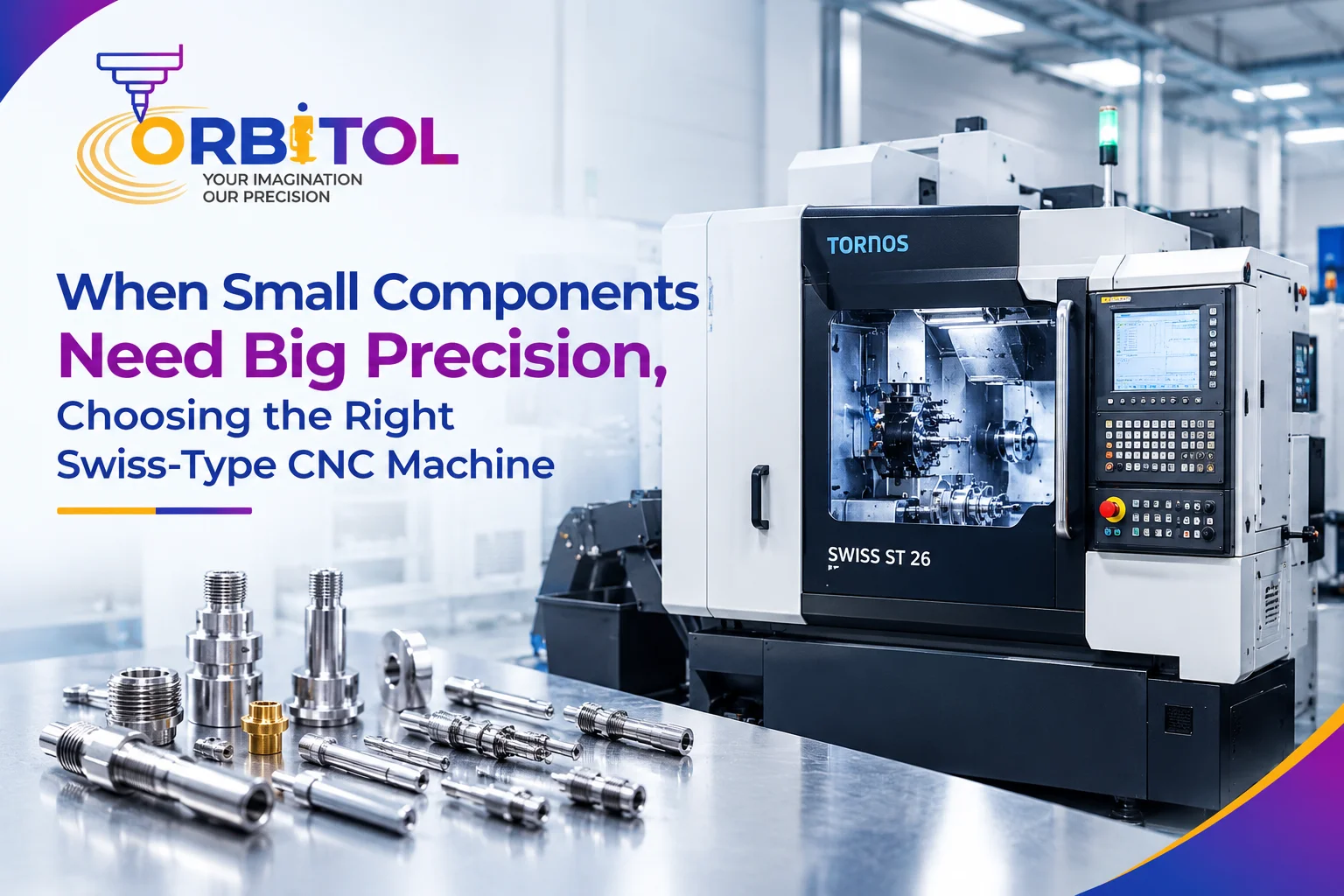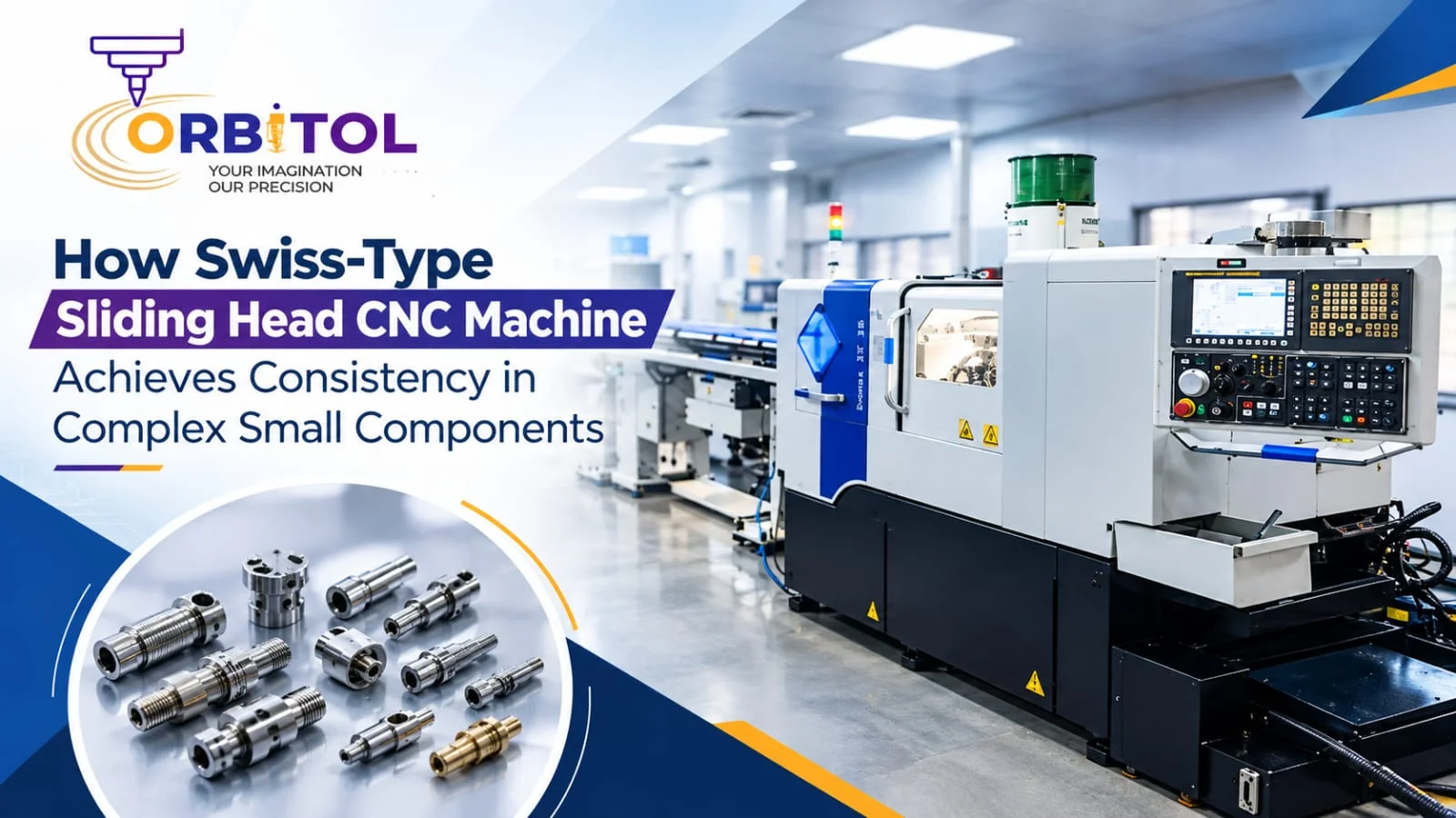
Small components often demand much more than just accurate turning. Tiny shafts, pins, screws, connectors and other intricate parts may require multiple features, tight tolerances and consistent dimensions throughout production. This is where a Swiss-Type CNC Machine becomes valuable.
Designed for precision Small Components. Swiss-type machining provides excellent work piece support close to the cutting area while allowing multiple operations to be performed efficiently. In this blog, we will explore how a Sliding Head CNC Machine works, what makes it suitable for High Precision CNC Machining, and which factors should be considered when choosing the right machine for complex precision parts.
Table of Contents
- Why Small Components Require Specialized Machining
- What Is a Swiss-Type CNC Machine?
- How a Sliding Head CNC Machine Improves Accuracy?
- Key Factors When Choosing a Swiss-Type Machine
- Multi-Axis Machining for Complex Small Components
- Tooling, Guide Bushing and CNC Control
- Swiss-Type CNC Machines at Orbitol Intelligence
- Applications of Swiss-Type Precision Machining
- Conclusion
1. Why Small Components Require Specialized Machining
Although making tiny products appears to be a straightforward task. Accomplishing it precisely is one of the most difficult tasks in precision production.
For example, a connector pin, small shaft, medical screw, or other device does not exceed a few millimeters in diameter, yet requires threads, cross-drilled holes, various diameters and groves, etc.
The smaller the size of a component, the more significant it becomes for the machining operation to be stable.
During conventional turning, a slender work piece can experience deflection because cutting forces act on the material. Even a small amount of movement can affect the final dimensions.
This is why selecting the right Swiss-Type CNC Machine is important for manufacturers working with small and intricate components.
Swiss or Swiss-type machines are engineered to meet the demands of parts that are small and precise in nature. Because of their sliding-headstock-and-guide-bushing design, material is held nearer to the cutting zone. This minimizing deflection.
This approach makes Swiss-type machining particularly useful. When Small Components need repeatable dimensions and controlled tolerances.
At Orbitol Intelligence Swiss-type machining forms part of a wider precision manufacturing capability. That includes CNC/VMC machining, Swiss-type sliding-head machining, EDM and other specialized processes.
The important question, therefore, is not simply whether a manufacturer has a CNC turning machine. It is whether the machine and process are appropriate for the geometry size tolerance and production requirements of the component.
2. What Is a Swiss-Type CNC Machine?
A Swiss-Type CNC Machine is a CNC turning machine designed primarily. For machining small-diameter, slender and complex components.
It is also commonly associated with terms such as Swiss Type Machine. Swiss lathe and sliding-head CNC machine.
The biggest difference between Swiss-type and conventional turning is how the work piece is supported.
In conventional turning, the material is generally held in a chuck. While the cutting tool moves along the work piece.
In Swiss-type machining, bar material passes through a guide bushing. The material can move through the bushing while machining takes place close to the point of support.
This arrangement provides an important advantage.
Machining Close to the Support Point
When the cutting operation takes place close to the guide bushing. The unsupported length of the material is reduced.
This can help minimize
- Work piece deflection
- Vibration
- Dimensional variation
- Instability during cutting
For long, slender components, this can make a significant difference.
Multiple Machining Operations
Modern Swiss-type machines are not limited to basic turning.
Depending on machine configuration, they can perform several operations including:
- Turning
- Drilling
- Threading
- Milling
- Cross-hole machining
Combining these operations can reduce the need to transfer the component between different machines.
This is particularly valuable for Precision Machining. Where every additional setup can introduce another opportunity for alignment variation.
3. How a Sliding Head CNC Machine Improves Accuracy
Sliding Head CNC Machines contain unique features. That allow them to support the component throughout the machining process.
A small-diameter work piece can shift a certain distance from the cutting tool. When rotating due to the impact of cutting forces.
This becomes significant in turning operations as the distance between the component length and diameter increases.
The sliding-head design addresses this by moving the material through a guide bushing while keeping the cutting area close to the support.
Reduced Work Piece Deflection
The guide bushing supports the material near the cutting zone.
As a result, the cutting tool does not have to work on a long unsupported section of material.
This can help maintain dimensional stability during turning.
Consistent Production
Precision manufacturing is not only about making one accurate component.
The real challenge is producing the same component repeatedly.
Once the machining program, tooling and process have been properly established, a Swiss-Type CNC Machine can repeat the same sequence across a production batch.
This is particularly useful when hundreds or thousands of identical Small Components are required.
Better Control of Slender Parts
Thin shafts, pins and miniature components can be difficult to machine on conventional equipment because of their tendency to flex.
Swiss-type machining is specifically suited to these geometries because the work piece remains supported close to the cutting point.
This makes the technology particularly useful for applications. Where High Precision CNC Machining is required.
4. Key Factors When Choosing a Swiss-Type Machine
Not every Swiss-type machine is suitable for every component.
The right equipment should be selected according to the component’s dimensions, geometry, tolerance, material and production quantity.
1. Component Diameter
The machine’s bar capacity should match the required component size.
For example, Orbitol Intelligence lists the DMG MORI SPRINT 20/8 with a maximum diameter of 25.4 mm.
This makes understanding the required raw material diameter an important first step when selecting equipment.
2. Number of Axes
Complex components can require turning, milling, drilling and other secondary operations.
A higher-axis configuration can provide greater flexibility for performing these operations within a coordinated setup.
Orbitol DMG MORI SPRINT 20/8 is listed as an 8-axis Swiss-type sliding-head machine, while its TORNOS SWISS ST 26 is listed with a 9-axis configuration.
3. Spindle Speed
Some components can require proper spindle speeds in order to obtain good cutting results and surface quality.
The appropriate spindle speed will depend on several factors like material type, tool diameter, cutting conditions and geometry of the component.
Orbitol lists 10,000 RPM for both its SPRINT 20/8 and TORNOS SWISS ST 26 configurations.
4. Tooling Capability
A complex component may need several cutting tools.
The machine should therefore provide suitable tooling capability for turning, drilling, threading and driven-tool operations where required.
5. Inspection Capability
Machine capability alone does not guarantee component quality.
The manufacturing process should also include suitable inspection methods to verify dimensions and critical features.
Orbitol TORNOS SWISS ST 26 capability includes in-process quality control using laser and camera inspection along with post-processing inspection.
5. Multi-Axis Machining for Complex Small Components
Many Small Components are more complicated than their size suggests.
A miniature part may contain several diameters, a threaded section, cross-holes and milled surfaces—all of which need to maintain their correct relationship to one another.
This is where multi-axis capability becomes important.
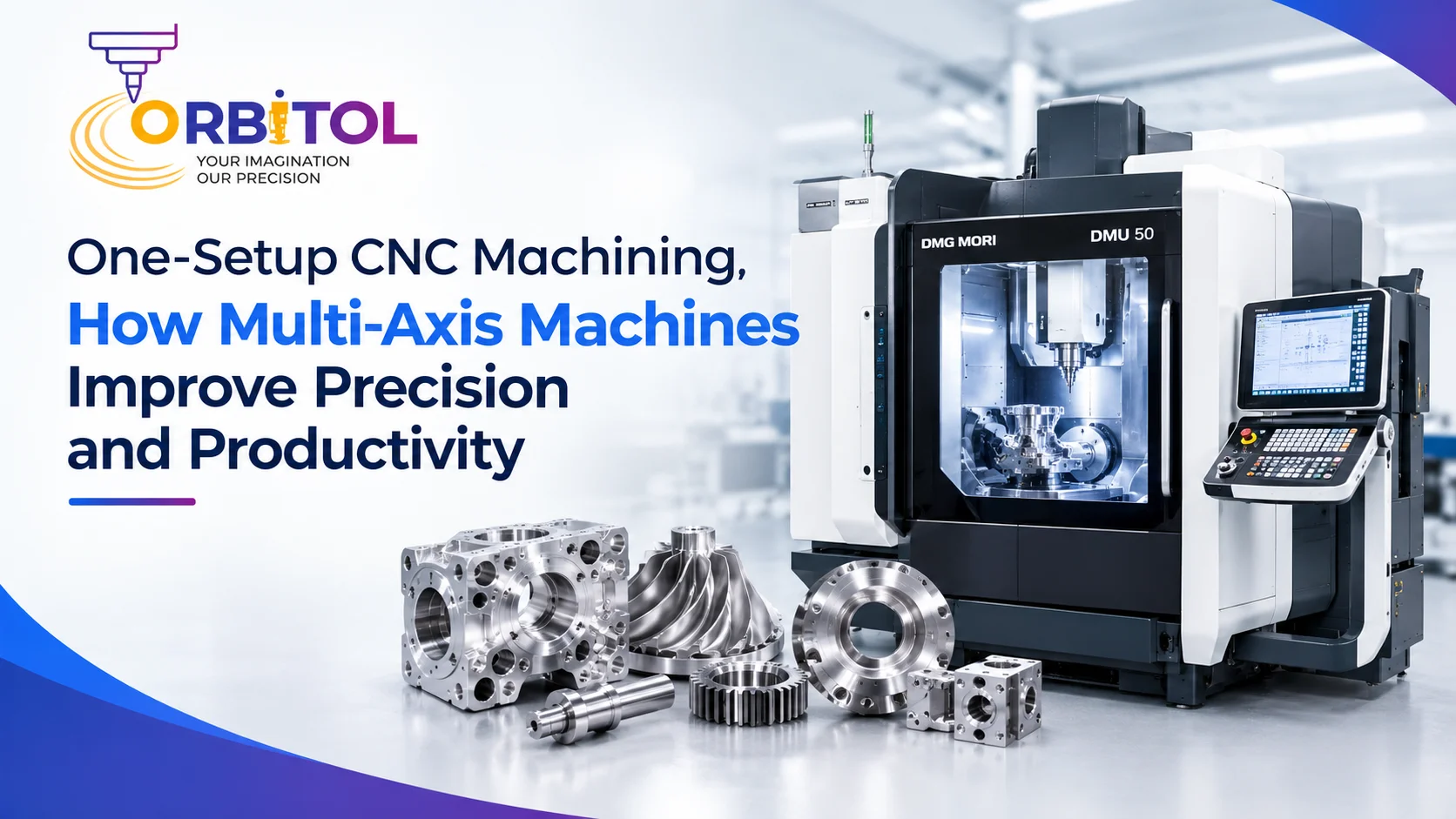
A multi-axis Sliding Head CNC Machine can perform several machining operations during the same production cycle.
Instead of producing the basic turned shape on one machine and then moving the component to another machine for drilling or milling, more operations can potentially be completed within the same setup.
Turning
Turning produces, the primary cylindrical features of the component.
Different diameters, shoulders and grooves can be produced according to the programmed geometry.
Drilling
Small components frequently require axial or cross-drilled holes.
Swiss-type machines with suitable tooling can perform these operations without requiring a separate conventional setup.
Milling
Driven tooling can allow additional features such as flats, slots and milled profiles to be produced.
Threading
Threads are common in precision fasteners, medical components and miniature mechanical parts.
CNC-controlled threading allows the tool movement to follow programmed dimensions and cutting parameters.
Why Fewer Setups Matter
Every time a component is removed from one setup and repositioned in another, alignment has to be established again.
Reducing the number of setups can help maintain the relationship between different component features.
For complex parts, this can be one of the important advantages of a Swiss-Type CNC Machine.
6. Tooling and CNC Control
A precision machine is only one part of the manufacturing process.
The quality of the finished component also depends on tooling, programming, work holding and process control.
Cutting Tools
Small components often require small-diameter cutting tools.
Tool geometry, material and condition should be selected according to the work piece material and machining operation.
As tools wear, dimensional results can gradually change. Tool monitoring and replacement are therefore important for maintaining consistency.
CNC Programming
The CNC program determines how the machine moves through the machining cycle.
For complex components, programming must coordinate different axes and tools while maintaining the required machining sequence.
This becomes particularly important when turning, drilling and milling are performed within the same cycle.
Cutting Parameters
Spindle speed, feed rate, depth of cut and conditions for coolant can all affect the machining process.
Finding the optimal combination of these parameters will allow one to control forces acting on the cutting tool, temperature, vibrations and wear of the tool.
Together, these factors contribute to High Precision CNC Machining and repeatable component production.
7. Swiss-Type CNC Machines at Orbitol Intelligence
At Orbitol Intelligence, Swiss-type technology is used for the production of small, precision-critical components.
The company’s current machine capability information lists two dedicated Swiss-type machines: DMG MORI SPRINT 20/8 and TORNOS SWISS ST 26.
DMG MORI SPRINT 20/8
Orbitol lists the SPRINT 20/8 as a Swiss-Type Sliding Head machine with:
- 8 axes
- 10,000 RPM listed spindle speed
- Maximum diameter of 25.4 mm
- Fanuc Series 31iA controller
- 2-metre stroke length
- 5-micron tolerance capability
- Applications including watch components, medical screws and aerospace pins Orbitol
This machine configuration is particularly relevant to small-diameter components where repeatability and dimensional control are important.
TORNOS SWISS ST 26
Orbitol also operates the TORNOS SWISS ST 26, which is listed with:
- 25.4 mm diameter range
- 10,000 RPM listed spindle speed
- Fanuc Series 31iA controller
- 9-axis configuration
- 2-metre effective length
- Less-than-one-minute listed cycle time for orthopedic screws
- Laser and camera-based in-process quality control Orbitol
The machine is listed for applications including defence, orthopaedic and aeronautical components and precision fasteners. These capabilities allow Orbitol Intelligence to approach different component requirements according to their geometry and machining needs rather than using one machining method for every part.
The company’s broader manufacturing setup also includes 3-axis and 5-axis VMC machining, CNC turning, EDM and grinding capabilities.
8. Applications of Swiss-Type Precision Machining
The use of a Swiss-Type CNC Machine extends across industries where small components need controlled dimensions and repeatable production.
Medical Components
Medical applications can involve miniature screws, pins, instrument components and other precision parts.
Orbitol lists medical screws and orthopaedic implant-related applications for its Swiss-type machining capabilities.
Aerospace Components
Aerospace manufacturing can require small pins, connectors and other precision components where dimensional consistency is important.
Orbitol lists aerospace pins and aeronautical applications among its Swiss-type capabilities. Orbitol
Precision Fasteners
Small fasteners can contain multiple diameters, threads and other detailed features.
Swiss-type machining can combine several of these operations within a controlled production cycle.
Watch and Miniature Components
Miniature mechanical components often require small dimensions and consistent repeatability.
Orbitol specifically lists watch components among the applications for its SPRINT 20/8. Orbitol
Automotive and Industrial Components
Automotive and industrial equipment can also require small shafts, pins, bushings, connectors and other precision parts.
For these applications, the ability to maintain repeatability over production batches can be just as important as achieving the required dimension on an individual component.
9. Conclusion
Choosing the right Swiss-Type CNC Machine starts with understanding the component rather than simply comparing machine specifications.
The diameter, length, geometry, material, tolerance and production quantity all influence which machining configuration is appropriate.
For slender and small-diameter components, the guide-bushing principle of a Sliding Head CNC Machine provides support close to the cutting area. This helps reduce work piece deflection and can contribute to more consistent dimensional results.
Multi-axis capabilities can further improve the manufacturing process by allowing turning, drilling, milling and threading operations to be performed within a coordinated setup.
For manufacturers requiring High Precision CNC Machining, the complete process matters—from machine selection and tooling to CNC programming, cutting parameters and inspection.
At Orbitol Intelligence, the DMG MORI SPRINT 20/8 and TORNOS SWISS ST 26 provide dedicated Swiss-type capabilities for small and complex components, while the wider facility combines Swiss-type machining with 3-axis and 5-axis VMC, CNC turning, EDM and grinding processes. Orbitol
Ultimately, the right Swiss Type Machine is the one that matches the actual manufacturing requirements of the component.
When small components need big precision, machine capability, process control and engineering experience have to work together.