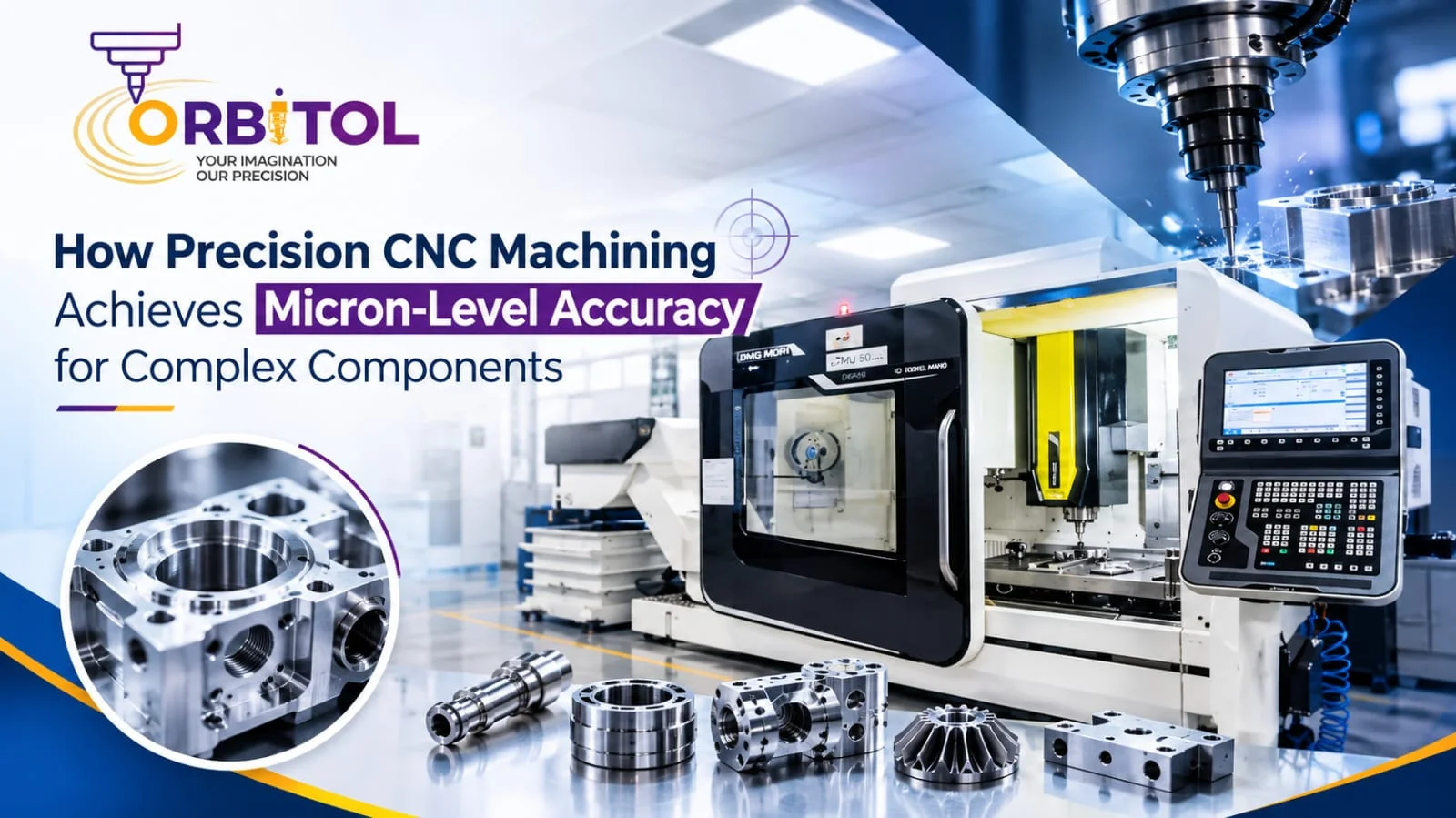
Precision CNC Machining, Today, the manufacturing process relies on parts. That need to be manufactured to fit within extremely closely defined measurement tolerances. A minor deviation in the size of a critical component can influence assembly, motion, contact and the final performance of the product in general.
This is where Precision CNC Machining comes into play.
Table of Contents
- Introduction to Precision CNC Machining
- What Makes Micron-Level Accuracy Possible?
- How Tight Tolerance Machining Improves Component Quality
- Importance of Tooling, Programming and Machine Control
- Precision CNC Machining for Automotive and Medical Components
- CNC Machined Components and Quality Inspection
- How Orbitol Intelligence Supports High Accuracy Machining
- Conclusion
1. Introduction to Precision CNC Machining
Unlike conventional machining processes, CNC machining utilizes movements controlled by computer to facilitate the cutting process of the tools according to a specific program. This allows manufacturers to produce complex geometries with repeatable dimensions and controlled machining conditions.
For applications requiring Micron-Level Accuracy, however, simply having a CNC machine is not enough accuracy depends on several factors working together. Including machine capability, programming, cutting tools. work holding, material behaviour, machining strategy and inspection.
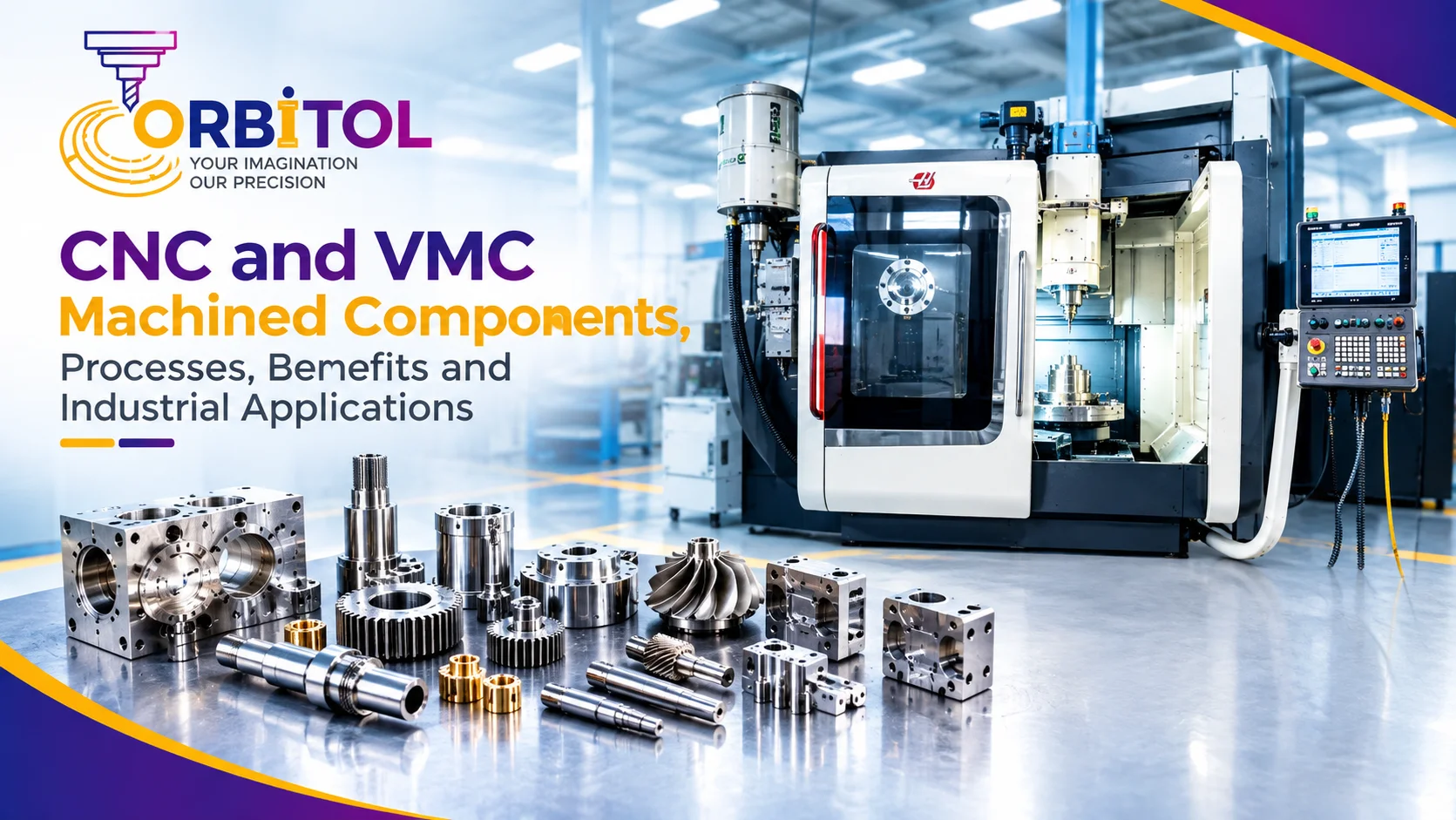
Orbitol Intelligence, precision manufacturing combines advanced CNC and VMC machining capabilities. With controlled production and inspection processes. The company operates 3-axis and 5-axis machining centres along with Swiss-type machining equipment for complex and small components. orbitol
The objective is not simply to remove material. It is to produce a component that matches the required dimensions, geometry and surface requirements consistently.
2. What Makes Micron-Level Accuracy Possible?
At present, the production process depends on manufacturing parts . That have to have very precise measurement tolerance. Any small measurement variation in a key part can affect the assembly of the product. Its movement, contact, and result in the general performance of the product.
This is where Precision CNC Machining comes in.
Unlike traditional machining processes, CNC machining. controlled movements of cutting are performed according to a specific program.
For high-precision applications, machine condition and maintenance are therefore important. Parts of the manufacturing process.
Thermal Stability
Temperature can also affect machining accuracy.
Machine components, cutting tools and work pieces. Can expand or contract as temperatures change. In operations involving extremely close tolerances, these changes can influence final dimensions.
Controlled machining conditions and suitable production practices. Help reduce the effect of thermal variation.
Tool Condition
Cutting tools gradually wear during machining. As a tool wears, cutting performance and dimensional results can change.
For this reason, tool selection, tool condition and tool replacement. Are important considerations in High Accuracy Machining.
The correct geometry of the tool as well as appropriate cutting parameters. are essential in achieving the necessary finish of the surface. while minimizing unnecessary cutting forces.
3. How Tight Tolerance Machining Improves Component Quality
Tight tolerance machining is crucial whenever it is necessary to have certain limits of dimension.
Consider a component containing multiple holes. Pockets, mating surfaces and angled features. If each feature varies beyond its specified tolerance. The final component may not assemble correctly.
Precision machining helps control these dimensions throughout production.
Important areas include
Dimensional Control
CNC programming allows tool movements to follow predefined coordinates. This supports repeatable production of features such as:
- Holes
- Slots
- Pockets
- Profiles
- Mating surfaces
Geometric Accuracy
Dimensional accuracy is only one part of component quality. Complex components may also require control over positioning, alignment and geometry.
A machining strategy must therefore consider the complete component. rather than individual dimensions alone.
Surface Finish
Surface finish can influence how a component performs, particularly. Where two surfaces must move, seal or mate together.
The correct cutting tool, spindle speed, feed rate. Machining sequence and finishing operation can contribute to achieving the required surface condition.
This combination of dimensional control and surface quality makes. Precision CNC Machining valuable for components where consistency matters from part to part.
4. Importance of Tooling, Programming and Machine Control
Precision machine can only deliver consistent results. When the complete machining process is properly planned.
CAM Programming
Complex components are generally developed from digital designs and converted. Into machine instructions through CAM systems.
For multi-axis machining, programming becomes particularly important because the tool orientation and movement must be coordinated carefully.
Orbitol Intelligence lists Solid CAM and Siemens systems among its machining technology and programming capabilities. Orbitol
Work holding
Stability of the work piece is required for effective machining. If the work piece is not positioned correctly or if it has been clamped poorly, movement in the work piece can take place. Which will affect dimensional accuracy. Proper working method and clamping. Tool or fixtures enable the work piece to remain in personnel stable position. Throughout the machining operation.
Cutting Parameters
The performance of machining may be affected by various factors. Which consist of feeding speed, spindle speed, cutting depth, and type of tool.
Wrong selection of parameters can lead to more vibration. Greater tool wear, and overheating of the machine part. A controlled machining strategy helps maintain consistency. While achieving the required material removal and finish.
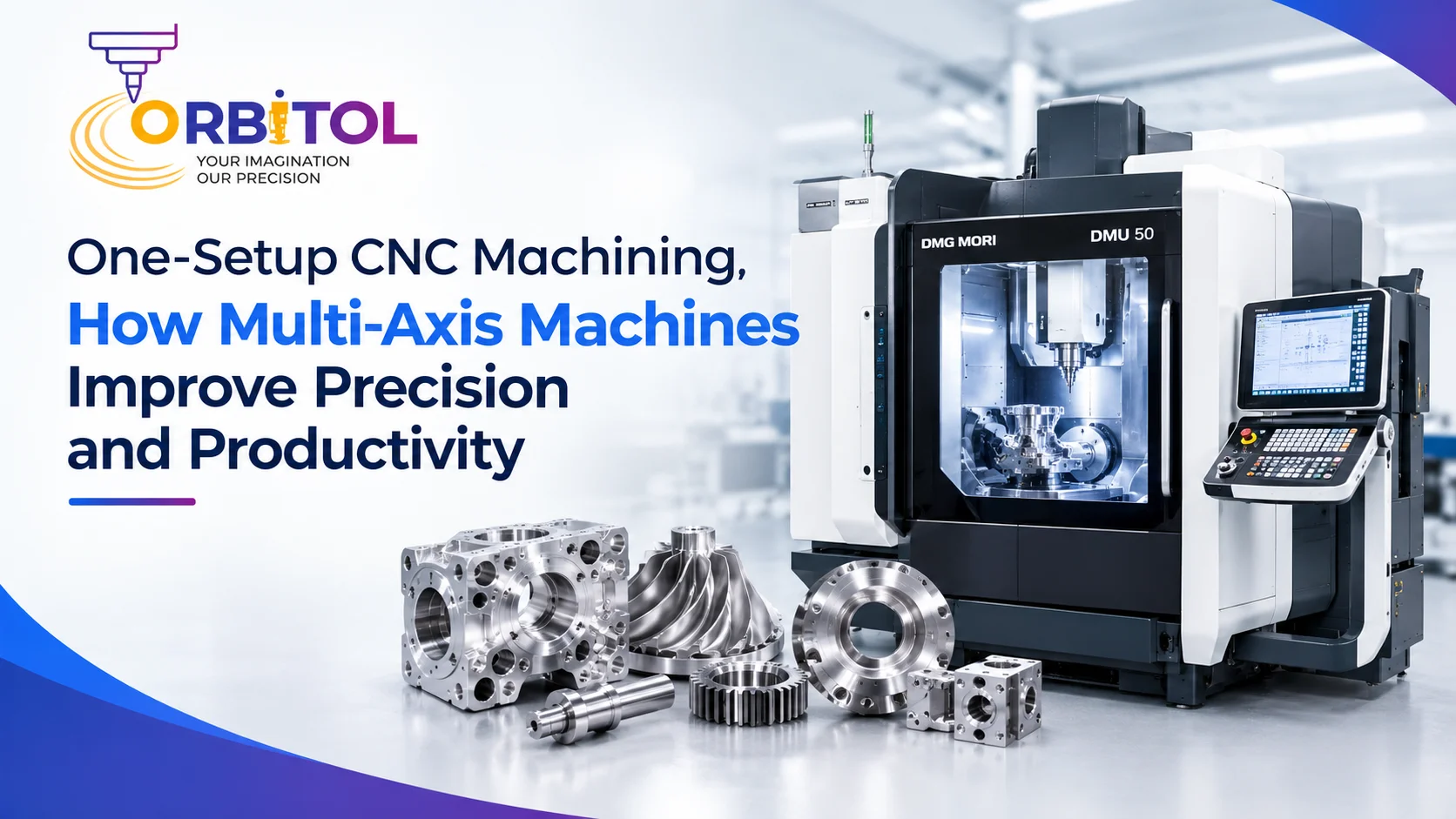
One-Setup Machining
For complex parts, one-setup machining. Can reduce the number of times a component needs to be repositioned.
This is particularly helpful in case of controlling several entities in a defined ratio.
5. Precision CNC Machining for Automotive and Medical Components
Repeatability is very crucial in such cases. Since it is often required to process the pieces in bulk. While ensuring the same size and precision.
Automotive CNC Machining
Automotive CNC Machining combines programmed machining. With controlled tooling and inspection to produce components according to defined engineering specifications.
Orbitol Intelligence identifies automotive components among its applications. for precision machining and VMC production. Orbitol
Medical CNC Machining
Medical manufacturing presents another demanding application for precision engineering.
Medical components may require complex geometries, small dimensions and controlled surfaces. Depending on the component, machining may involve specialized tooling. Multi-axis machining or Swiss-type machining.
Orbitol medical machining capabilities include surgical instruments, implants, medical moulds and custom healthcare equipment components. Its website also identifies CNC-controlled machining and calibrated inspection. Systems as part of its medical manufacturing approach. Orbitol
For such applications, Medical CNC Machining focuses on repeatability. Dimensional control and manufacturing consistency.
6. CNC Machined Components and Quality Inspection
Producing a component is only one part of precision manufacturing. The finished component must also be checked against its engineering requirements.
CNC Machined Components may require inspection of dimensions, geometry, surface characteristics and other specified parameters depending on the application.
Quality control can involve
- Dimensional inspection
- Tool and process verification
- Surface-finish checking
- In-process monitoring
- Final component inspection
The inspection process helps identify dimensional deviations before components. Move to the next manufacturing or assembly stage.
For Micron-Level Accuracy, inspection becomes especially important because conventional visual checks cannot confirm extremely small dimensional differences.
Orbitol Intelligence highlights in-process quality control. Inspection systems and real-time quality monitoring among its precision manufacturing capabilities.
7. How Orbitol Intelligence Supports High Accuracy Machining
For complex components, precision depends on the combination of equipment, process planning. Skilled engineering and quality control.
Orbitol Intelligence operates a manufacturing ecosystem. That includes 3-axis and 5-axis CNC/VMC machining, Swiss-type machining, EDM and other precision manufacturing capabilities. Orbitol
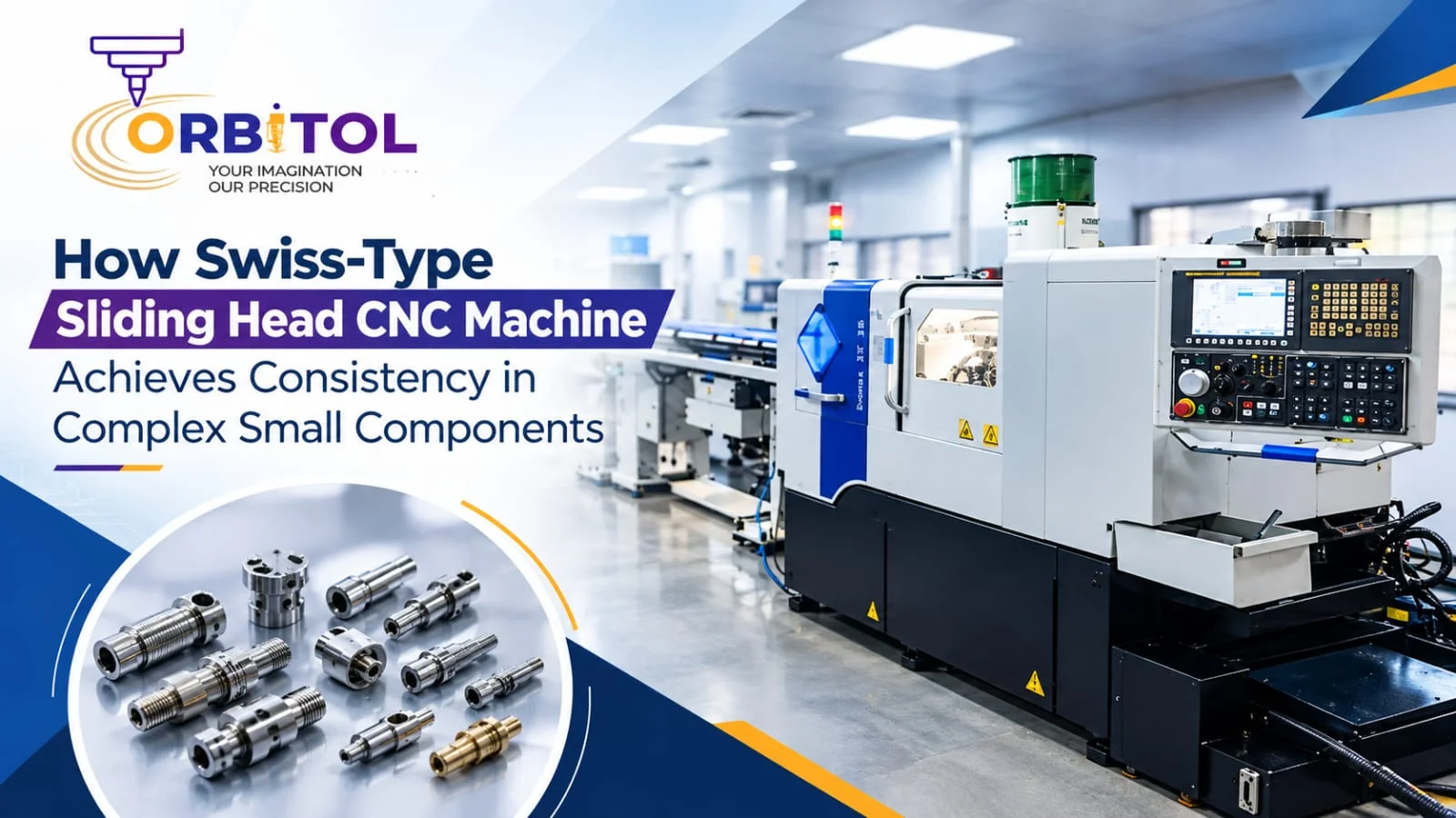
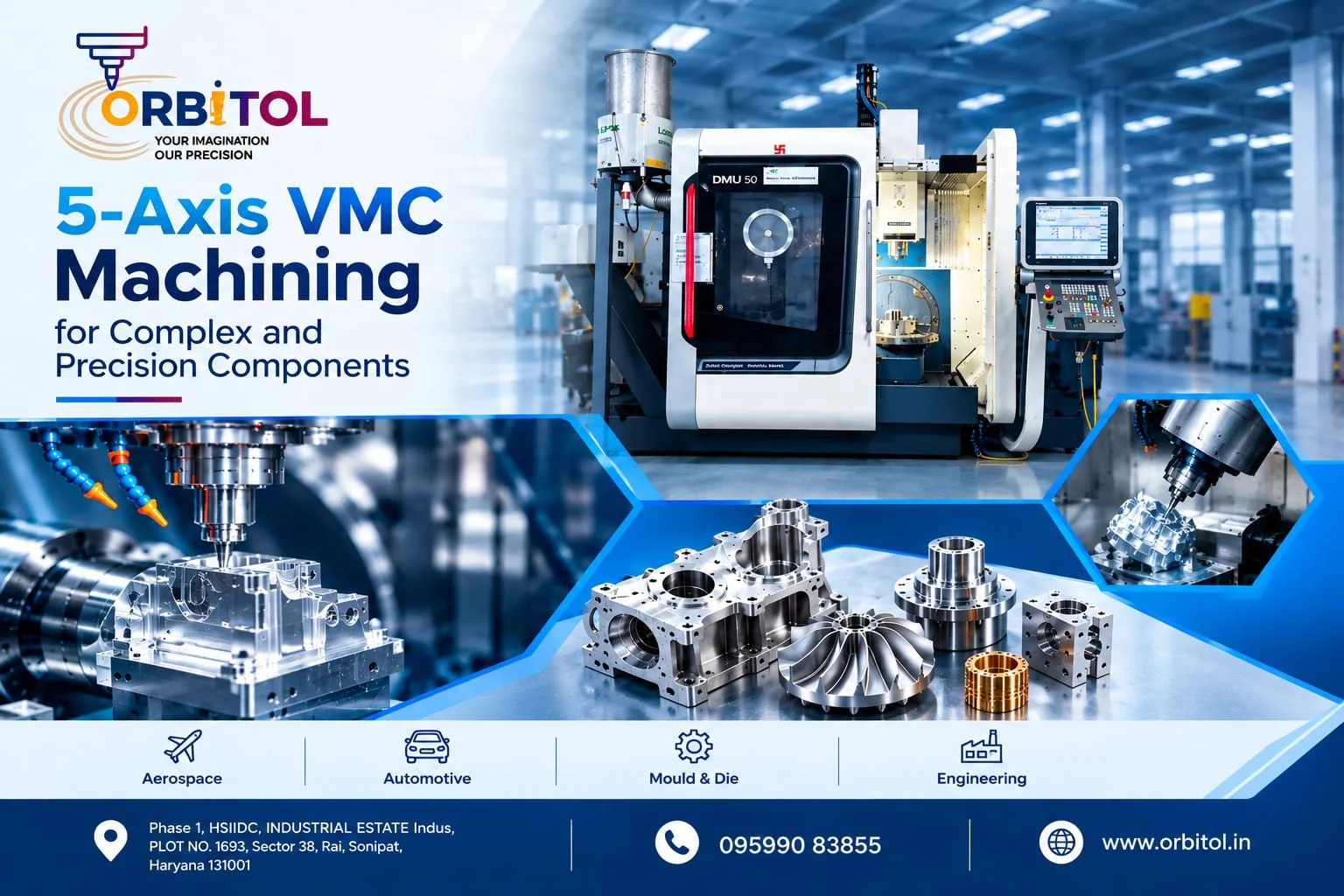
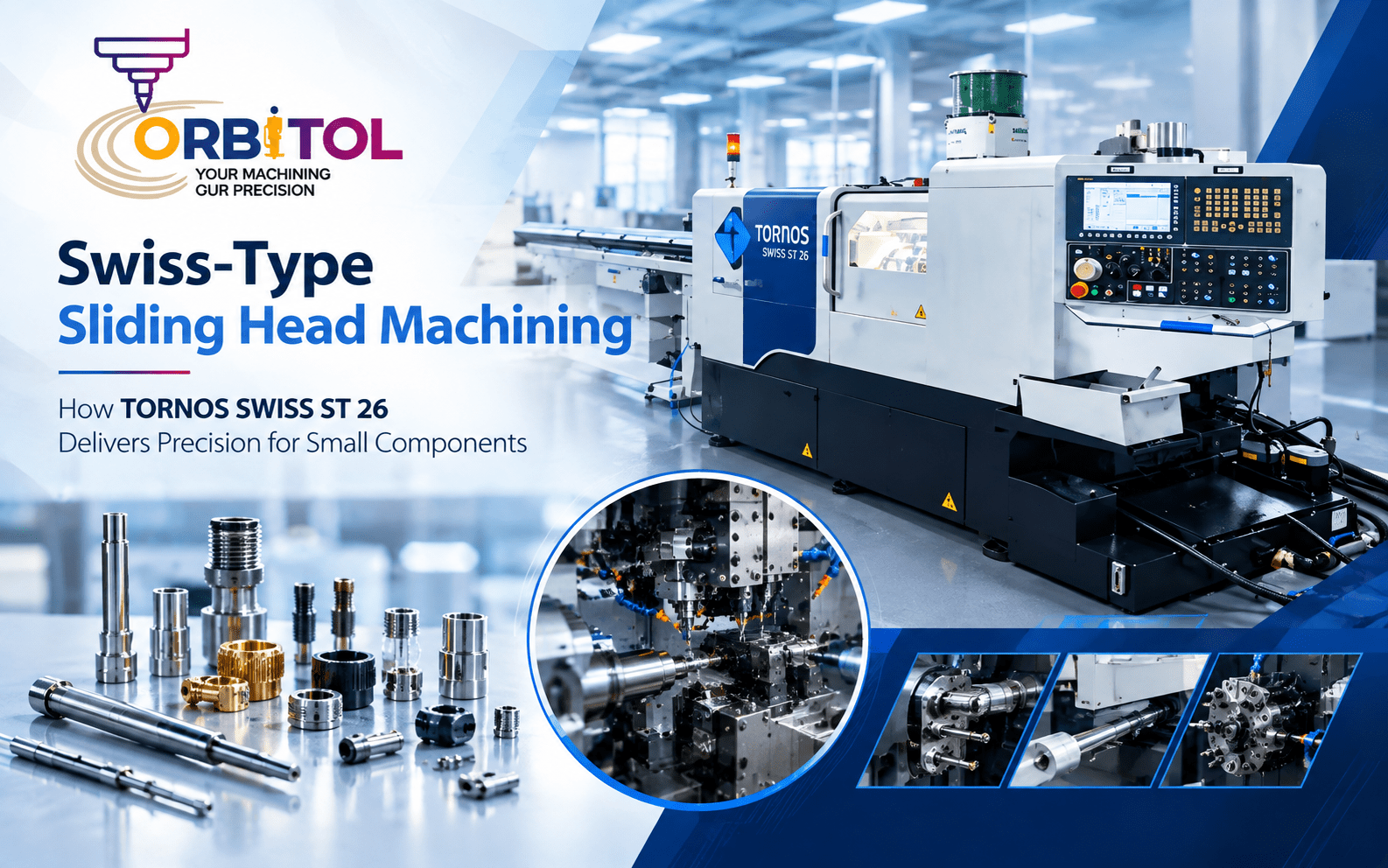
Its listed equipment includes the DMG MORI DMU 50 5-axis VMC and DMG MORI 635 V ECOLINE 3-axis VMC. The company also lists Swiss-type machines such as the DMG MORI SPRINT 20/8 and TORNOS SWISS ST 26. For small and complex components.
This range of machines allows machining methods. To be selected according to the component rather than forcing every job into the same process.
For example, complex components with angled surfaces can benefit from 5-axis machining While suitable prismatic components. Can be efficiently produced on a 3-axis VMC. Small precision parts can also be manufactured using Swiss-type machining.
Orbitol facility information states that its production environment includes an air-conditioned manufacturing floor. CNC and Swiss-type machining bays, precision inspection capabilities and rapid prototyping facilities.
This combination supports the production of precision components. From prototypes through production batches.
8. Conclusion
Achieving micron-level accuracy is not the result of a single machine or technology. It is the outcome of a controlled manufacturing process in which machine capability tooling, programming, work holding, machining parameters, environmental conditions and inspection work together.
The basics of precision CNC Machining let us produce a variety of complex items. With repeatable dimensions. 3-axis VMC machining can be used to manufacture most of the precision parts. While 5-axis machining gives more options to create complex profiles. And inclined surfaces, and perform the operations in one setup.
For applications requiring High Accuracy Machining. The complete production process matters. Proper tooling, stable setups, controlled machining conditions and reliable inspection help maintain. Tight Tolerance Machining requirements.
From Automotive CNC Machining to Medical CNC Machining, the demand for consistent CNC Machined Components continues to grow as component designs become more complex and dimensional requirements become more demanding.
At Orbitol Intelligence, advanced CNC/VMC and Swiss-type machining capabilities are combined. With precision-focused manufacturing processes to produce complex components. Where dimensional accuracy and repeatability are critical. Orbitol
When every micron matters, precision is not simply a specification it is a process that must be controlled. From the first setup to the final inspection.