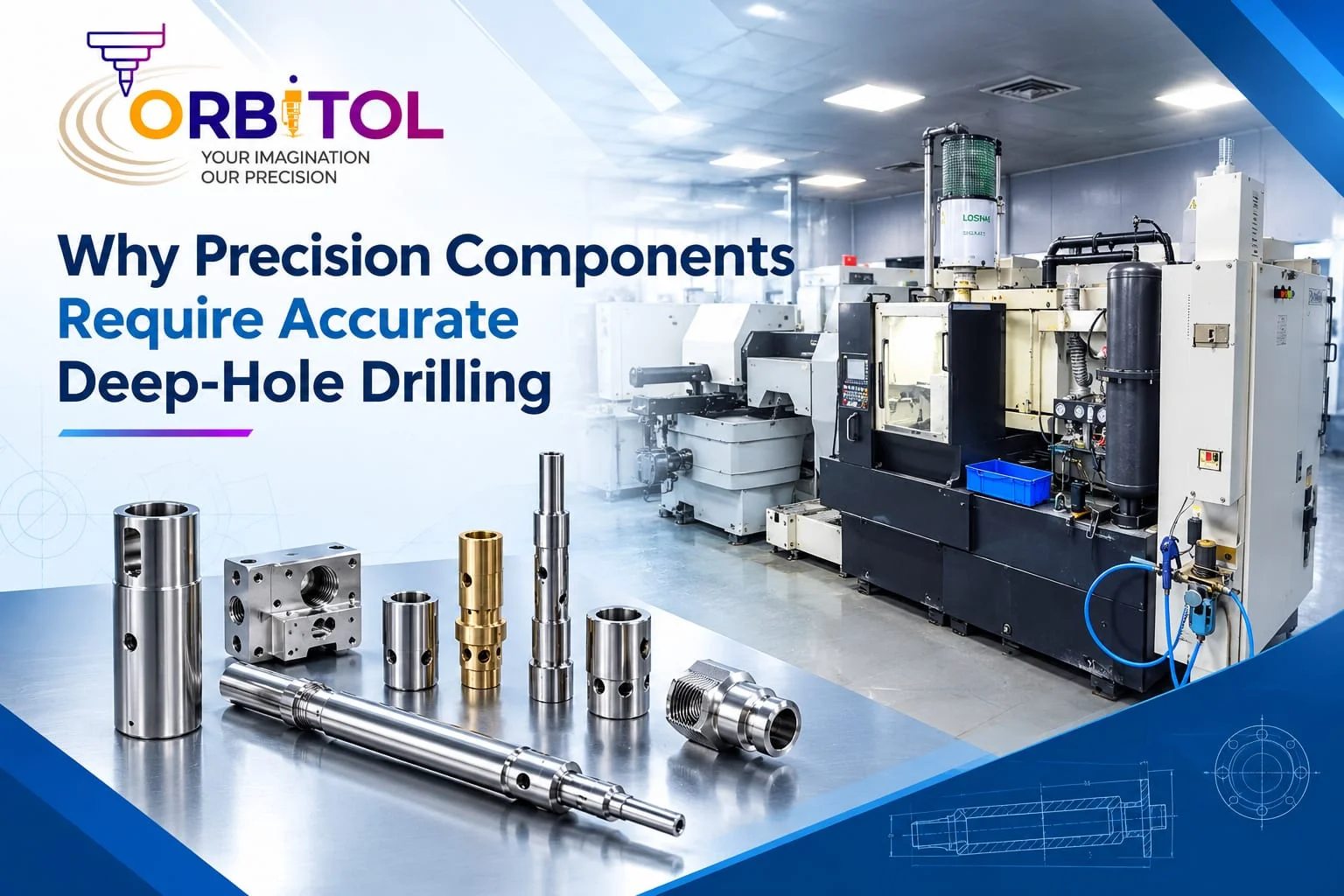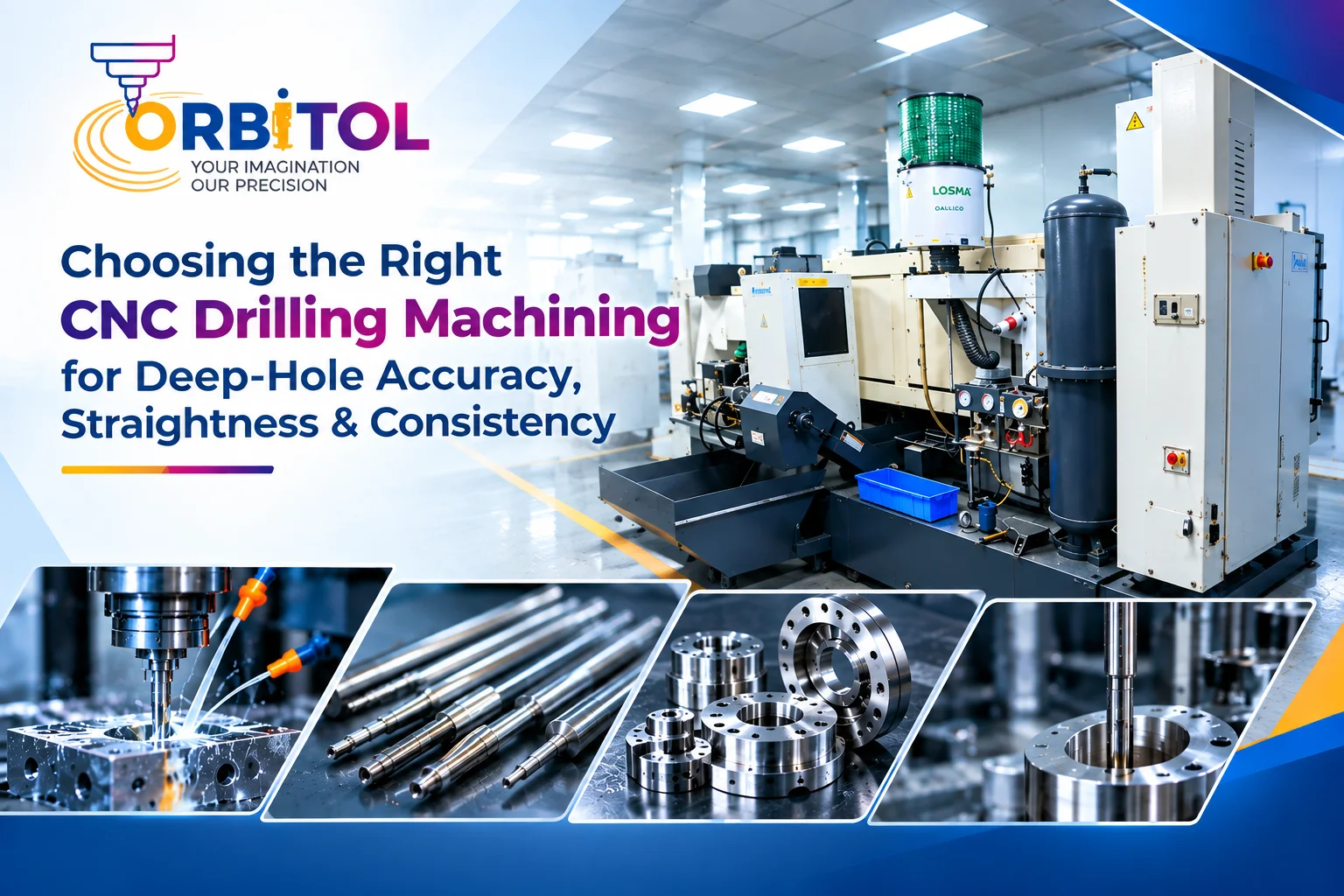
Deep Hole Drilling, Precision components are typically created with aspects. That cannot be made using regular machining techniques. One of the more challenging features of a precision component is a deep hole. Which must retain its diameter, depth, straightness, and quality of the interior surface.
When the depth increases as compared to the hol diameter, its drilling becomes harder. The aspects that influence the creation of the hole are tool bending, heating, the shavings removal process, and vibration. Even the smallest discrepancy can soon turn into a serious problem if the hole is significant.
This is where Deep Hole Drilling becomes important.
A specialized deep-hole process is designed to produce long and narrow holes. While maintaining controlled machining conditions. For applications requiring high straightness and dimensional consistency, a Gun Drilling Machine. Can provide the specialized tooling, coolant delivery and machine control needed for the job.
For a precision manufacturing company Orbitol Intelligence, rocky-holes drilling is a great advantage for creating components. Applied in automotive, aviation, hydraulic, medical and tool industries.
- Why Accurate Deep Hole Drilling Matters for Precision Components
- What Makes Deep Hole Drilling Different?
- How Gun Drilling Achieves Straight and Consistent Holes
- Key Factors That Influence Precision Drilling
- Applications of Precision Deep Hole Drilling
- Orbitol Intelligence: CNC Gun Drilling Capability
- Conclusion
1. Why Accurate Deep Hole Drilling Matters for Precision Components
While a hole looks easy to manufacture, this becomes more complicated when it comes to deep-holes manufacturing.
For precision products. Holes may be used for connecting parts properly, providing access for gas or liquid, or accommodating a shaft.
The hole may need to meet several requirements simultaneously:
- Correct diameter
- Controlled depth
- High straightness
- Consistent internal surface
- Accurate positioning
- Repeatable production
If the hole begins to deviate from its intended centerline, the deviation can increase as the drilling depth increases. This can affect the functionality of the finished component.
For example, a hydraulic component may require a straight internal passage for controlled fluid movement. Similarly, a mould component may require accurately positioned cooling channels to support effective temperature control.
This is why Precision Drilling becomes an important part of manufacturing. When component performance depends on the accuracy of an internal hole.
Why Conventional Drilling Can Become Difficult
Regular drill has a wide area of applications. But when the hole depth increases much more than the hole diameter, it becomes difficult to drill as required.
The drill can experience deflection because of cutting forces. Heat can accumulate at the cutting zone, while chips must travel out of the hole without obstructing the cutting process.
These challenges make specialized. Deep Hole Drilling technology valuable for precision components.
2. What Makes Deep Hole Drilling Different?
Deep Hole Drilling is the art of applying drilling technique. When the deepness of the hole is much more than the diameter of the hole.
The definition differs from application to application but the rule of thumb that deeper holes are trickier to drill still stands.
In the process of drilling the cutting material is removed from the material. In the case of shallow hole drilling, the chips do not get stuck in the hole. However, in deep hole drilling their way out is much longer.
Tool Stability and Guidance
A long drilling tool needs to remain stable. While entering and progressing through the component.
If the tool moves away from the intended path, the hole can become misaligned or curved.
Gun drilling systems use specialized drill designs and controlled guidance to help maintain the intended drilling direction.
This is one reason why a Gun Drilling Machine is preferred for many applications. Where hole straightness is critical.
Heat Management
Drilling generates heat through friction and cutting.
As hole depth increases, controlling the temperature becomes increasingly important because excessive heat can influence tool life, surface quality and dimensional consistency.
A controlled coolant system helps manage the cutting temperature and supports a stable drilling process.
Orbitol Intelligence’s Precihole CNC Gun Drilling Machine is equipped. With a high-pressure coolant system for deep-hole applications.
3. How Gun Drilling Achieves Straight and Consistent Holes
A Gun Drilling Machine is specifically developed for producing deep, relatively small-diameter holes with controlled straightness and dimensional accuracy.
The process combines specialized tooling. With CNC-controlled machining.
Controlled Tool Movement
CNC control allows the drilling cycle to be programmed according to the required hole position. Depth and machining parameters.
Once the setup and program have been verified, the same machining cycle. Can be repeated for subsequent components.
This repeatability is particularly useful for production parts. Where every component needs to maintain the same hole geometry.
High-Pressure Coolant
High-pressure coolant is one of the important elements of gun drilling.
The coolant helps reach the cutting zone and assists in moving chips away from the drilling area. It also helps control heat during machining.
For deep holes, effective coolant delivery can therefore contribute to both tool performance and hole quality.
Specialized Gun Drill
A gun drill is made for deep-hole applications. Which is different from a conventional twist drill.
The geometry and guiding system allow for precision cutting as the tool progresses into the workpiece.
The result can be improved straightness, consistent hole diameter and better internal surface quality. When the process is correctly set up.
CNC Repeatability
A CNC Gun Drilling Machine combines specialized gun drilling technology. With programmable machine movement.
This means that once the correct parameters have been established for a component. The same drilling sequence can be repeated with controlled feed, speed and depth.
This is important when producing batches of Precision Components where consistency from one component to another is essential.
4. Key Factors That Influence Precision Drilling
Achieving accurate holes does not depend on the machine alone.
The complete process must be controlled. From component setup and tool selection to coolant delivery and final inspection.
Hole Diameter and Depth
The first consideration is the actual hole specification.
A small-diameter hole extending several hundred millimeters into a component presents a very different machining challenge from a short, large-diameter hole.
Orbitol Intelligence’s Precihole CNC Gun Drilling Machine is listed. With a drilling capacity of Ø3 mm to Ø25 mm and a maximum drilling depth of up to 1000 mm.
This capability makes the machine suitable for a range of specialized deep-hole applications.
Straightness
Hole straightness is critical. When the internal passage must follow a specific centerline.
A hole can have an acceptable diameter at its entrance but still deviate from the required path deeper inside the component.
For functional components, such deviation may affect assembly, fluid flow or the relationship between different component features.
The drilling method, tooling, work holding and machine stability must therefore. Work together to maintain the required path.
Material
Different materials behave differently during drilling.
Steel, stainless steel, alloy steel, titanium, brass and aluminium. Can require different cutting parameters and tooling strategies.
Orbitol listed Precihole machine supports materials.steel, stainless steel, alloy steel, titanium, brass and aluminium.
Material hardness, chip behaviour and thermal characteristics all need to be considered. When establishing the machining process.
Coolant Delivery
For deep holes, coolant is not simply used to reduce temperature.
It also supports chip evacuation.
A high-pressure coolant system helps move chips away. From the cutting zone, reducing the possibility of chip packing inside the hole.
Machine Stability
Machine rigidity and stability are also important for Precision Deep Hole Drilling.
Unwanted vibration or movement can affect the drilling path and surface quality.
A stable setup helps maintain the relationship between the workpiece, drill and machine throughout the drilling cycle.
Inspection
The final hole must be checked against its specified requirements.
Depending on the application, inspection may include checking:
- Hole diameter
- Hole depth
- Straightness
- Position
- Surface condition
Inspection is especially important for precision components. Because dimensional errors inside a component may not be visible from the outside.
5. Applications of Precision Deep Hole Drilling
Accurate deep holes are required in several industries. Where internal geometry affects component performance.
Automotive Components
Automotive components can include shafts, injector bodies, hydraulic elements and other precision parts. Requiring accurately produced internal holes.
Consistent hole dimensions can be important. For assembly and reliable component operation.
Hydraulic Components
Hydraulic components frequently use internal passages through. Which fluid must move under controlled conditions.
A hole that is incorrectly positioned, undersized or deviates significantly. From its intended path can affect component functionality.
This makes Precision Drilling important for hydraulic components. Where internal passages are critical to performance.
Aerospace Components
Aerospace components often require controlled machining processes and precise internal features.
Depending on component design, deep-hole machining. Can be used for specialised internal passages and other precision features.
The ability to maintain consistent hole geometry is particularly important. When components have demanding dimensional requirements.
Medical Components
Medical and healthcare manufacturing can involve components. With small and intricate features.
Depending on the design and material, deep-hole processes. May be used to produce precise internal features while maintaining controlled dimensions and surface quality.
Mould and Die Components
Moulds and dies can require deep internal cooling channels.
Accurately positioned cooling passages. Can help support more consistent temperature control during moulding operations.
For such applications, the drilling process must consider not only hole depth. But also the position and relationship of the hole to the surrounding geometry.
Orbitol Intelligence lists automotive, aerospace, hydraulic, medical and tooling applications. For its CNC Gun Drilling Machine.
6. Orbitol Intelligence, CNC Gun Drilling Capability
At Orbitol Intelligence, specialized deep-hole machining. Is supported by a Precihole CNC Gun Drilling Machine developed for precision applications.
The machine is listed with
- Drilling capacity of Ø3 mm–Ø25 mm
- Maximum drilling depth of up to 1000 mm
- Spindle speed up to 6,000 RPM
- 2-axis X and Z configuration
- High-pressure coolant system
- CNC control
- Accuracy capability of up to ±5 micron
It is listed for machining steel, stainless steel, alloy steel, titanium, brass and aluminium.
The machine is also listed for applications including automotive components, aerospace parts. Hydraulic components, medical components and tooling. Products identified by Orbitol include deep-hole shafts, injector bodies, valve components, bushes and mould and die components.
Deep-Hole Machining Alongside Other CNC Capabilities
One advantage of a broader precision manufacturing setup is that a component. May require multiple machining operations.
A component could require turning before drilling, milling after drilling or grinding for final dimensional control.
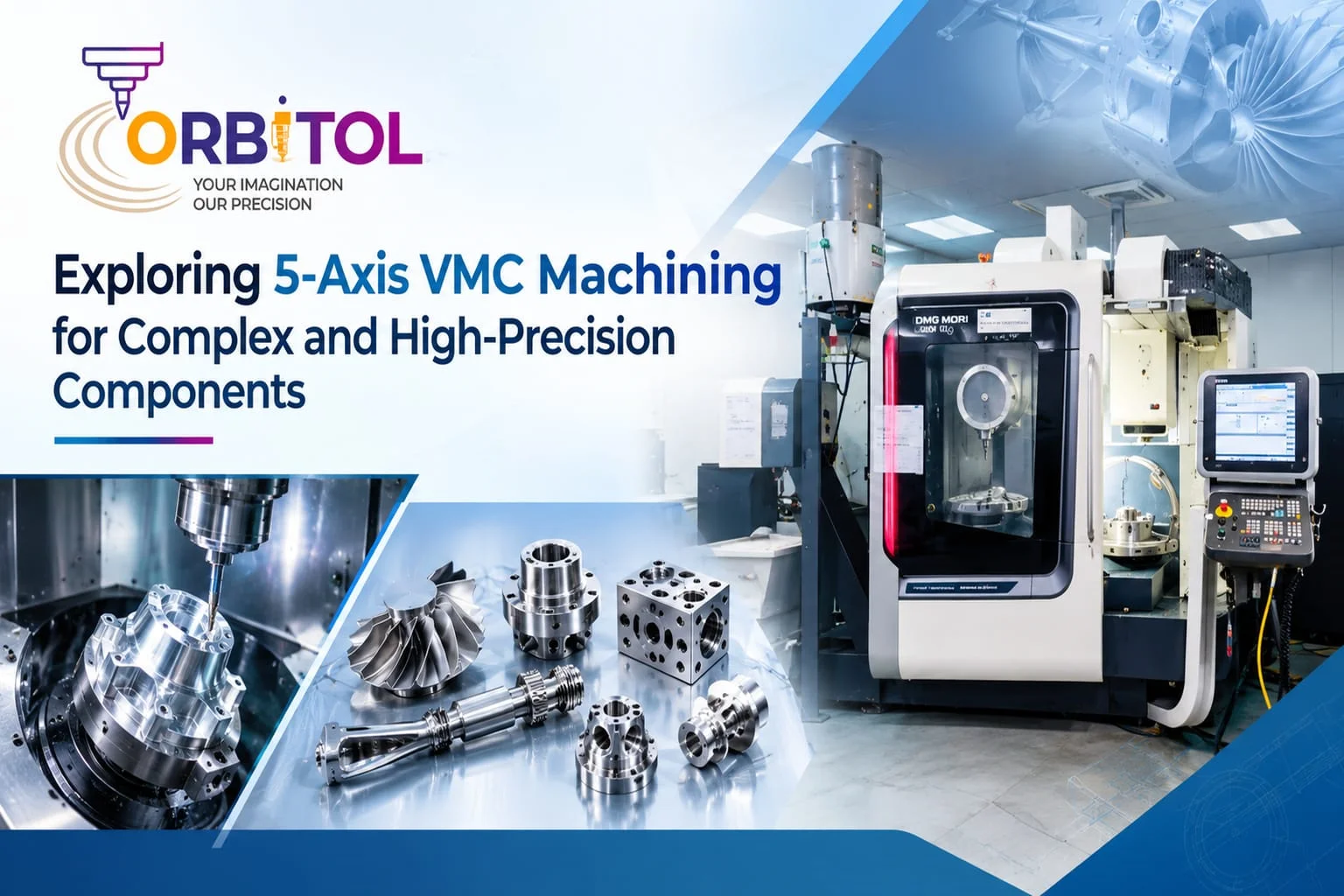
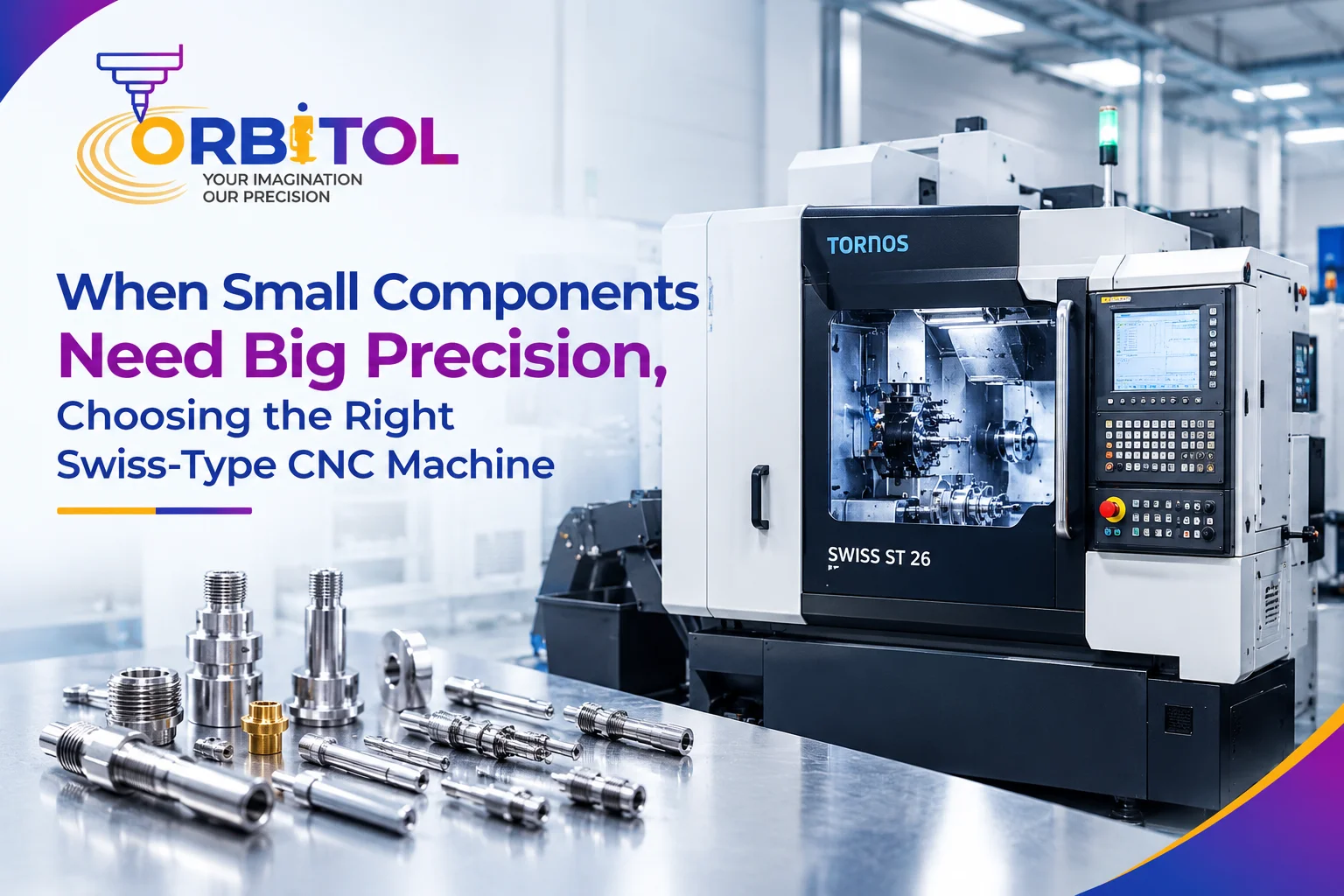
Orbitol Intelligence’s manufacturing facility includes 3-axis and 5-axis CNC/VMC machining centres. Swiss-type turning, EDM, grinding and heat-treatment capabilities in addition to its gun drilling equipment.
This allows machining processes to be selected according to the component rather than treating. Every requirement as a standard drilling job.
For example, a complex component may first require CNC turning to establish its primary geometry. Followed by Deep Hole Drilling for an internal passage and additional machining or finishing operations.
This integrated approach can be useful for prototype development as well as production requirements.
Why Process Control Matters
Accurate deep-hole machining depends on more than the machine specification.
The work piece must be positioned correctly, the drilling tool must be appropriate for the material and hole geometry, and cutting conditions must be controlled throughout the cycle.
At Orbitol Intelligence, deep-hole drilling forms part of a wider precision manufacturing environment focused on tight-tolerance component production.
The company’s website lists ±5 micron accuracy capability. Across its advanced machining capabilities and identifies applications across aerospace, medical, automotive, mould and die and other precision-focused industries.
Conclusion
Precision components rely heavily on certain internal aspects of the part. Which may not be visible when the component is already in place. For example, deep and narrow holes are typically very difficult to create.
In this case, the process of Deep Hole Drilling is very helpful it uses advanced machining techniques. Which enable controlling the movement of the tool, delivery of coolant, evacuation of chips and conditions of cutting during the drilling process.
The Gun Drilling Machine can be very useful in producing these deep holes as it creates holes. With exact diameter and straightness due to the combination of the high-pressure cooling system, particular tools and CNC control.