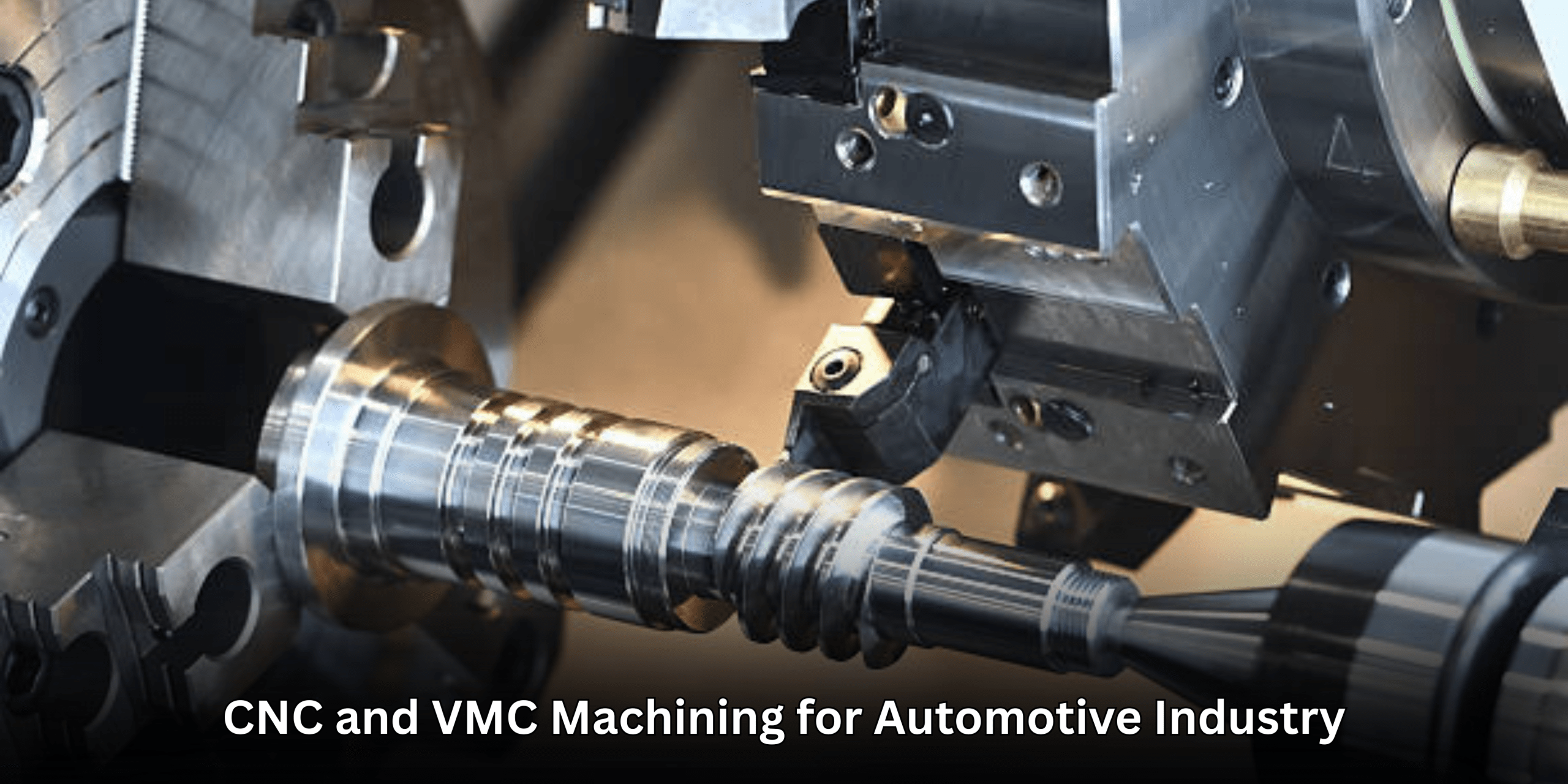
The manufacturing industry is experiencing its most important period of change throughout its entire history. The transition from traditional manufacturing techniques to systems that operate through digital networks with intelligent machinery and human operators has created Industry 4.0 manufacturing which enables real-time collaboration between machines and data and human workers. Smart CNC machining serves as the fundamental technology that drives this entire process because it integrates precise engineering with automated systems and network capabilities and smart data analysis.
Precision manufacturing businesses need to implement smart CNC machining technology because it has become essential for their operations. The organization requires this approach to maintain its competitive edge while expanding its business and delivering high-quality products in international markets. The blog shows how smart CNC machining technology drives Industry 4.0 manufacturing through its supporting technologies to enhance productivity and quality while establishing itself as the advanced machining solution of tomorrow.
Understanding Industry 4.0 Manufacturing
Industry 4.0 manufacturing describes the process of using digital technologies to modernize industrial production systems. Industry 4.0 introduces intelligent and connected systems that operate without human intervention to industrial production processes.
The essential elements of Industry 4.0 demonstrate the following characteristics:
- Smart factories operate through their interlinked machinery systems
- Organizations collect data in actual time while they analyze it
- The system operates through automatic processes which improve themselves
- The system connects its physical components with its digital elements
- The system provides complete visibility throughout the entire production process
CNC machines in this ecosystem transform from independent machines into networked machines which help in making choices. The advanced development of CNC machining technology creates smart CNC machines.
Smart CNC machining is the next generation of CNC machining, where traditional CNC machines are enhanced with sensors, connectivity, software, and analytics. The machines operate through their programmed instructions while they simultaneously track and analyze their machining processes to achieve operational improvement.
Smart CNC machining introduces the following capabilities which conventional CNC machining lacks:
- The system maintains ongoing watch over its machinery status.
- The system modifies its settings without human intervention.
- The system can anticipate when maintenance will be required.
- The system provides a complete digital record of all operations.
- The system connects smoothly with existing business software applications.
This transformation aligns CNC machining with the principles of smart manufacturing and Industry 4.0.
Why Smart CNC Machining Is Central to Industry 4.0
Current manufacturing operations in Industry 4.0 require three essential components which include real-time data and automated systems and intelligent technologies. The manufacturing process depends on CNC machines because they produce precise metal parts which create a vital connection between various production steps. Intelligent CNC machines function as data generators along with their role in maintaining product standards and improving operational efficiency.
Smart CNC machining powers Industry 4.0 by enabling:
- Data-driven manufacturing decisions
- Consistent quality at scale
- Faster response to production changes
- Reduced downtime and waste
Smart CNC machining brings about a complete transformation of industrial machining operations into an advanced system which operates with intelligent connectivity and exceptional efficiency.
Core Technologies Behind Smart CNC Machining
1. CNC Automation
The process of smart CNC machining depends entirely on CNC automation technology. The system achieves better results through its automated tool changes and robotic loading and unloading functions together with adaptive machining cycles which minimize human operation needs.
CNC automation provides multiple advantages which include the following benefits.
The system achieves higher production rates. The system minimizes mistakes made by operators. The system creates safer work conditions. The system reduces the need for human workers.
CNC machines achieve nonstop operation through automation which enables manufacturers to produce high quantities of products for original equipment manufacturers without any decrease in product quality.
2. IoT in CNC Machining
Smart CNC machining depends on the Internet of Things as its essential technology. The embedded sensors in CNC machines gather operational data which includes:
- Spindle speed and load
- Vibration and temperature
- Tool wear conditions
- Cycle time and idle time
The system transmits data in real-time which enables CNC machine performance monitoring together with machine performance assessment. IoT connectivity transforms CNC machines into intelligent nodes within a smart factory.
3. Data-Driven Manufacturing
Data-driven manufacturing stands as the primary pillar supporting Industry 4.0. Smart CNC machining produces extensive operational data, which engineers use to analyze system faults and develop better machining methods.
Data analysis enables organizations to:
- Determine optimal feed rates and cutting speeds
- Reduce both scrap production and rework activities
- Improve production planning accuracy
The method guarantees that precise manufacturing operations maintain their required standards while remaining economically feasible.
4. AI and Machine Learning in CNC Machining
Smart CNC machining receives its advancement through artificial intelligence, which enables systems to detect hidden patterns that human operators cannot recognize. Machine learning algorithms use historical machining data to perform three tasks; they predict tool failure, recommend optimal machining parameters, and detect quality deviations at an early stage.
AI-driven insights assist manufacturers in maintaining high precision standards, which results in increased productivity and decreased equipment downtime.
5. Manufacturing Execution Systems Integration
The complete operational compatibility of Smart CNC machines with Manufacturing Execution Systems (MES) emerges from their integrated design. The system provides production facilities with real-time operational status monitoring while it automatically organizes work schedules and maintains quality control records which track product history.
The system connects to Manufacturing Execution Systems which enables CNC machining to support both engineering solutions and business planning needs of the organization.
Smart CNC Machining and Precision Manufacturing
Precision manufacturing demands that manufacturers maintain complete control over their product dimensions while they produce identical items during their entire production run. The system enables smart CNC systems to achieve their optimum operational accuracy by automatically adjusting machining parameters while tracking all machining conditions.
The system provides primary benefits which include:
- The system decreases dimensional differences between actual and planned measurements
- The method produces better surface quality results
- The system extends the lifespan of cutting instruments
- The system maintains consistent machining results
The aerospace automotive medical devices and electronics industries require this level of command because their CNC components must fulfill demanding specifications.
Role of Smart CNC Machining in Smart Factories
A smart factory exists as an environment which enables machines to communicate with each other while they adapt and optimize their operations together. The entire system operates through Smart CNC machining which serves as the fundamental technology for this operation.
The smart factory system uses CNC machines to transmit production data to their linked devices so they can detect delays in operations while displaying current updates of their manufacturing activities.
Factories achieve higher productivity through system interconnection which enables their technological manufacturing progress.
Predictive Maintenance and Reduced Downtime
The main benefit of smart CNC machining for users comes through its predictive maintenance feature. The traditional maintenance approach uses two methods which include scheduled maintenance and emergency maintenance but both methods prove to be ineffective.
The system uses machine health indicators monitoring to establish predictive maintenance through smart CNC machining because it detects equipment problems before they lead to equipment breakdowns and maintains equipment through scheduled maintenance. The process results in reduced emergency downtime which extends the operational lifespan of machines while keeping production activities running without interruptions.
Quality Control in Smart CNC Machining
Quality assurance is a critical aspect of Industry 4.0 manufacturing. Smart CNC machining integrates quality control directly into the machining process.
Real-time quality monitoring allows:
- Immediate detection of deviations
- Automatic process correction
- Reduced inspection time
Digital quality records also improve traceability, which is essential for regulated industries and OEM manufacturing.
Digital Twin Technology in CNC Machining
A digital twin operates as a virtual representation which shows both the physical machine and its actual operational procedures of the CNC machine. The smart CNC machining system uses digital twins to create preemptive simulations of machining operations which will take place.
The advantages of digital twins include the following benefits
- They enable process validation to take place before actual production begins
- The method brings about a decrease in required experimental testing
- The system generates optimal paths for equipment movement within the facility
This technology enhances advanced machining capabilities while reducing the time needed to develop new CNC components.
Smart CNC Machining and Industry 4.0 Supply Chains
The manufacturing process in Industry 4.0 operates throughout the entire supply chain, which extends beyond factory operations.
Smart CNC machining provides exact production data, which enables:
- Inventory planning
- Demand forecasting
- Delivery scheduling
Increased transparency enables better collaboration between manufacturers and suppliers and customers, which enhances engineering solutions throughout the value chain.
Applications of Smart CNC Machining Across Industries
Automotive Manufacturing
Smart CNC machining enables manufacturers to produce engine parts and transmission components and structural elements at high production rates. The system uses real-time monitoring to maintain product quality while satisfying demanding production requirements.
Aerospace Manufacturing
Smart CNC machining delivers precise results for aerospace applications which require strict adherence to manufacturing standards because it maintains complete operational tracking throughout production.
Medical Device Manufacturing
Medical components require perfect surface finishes and exact dimensional measurements. The smart CNC machine system enables manufacturers to achieve precise, dependable production processes which safeguard patient health.
Industrial Equipment Manufacturing
Smart CNC machining technology enhances metal component durability while delivering improved product quality and increased efficiency in manufacturing processes.
Benefits of Smart CNC Machining for Manufacturers
The adoption of smart CNC machining delivers measurable business benefits:
- Increased productivity through automation
- Lower operational costs through reduced waste
- Improved quality and consistency
- Faster time to market
- Enhanced scalability
These advantages make smart CNC machining a cornerstone of Industry 4.0 success.
Challenges in Adopting Smart CNC Machining
The process of adopting smart CNC machining brings forward multiple challenges which show its benefits.
- The system requires businesses to pay for their first equipment costs.
- The system needs businesses to handle their data integration process which requires complex work.
- The system needs businesses to create training programs for their employees.
The organization can solve its problems by executing its plans through stepwise execution while developing employee skills and preparing for future needs.
Roadmap to Implement Smart CNC Machining
Manufacturers who want to implement smart CNC machining can achieve their goal through a structured method that includes following steps.
- Manufacturers need to assess their current CNC systems.
- Manufacturers need to find areas where their operations need both automation and connectivity solutions.
- The company should establish a system for monitoring CNC machines through Internet of Things technology.
- The organization needs to connect its data analytics platform with its manufacturing execution system.
- The organization needs to provide training programs for both its operators and engineers.
The organization will use this roadmap to achieve a successful transition into smart manufacturing technology.
Smart CNC Machining in the Indian Manufacturing Landscape
India’s manufacturing sector is rapidly adopting Industry 4.0 principles. Smart CNC machining supports this growth by enabling:
- Global-quality precision manufacturing
- Competitive OEM manufacturing capabilities
- Advanced manufacturing technology adoption
Manufacturers can use smart CNC machining to compete in international markets because there is increasing demand for high-precision CNC components.
Future of Smart CNC Machining
The future of smart CNC machining will develop through more complete integration of artificial intelligence systems with robotic technology and cloud computing platforms. The following trends are currently emerging in the manufacturing industry:
- Autonomous machining systems
- Fully connected smart factories
- Real-time customer-driven production
The developments will enhance the capacity of smart CNC machining to advance Industrial 4.0 manufacturing processes.
Conclusion
Smart CNC machining represents more than a mere update to traditional CNC machining because it serves as a vital technology that makes Industry 4.0 manufacturing possible. Smart CNC machining achieves three major benefits, which include increased productivity, enhanced product quality, and environmentally sustainable business expansion, through its integration of CNC automation with real-time data and intelligent analytics.
Manufacturers who specialize in precision production should consider investing in smart CNC machining because it will help them achieve their long-term goals. Smart CNC machining will continue to drive modern manufacturing operations, which require competitiveness, within Industry 4.0 as the technology evolves.