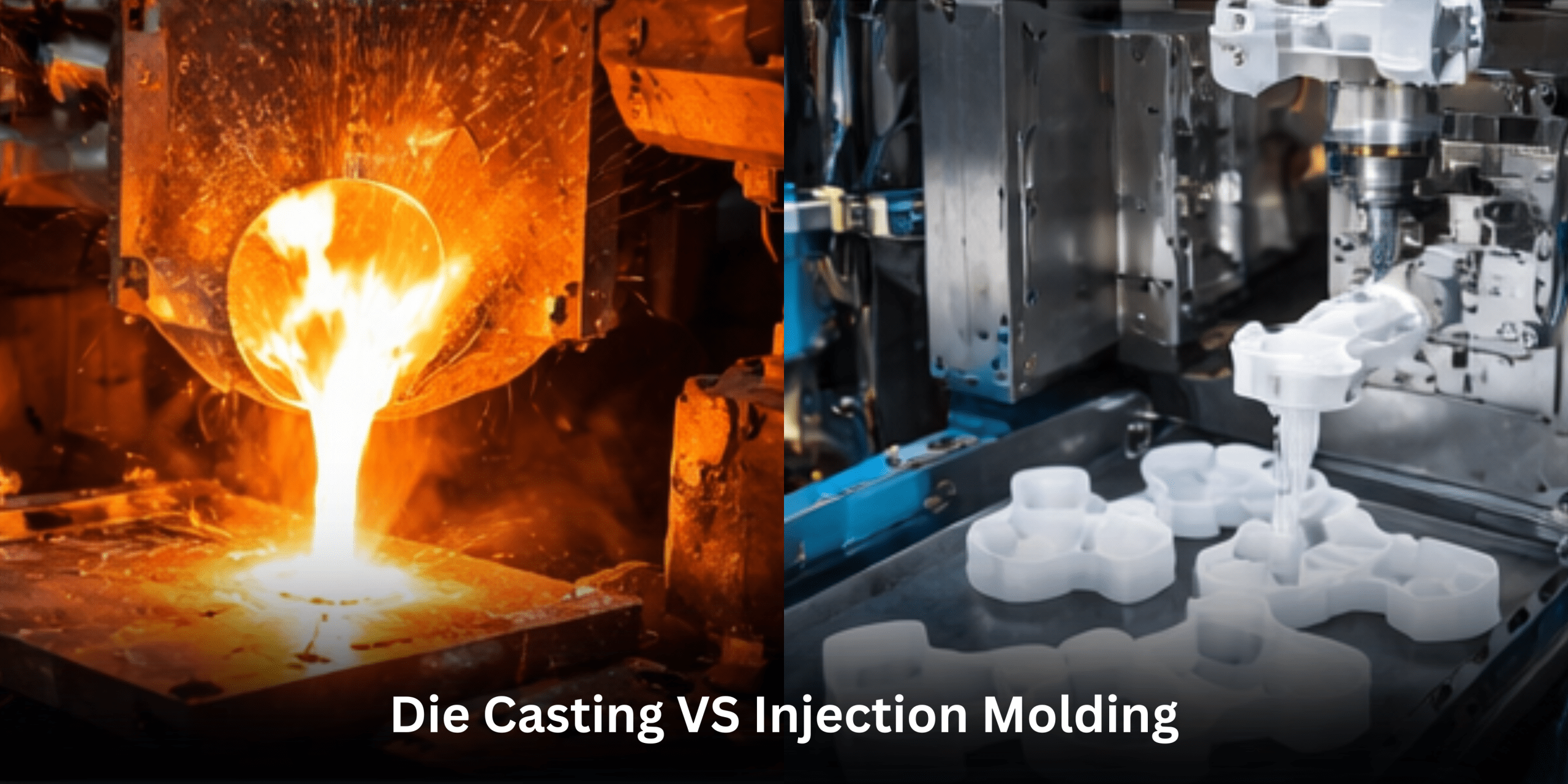
Right now factories depend on exact shaping methods to make top-grade pieces fast and often. Injection molding along with die casting stand out among common techniques found across shops. Though each pushes stuff into a mold for final shapes, their paths split when it comes to substances involved, heat levels needed, gear demands, part strength, plus where they fit best. Spotting how these two differ matters deeply for those building things – engineers, creators, makers – especially when balancing price tags, standards, and speed on the floor.
Picking injection molding or die casting isn’t just about specs – it shapes your whole approach. Tool costs shift depending on the path taken. Durability changes based on material behavior under stress. Weight becomes a factor when design complexity rises. Strength matters most where force and temperature push limits. Scaling up feels different across each method. Profit over time links closely to early choices made quietly. Light plastic pieces sometimes beat heavier alternatives. Intricate forms emerge more easily in certain molds. Metal wins when conditions get harsh without warning. This look dives into how both techniques operate behind the scenes. Processes reveal hidden trade-offs not obvious at first glance. Pros appear clearly only after comparing real-world cases. Cons show up during production runs, often too late. Differences stand out when materials face performance tests. Fit determines outcome more than expected upfront. Your need guides what makes sense in the end.
Let’s read more about Die Casting and Injection Molding and also How Die casting and Injection Molding stands out.
Introduction to Die Casting
Under heavy pressure, molten metal gets forced into durable steel molds – these are called dies. Non-iron metals like aluminum, zinc, or magnesium often go through this method.Die casting permits these metals to accomplish exact shapes rapidly, with steady quality.
Since the molds can be reused and the filling happens fast, results tend to hold precise shapes. Surfaces come out even, almost polished, without needing extra work. Walls of the cast pieces may be surprisingly slim, yet consistent every time.
Steel molds set die casting apart from older techniques like sand or plaster molding.Die casting molds can persevere thousands of cycles, making pass-on casting perfect for mass generation of metal components.Because these tools endure countless uses, the process suits large-scale manufacturing well. Engine parts for cars often come from die casting, along with gearboxes and frames. Electronics benefit too, getting sturdy outer shells through this method. Toughness defines what comes out, making it a go-to where reliability matters.
Die Casting Process
The die casting process follows a structured sequence of steps:
1. Die Preparation: After wiping down the form, oil is connected so pieces slip out without catching. Cleaning comes to begin with, at that point a smooth coat goes on to keep things moving easily.
2. Metal Melting: Molten metal forms when alloys soak in furnace heat long enough to lose solid shape.
3. Injection: Poured fast, molten metal surges into the die thanks to intense force. Every ridge and corner takes shape because the push never lets up.
4. Cooling and Solidification: Inside the mold, the metal loses heat fast. Thanks to good thermal transfer in steel molds, each round takes less time.
5. Ejecting: Once it hardens, the mold splits open while pins inside shove the part loose.
6. Trimming and Finishing: Leftover bits get trimmed off. When needed, extra shaping happens afterward.
Precision jumps up a notch when die casting enters the picture instead of older techniques like sand or plaster molds. Injection pressure takes center stage here, steering clear of rotation’s influence seen in centrifugal approaches. Tighter margins come naturally, repeat after repeat, without leaning on spinning motions to guide the flow. What you get stays consistent, shaped more by steady force than circular motion ever offered.
Pros of Die Casting
1. High Strength and Durability: Fragments of molten metal take shape under pressure, forming parts built to bear loads. These pieces emerge solid, ready for roles where strength matters most.
2. Excellent Surface Finish: Frequently, parts need little work after printing.
3. High Production Efficiency: Die Casting is favored over other metal shaping strategies since kick the bucket casting gives speedier cycles with steady yield. In Die Casting, after the molds are ready, making parts through die casting moves fast. Production speeds up right away once setup finishes. With tooling done, pieces come out one after another without delay. When everything is set, output jumps quickly. Finishing the tools means runs can start at full pace.
4. Dimensional Accuracy: A mold made for casting holds exact measurements, delivering steady results every time it’s used.
5. Thin Wall Capability: With delicate parts, tricky shapes can still be made. Thin walls don’t stop intricate forms from taking shape.
6. Long Tool Life: With care, a Die casting lasts through countless cycles. Parts emerge cleanly each time it’s used. Its lifespan grows when handled right. Precision matters most during setup. Even wear keeps performance steady over years.
Cons of Die Casting
1. High Initial Tool Expenses: Funding needed right away when making a cast mold.
2. Limited to Non Ferrous Metals: Ferrous metals typically struggle when used in die casting methods.
3. Porosity Risk: Pockets form where trapped air sits. When air stays put, hollow spots appear inside.
4. Changing designs costs more: Mold changes during production? That drains funds quickly. Expenses shoot up if tweaks wait too long.
5. High Energy Consumption: Fires rage only so molten streams can crawl through channels. Pressure builds until what stood firm flows without warning.
Introduction to Injection Molding
Molten plastic gets pushed into a shaped space to form pieces – that’s how injection molding works. This method ranks among the top ways factories make things worldwide. From car dashboards to tiny healthcare tools, many fields rely on injection molding. Precision matters here, so does making shapes light but strong.
Complex designs come out easily, thanks to this injection molding technique.
Not like die casting – built for metals – this method shapes thermoplastics along with certain heat-setting substances.With room to test textures, hues, built-in supports, and surface traits, injection molding makes design changes feel natural during setup. When a job needs countless copies that match exactly, its steady output turns heads across large runs.
Injection Molding Process
The injection molding process consists of several carefully controlled stages:
1. Material Preparation: Before they’re used in injection molding, plastic pellets get dried out so any water goes away.
2. Melting: In the Injection Molding, the temperature rise within the chamber softens the substance gradually. Melted, it flows more freely as heat builds up steadily.
3. Injection: During injection molding, liquid plastic gets forced in with strong push. Pressure drives it to fill every corner fast.
4. Cooling: A hard shell forms when the substance meets the cool walls of its container. Inside, thickness grows bit by bit as warmth escapes. Shape takes hold where temperature drops fast enough. Firmness spreads until motion stops completely.
5. Ejection: The injection molding machine opens the mold, out pops the completed piece when ejector pins push it free.
6. Two plate : A mold made of two parts shows up often in injection molding. It works straight forward, fitting most machines without fuss. One half stays put while the other moves to open and close. This setup has been around a long time, trusted for steady results. Parts come out clean when done right injection molding processes.
7. Three Mold : Three-plate molds are plan shifts utilized in injection molding when additional adaptability is needed. Flexibility in positioning gates grows without extra steps. Placement options open up, simply because space divides differently inside. Gate access changes shape, thanks to added layers. More room means more choices, built into the structure itself.
8. Hot runner systems – One reason cold runner setups get picked in injection molding? They save money on molds. Yet here’s the catch – extra plastic gets tossed each time. Waste piles up, even if the system feels cheaper at first.
9. One setup shapes several matching pieces at once. Each shot forms a set of connected components. Multiple items emerge together during production. Related elements come out in single runs. Several similar parts release simultaneously. A cycle delivers grouped outcomes efficiently. Matching sections appear all at once.
10. Stack mold systems – Fine-tuned depth setups let injection molding move easily between distinctive yield requests. Stacking cavities increments yield without expanding cycle time, making expansive generation runs more productive.
Pros of Injection Molding
1. Cost-Effective for High-Volume Production: Once the form is built, Injection molding gets to be amazingly prudent for huge generation runs. The cycle times are brief, labor costs are low, and mechanization increments efficiency.
2. Plan Flexibility: Injection molding underpins profoundly complex geometries. Undermines, snap-fits, living pivots, ribs, and complicated inside highlights can be molded straightforwardly into the portion without auxiliary operations.
3. Lightweight Components: Plastic parts are altogether lighter than metal components made through kick the bucket casting. This is why injection molding is perfect for applications where weight decrease is basic.
This makes Injection molding perfect for businesses like car and hardware where weight diminishment progresses execution and efficiency.
4. Wide Fabric Selection: Injection molding works with thousands of thermoplastics and thermosetting polymers. Materials can be chosen for adaptability, quality, straightforwardness, chemical resistance, or warm tolerance.
5. Surface Wrap up & Aesthetics: Parts can be molded with finished surfaces, gleam wraps up, branding points of interest, and custom colors specifically in the shape — lessening post-processing.
6. Negligible Fabric Waste: Excess plastic from runners and sprues can regularly be reused and reused, particularly in cold runner systems.
7. Quick Generation Cycles: Injection molding ordinarily has shorter cycle times compared to Die casting, particularly for littler plastic components.
8. Lower Vitality Requirements: Compared to Die casting, Injection molding by and expansive requires lower dissolving temperatures, driving to decreased essentialness utilization.
Cons of Injection Molding
1. Tall Starting Tooling Costs: Custom molds are costly and time-consuming to create. Plan changes after form creation can be costly.
2. Constrained Quality Compared to Metal: Plastic components cannot coordinate the mechanical quality, warm resistance, and strength of metal parts delivered through die casting.
3. Shrinkage & Distorting Risk: Plastic materials shrivel as they cool, which may cause dimensional variety if not appropriately overseen amid form design.
4. Not Reasonable for Exceptionally Tall Temperatures: Injection molding plastic parts may misshape beneath extraordinary warm where Die casting metal parts would stay stable.
5. Longer Shape Advancement Time: Complex molds may take weeks or months to make some time recently generation can begin.
6. Natural Concerns: Some plastics are not biodegradable and may raise supportability concerns unless recyclable materials are utilized.
Key Differences Between Die Casting and Injection Molding
Here is a clear comparison table Between Injection Molding and Die Casting:
| Factor | Injection Molding | Die Casting |
| Material Used | Thermoplastics & thermosets | Non-ferrous metals (aluminum, zinc, magnesium) |
| Melting Temperature | Lower | Much higher |
| Part Strength | Moderate | High structural strength |
| Weight | Lightweight | Heavier |
| Tooling Cost | High initial cost | Very high initial cost |
| Production Speed | Very fast | Fast |
| Surface Finish | Excellent, customizable | Smooth metallic finish |
| Design Flexibility | Highly complex designs possible | Good but limited by metal flow |
| Heat Resistance | Limited | Excellent |
| Best For | Consumer goods, medical devices, packaging | Automotive, machinery, industrial parts |
Execution Perspective
- If your item needs quality, unbending nature, and warm resistance, Die casting is frequently the way better choice.
- If your item requires complex shapes, lightweight structure, and taken a toll proficiency at tall volumes, injection molding is ordinarily preferred.
When to Select Injection Molding Over Die Casting
Choose injection molding when:
- Weight decrease is critical
- The item requires complicated plan features
- You require huge generation volumes
- Aesthetic customization is important
- Cost per unit must stay low
When to Select Die Casting Over Injection Molding.
Choose Die casting when:
- Mechanical quality is essential
- The portion will confront tall temperatures
- Structural toughness is required
- Long-term wear resistance matters
Orbitol Intelligence As Specialists in Die Casting and Injection Molding
Orbitol Intelligence Pvt. Ltd. is a trusted accomplice for producers looking to exceed expectations in Die casting and injection molding. With progressed innovation and industry ability, Orbitol makes a difference clients optimize both Die Casting and injection molding forms to create high-quality metal and plastic parts with accuracy and consistency.
Whether you are working on car components, aviation parts, or shopper items, Orbitol guarantees that each kick the bucket casting and injection molding venture meets the most elevated guidelines.
Their administrations include:
- Optimized Die Casting and Injection Molding Forms: Direction on selecting the most reasonable method. Die casting for metals or injection molding for plastics to maximize effectiveness and accuracy.
- High-Precision Form Plan for Die Casting and Injection Molding: Custom molds that diminish absconds, improve solidness, and guarantee repeatable results.
- Technical Back and Preparing for Die Casting and Injection Molding: Master help to offer assistance your group handle complex generation setups efficiently.
- Consistent Quality in Die Casting and Injection Molding: Solid results for high-volume generation, keeping up both quality in metals and exactness in plastic components.
By collaborating with Orbitol Intelligence Pvt. Ltd., producers pick up a total arrangement for Die casting and Injection molding, accomplishing predominant surface wraps up, more tightly resistances, and quicker generation cycles, all whereas diminishing blunders and moving forward by and large workflow.
Conclusion: Die Casting VS Injection Molding
Both injection molding and Die casting are capable fabricating forms, but they serve diverse purposes.
Injection molding overwhelms in applications requiring lightweight, complex, and high-volume plastic parts,injection molding is best here. Injection Molding offers plan opportunity, fetched effectiveness at scale, and quick generation cycles. Be that as it may, it cannot coordinate the quality and warm resistance of metal components.
Die casting, on the other hand Die Casting, exceeds expectations in creating tough, high-strength metal parts with great dimensional precision. Whereas Die Casting requests higher vitality and tooling costs, it remains the favored arrangement for auxiliary and heavy-duty applications.
Ultimately, for choosing Die Casting or Injection Molding the right choice depends on:
- Material requirements
- Mechanical execution needs
- Production volume
- Budget constraints
- Operating environment
Selecting between injection molding and die casting is not fair around fabricating; it is approximately adjusting your generation procedure with item execution and long-term benefit.