Introduction- Injection Molding
Today’s factories rely on methods able to shape top-grade molds fast, precise, every single time. Not just cars, but common household items too come from systems built to repeat the exact form over and over without losing standard. Right now, one of the go-to techniques for crafting plastic parts in injection molding pieces happens through injecting material into a mold under pressure.
A single reason injection molding stands out? It builds detailed forms precisely, without spending too much when making many copies. What changed manufacturing forever? This method lets factories shape complicated parts through molds using less material than older ways
Out of melted plastic bits, new forms begin life inside custom molds shaped like ground hollows. During the injection molding process, Cooling locks each piece into place, matching the cavity down to the smallest detail. Machines guided by today’s automated setups pour in the liquid stuff into the molds without missing a beat. Exact copies pile up fast – thousands at first, then swelling toward millions – all coming out nearly indistinguishable.
This piece dives into injection molding – what it means, how the injection molding method runs. Earth design plays a role, sometimes overlooked. Various approaches to injection molding exist, each with its own path. Industries lean on this technique heavily, especially those building everyday items. How things take shape here matters more than many assume
What is Injection Molding?
Molten stuff gets pushed into a shaped hole to make parts, that is what injection molding does. Heat treats the substance till it sets
Once melted, it turns runny enough to move through soil, then hardens into the form wanted
Plastic items that soften when heated make up most of what goes through the Injection Molding. Heat changes them again and again, yet they hold onto their core traits just fine. Tiny beads become the starting point, poured into machines where warmth transforms them completely. Into molds they flow only after turning fully liquid under steady power
A good mold shape makes or breaks how well injection molding works. When the mold is set just right, stuff flows smoothly during filling. Cooling happens evenly across the part. The finished piece holds its exact size and form without drifting off target
One reason injection molding sticks around? It works well, scales easily. Fact is, factories rely on it heavily across many fields. Think cars, gadgets – also hospitals, everyday items too. Size doesn’t matter here; small parts or big batches, it handles both. What started as a niche method now runs through entire industries. Not flashy, yet everywhere. That kind of reach didn’t happen by accident.
Features Of Injection molding
Several characteristics make injection molding decomposing a favored system in modern manufacturing:
- High product effectiveness for mass manufacturing
- Capability to produce complex and detailed factors
- Right on point once more, staying steady through it all
- Few scraps left behind because the method stays precise
- Together with different plastic tools
- Fine details help makers hit top quality without raising prices.
Injection Molding Process
From start to finish, injection molding moves through tightly managed phases turning basic materials into complete items. One after another, these steps ensure the end result sticks exactly to how it was meant to be made. Quality isn’t an accident – it follows from each careful move along the way
1. Material Preparation
A single grain at a time, tiny beads enter the machine – these make up what will become molded shapes. Made from substances like ABS, polypropylene, polyethylene, or nylon, they resemble miniature cylinders packed tight in bulk. Before movement starts, these bits rest still inside a hopper above the barrel. Heat soon softens them into something fluid enough to shift forward
Heat turns the pellets soft inside the chamber. The machine feeds these bits from a container above. Slowly, they travel into a warmed tube. There, warmth melts them ready for shaping
Once melted, they turn into a dense fluid suitable for shaping in molds
Starting off, poor ingredients mean problems down the line during production. A bumpy start with supplies often leads to shaky results in what gets made. When basics lack strength, everything built on them feels it too. Weak inputs show up clearly once things come together. What goes in shapes what comes out, every single time
2. Injection Stage
Out of nowhere, melted plastic gets pushed by a machine into a ground hollow, forced hard when the little beads turn liquid.
A dip in the ground forms when soil gets shaped with careful methods, setting clear edges and form. Into this space, liquid matter moves along inner pathways within the earth, spreading fully into the hollow
Right now, keeping the right pressure matters just as much as heat does when shaping plastic. Without both under control, marks might show up where they shouldn’t. Smooth flow depends on how well these two stay balanced through the run
3. Cooling Phase
Once the mold cavity gets filled, stuff inside begins to harden as temperature drops. This cooling phase matters a lot during plastic shaping since how fast or slow it happens shapes both strength and exact size of the object. Then things settle into their final form
Inside the mold, small pathways carry coolant that manages heat during production. Because of these passages, warmth moves away evenly from every area. Thanks to steady thermal control, each section solidifies at a similar pace. This balance cuts how long items need to set before removal. Less waiting means more parts can be made over time. Efficiency climbs without forcing speed manually
4. Ejection Stage
After cooling and hardening, space cracks open. From below, rods rise, nudging the solid piece free from its earthen mold
Fresh finishes might hit the item now, based on how things run. When it’s done, off it goes – slotted into bigger builds or used straight away
Only now does the mold open fully, readying the system for what comes next. A brief pause follows, making space for the machine to reset before another round begins
Significance of Mold Design in Injection Molding
It starts with how the mold sits on the ground – this shapes everything else. When setup makes sense, liquid plastic moves without stopping. Filling every corner happens naturally then. Cooling runs smoother when balance comes first
Painstaking shapes in casting sometimes misfire, bringing scars that resemble burns, hollow gaps inside, or incomplete sections where metal refuses to settle
Factors in Mold Design
A well-built earth structure takes into account various technical aspects, such as
- Proper gate placement for material flux
- Effective cooling channel layout
- Correct earth material selection
- Accurate depression confines
- Respectable venting to release trapped air.
A fresh approach to ground engineering boosts how well things work while quietly cutting flaws during making. One step forward in soil shaping means fewer marks show up later on builds
Types Of Injection Molding
From tiny parts to large components, one form of injection molding might fit better than another. Product shape matters a lot – some molds handle intricate details easier. When materials change, so does the method – flexibility keeps things moving. High output needs faster cycles, pushing some techniques forward. Complexity pushes limits; simpler designs open more doors. Volume guides choices just as much as design does
Plastic Injection Molding
Folks often pick plastic injection molding over other types. Heating things up makes the material flow like syrup in sunlight. This method relies on stuff that turns soft when warm
They harden once the temperature drops
Folks rely on this setup a lot when making common plastic stuff – think containers for wrapping things up, outer shells for gadgets, even pieces that go inside cars. Though it seems basic, the process shows up almost everywhere you’d least expect. From shops to garages, its role quietly holds steady. Not flashy, just functional. Always there, doing what it does without drawing attention
Insert Molding
Inside the mold, items go first – maybe metal bits, maybe something else. Then comes the hot plastic, sliding into place around them. This way, pieces become one solid unit when cooling happens. The process shapes complex parts others can’t handle so neatly. Each step fits together without extra work later on
Out pops a solid piece when plastic wraps the insert. Usually seen in electronics gear plus parts that move together
Overmolding
Something gets coated onto another thing through overmolding. Usually, rubber wraps around plastic this way. Think of toothbrushes – grippy parts come from that method. Medical tools often feel smoother because of it. Tools you hold tend to use this combo for comfort
Because it adds a soft layer, overmolding helps things last longer while feeling better in your hand
Micro Injection Molding
Tiny parts get made through micro injection molding. Usually found working inside tech gear or hospital tools instead. Precision matters most when pieces must fit tight spaces. Little by little, these methods shape what eyes can barely see. Factories rely on this for consistency at microscopic levels
Inside this setup sits a mold injector built for tiny amounts of melted plastic stuff. Not made for big batches, it works best when only a little goes in at once. Its frame adjusts easily, fitting odd-sized parts without extra tools nearby. Heat control stays sharp, even when running hours on end. Each cycle finishes fast, yet holds steady under repeated use. Built different from standard units, it skips the bulk but keeps strength. Precision matters most here, so every piece comes out just right
Injection Molding Benefits
There are several reasons why injection molding is considerably used in modern manufacturing.
High product effectiveness
A single mold can be made quickly when the machine runs on its own. Efficiency jumps because repetition happens without pause. Identical shapes come out one after another, driven by steady mechanical motion. Production speeds up since human hands stay out of the cycle
Complex Design Capability
With advanced earth design, intricate forms emerge – shapes too fragile for standard methods appear through careful shaping. Delicate details rise where traditional techniques fail, built slowly using precise layering instead of harsh cutting
Material Versatility
From sturdy to flexible, different thermoplastics work in injection molding. Manufacturers pick materials based on how strong they need the part, how stiff it must be, or whether it faces high temperatures
Reduced Waste
Because the plastic beads go in by exact amounts, less gets thrown away when making things this way instead of others
Harmonious Quality
A single mold gets shaped by machines that follow computer cues. Each round runs steady because electronics guide timing. Precision sticks through every piece made this way. Uniform results come from digital oversight of pressure and heat. Cycle after cycle, dimensions stay within tight boundaries
Injection molding operations
From automotive to medical gear, injection molding shows up almost everywhere. Its flexibility makes it a go-to, fitting needs without fuss. Different fields rely on it simply because it works so well.
Automotive Industry
Facing high demand, car makers rely heavily on injection molding for parts like dashboards and interior trim. One key reason? This method handles complex shapes well. Buffers take shape through the same process, steady and precise. Instead of assembling many pieces, entire sections emerge whole. Plastic components form quickly, fitting tight production timelines. For consistent results across thousands of units, few techniques match its reliability. Even small details lock into place during cooling. Vehicle interiors depend on this approach more than most realize
Electronics Industry
Molded parts show up everywhere in electronic gear – connectors take shape this way, along with casings that snap on, while switches form through the same process
Medical Industry
The medical sector uses injection molding to produce hypes
A single tool used in surgery might differ slightly because of how one person handles it, along with small changes in health conditions
Consumer Goods
From toothbrushes to toy cars, items people use daily often take shape through injection molding. Household goods like containers or utensils come to life this way too. Instead of handcrafting each piece, machines press melted material into molds. What emerges after cooling is a solid object ready for use. This method handles high volumes without slowing down. Even small details in design stay sharp batch after batch. Kitchen gadgets, storage bins, and similar things rely on this technique just as much
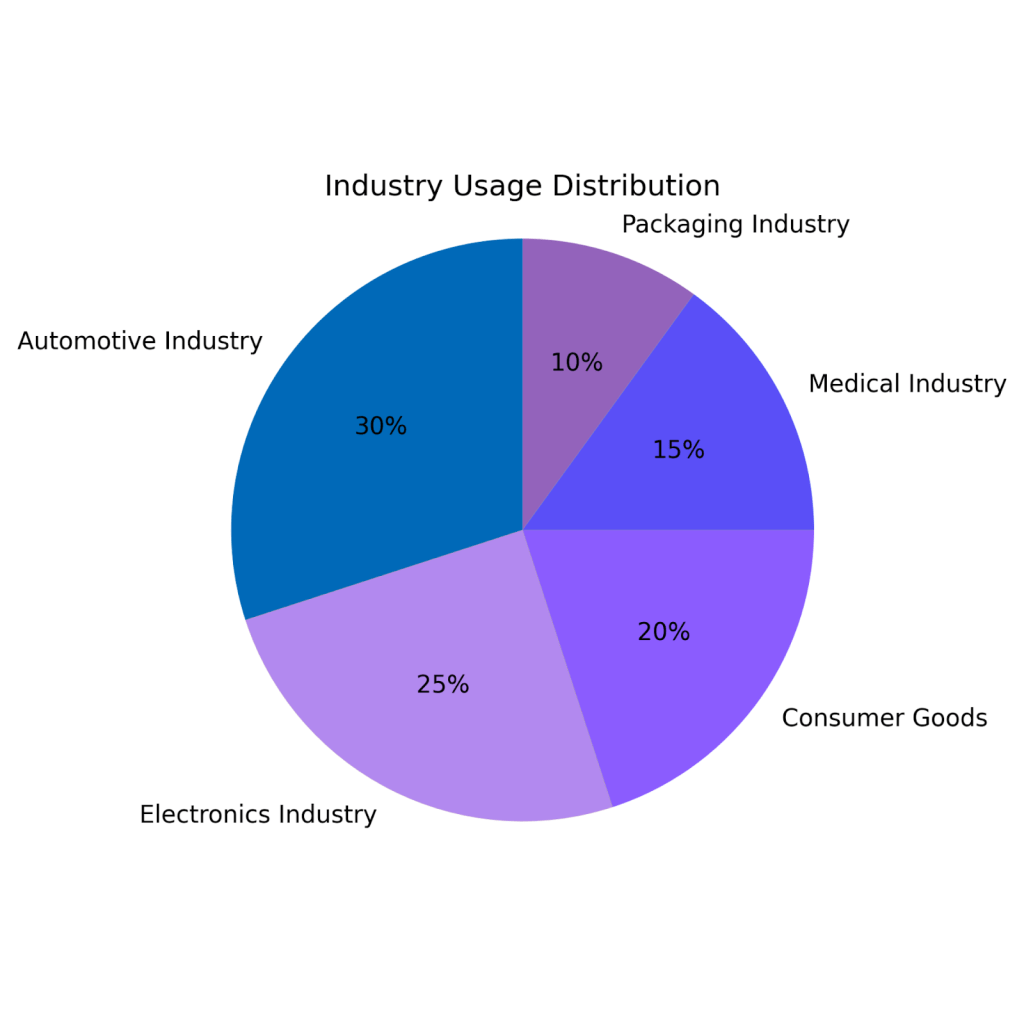
Below, you’ll find a map showing where different industries rely on injection molding to make plastic parts. Since this method works well and can handle large volumes, many sectors choose it for producing goods at scale.
Industries Usage Of Injection Molding Shows in below Chart
Why Choose Orbitol for Injection Molding Results?
A solid production partner matters just as much as nailing the product method. Firms aiming high need teams who know injection molding inside out – design roots, material flow, finishing touches – all of it.
What sets Orbitol Intelligence Pvt Ltd apart is their precision-driven approach to engineering through cutting-edge production tech. Years of hands-on experience shape how they handle contemporary manufacturing methods. Their solutions work smoothly under real-world demands, built tough where it matters. Performance stays consistent because every output answers actual operational needs
Orbitol Features Not Found Elsewhere
Advanced injection molding machine capabilities for perfection product
A spark of grit shapes the craft behind precision molds. Earth-wise methods sharpen every detail. Quality rides on smart structure choices. Clever layout lifts performance without flash. Thoughtful tweaks replace loud promises. Efficiency grows quiet, steady, real
The engineering crew held firm through tough production challenges
Fine plastic tools hold up well over time. Built tough, they resist wear without giving in easily. These items last because their makeup fights damage. Strength comes from smart material choices. Long life is built right into each piece
Every step of the injection molding runs under tight checks. From start to finish, oversight stays constant. Precision moves through each phase. Nothing skips review. Details get attention right up to completion
On time arrivals come standard. Pricing stays sharp without surprises
Every piece built at Orbitol moves with balance, shaped by careful making meant for serious work. When needs call for tiny custom molds or heavy production runs, standards never slip. Each item follows a clear line of toughness and precision. Quality here isn’t claimed – it shows in how things fit, last, and perform
Conclusion
Out there among production methods, few match how precisely injection molding shapes everyday items. Starting off with tiny beads of material, heat reshapes them inside tight systems. Through careful timing and pressure, those softened bits fill molds exactly. From that stage onward, cooling locks forms into solid usefulness. What comes out often feels sturdy, detailed without extra effort showing. Temperature control matters here more than speed ever does. Finished pieces emerge ready for real tasks right after release
Out of reach without smart groundwork, this tech leans on solid builds below the surface. Where gear meets precision tools, results shift toward better output. Stuff flows smoother once machines sync right. Big batches? They follow when everything holds tight
One wrong move in production can ruin everything – yet injection molding stays essential across cars, gadgets, health tools, and everyday items. Working alongside experienced teams such as Orbitol helps companies hit precise standards while keeping output steady under tough design demands.