In the manufacturing arena that is seriously competitive, industries are asking for parts that possess a very intricate design and at the same time, have an accuracy and repeatability that is excellent. Precision CNC machining has already established itself as the mainstay process for industrial manufacturing across various sectors that include aerospace, automotive, medical devices, and advanced engineering.
Orbitol Intelligence Pvt. Ltd. sees precision not only as a capability but also as the core of its manufacturing philosophy. The advanced CNC and VMC machining facilities of the company operate under strict quality control systems which support its engineering processes to produce components with high precision that comply with international industry standards.
What Is Precision CNC Machining?
Precision CNC machining refers to a manufacturing method in which computer-controlled machines are used to make parts that have very tight tolerances and dimensional accuracy that is consistent over time. In contrast to traditional machining, where human errors can cause variations, in CNC machining there is complete elimination of such errors thus every single item produced can be the same even if they come from a production run that is very large and has complex parts.
This is the case when:
- Tolerances are extremely small (microns)
- Surface quality directly affects performance
- Parts have to be very precise in their locations within the assembly
- High quality is the only option
CNC machining makes the engineering design a reality by converting digital designs into exact tool movements – thus it becomes the link between the engineering intent and the real-world performance. The use of CNC machining for medical implants or high-end automotive shafts has one thing in common that is precision and reliability which is still nowhere else to be found.
Why Precision is Essential for Industrial Components
A dimensional change of 1/1000 of an inch in critical applications could lead to:
- Assembly failures
- Performance decline
- Greater wear and tear
- Safety threats
Precision CNC machining guarantees that every single part works just as intended—be it a high-speed automobile part, a medical implant component, or a military-grade mechanical assembly. For original equipment manufacturers (OEMs), precision means not just accuracy but also the direct relation to the reliability of the product, the reputation of the brand, and the success of normal operation in the long run.
Besides, precision drastically lowers the likelihood of failures in the field, recalls, and costly warranty claims, which risks the entire industry such as aerospace and healthcare with their already high value. Precision machining with micron-level tolerances gives the OEM the protection of the reputation and the guarantee of the product safety.
Noteworthy Benefits of Precision CNC Machining
1. Outstanding Dimensional Precision
CNC machines utilize pre-programmed tool paths, thus, results are consistent throughout the entire production. This enables manufacturers to meet very stringent tolerances that manual machining cannot do reliably.
2. Outstanding Surface Finish
High-precision machining leaves little to no tool marks and irregularities, resulting in super smooth surfaces that enhance part performance, lower friction, and increase the service life of the part.
3. High Repeatability
Once the CNC program is proved reliable, the identical parts can be produced continually without any variations, which is essential for OEMs, overseas clients, and mass production.
4. Capability of Machining Complex Geometries
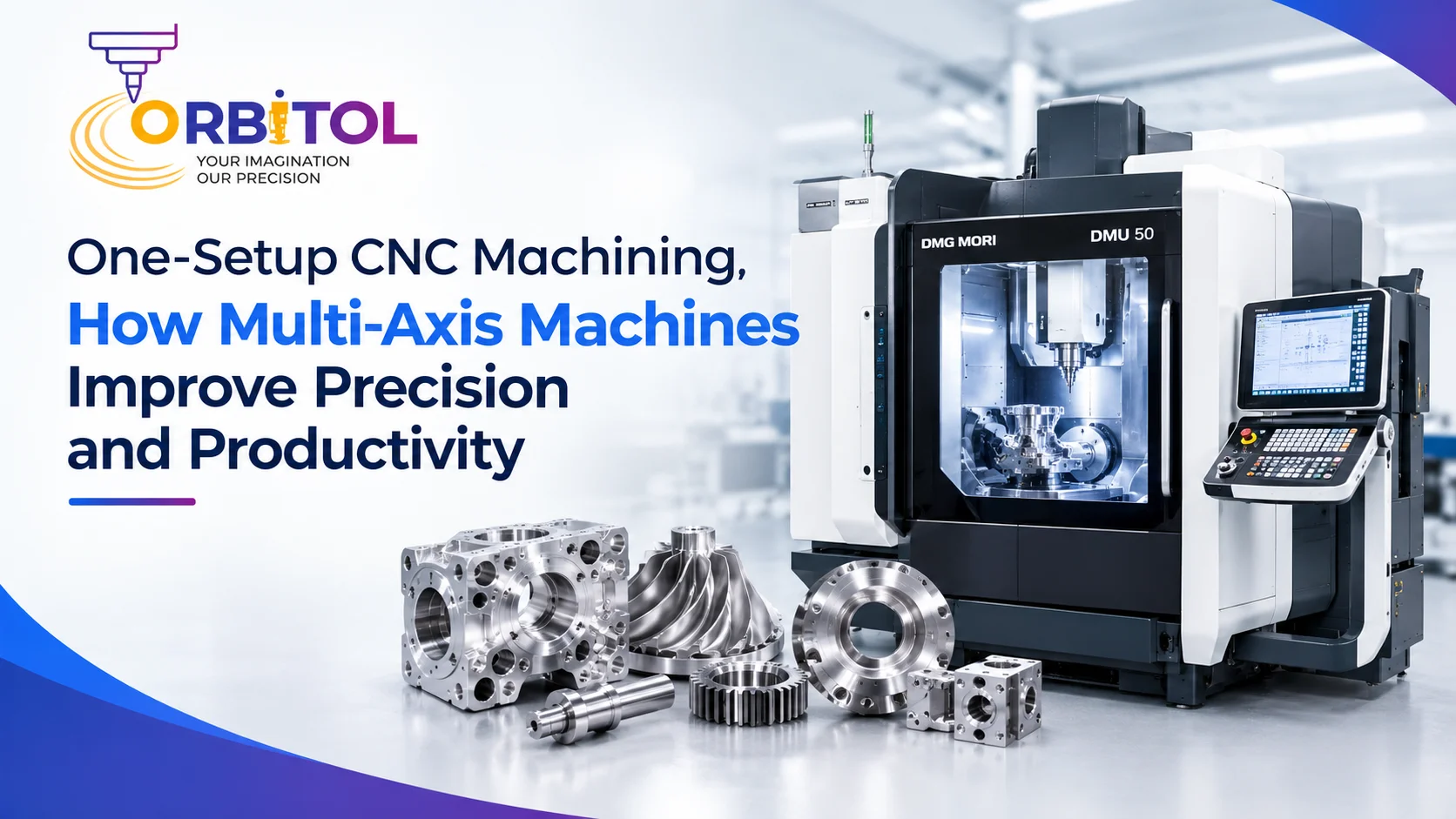
The latest CNC technology allows the machining process to go through several axes, thus the making of incredibly complex shapes and features in one setting is possible.
5. Fewer Production Errors
Machines are the primary reason why human error is minimized so much that the end product equalizes to very high quality with less scrap, less reworking, and so on.
6. Product Availability in Shorter Time
Automated tool changes, optimized toolpaths, and multi-axis machining are some of the reasons for the much shorter production time of precision CNC machining in comparison to the traditional methods.
7. Long-Term Production Cost Optimization
High initial investments may be a drawback, but precision CNC machining can significantly lower the total production costs by canceling out waste, rework, and assembly issues.
Precision CNC Machining vs Conventional Machining
Manual skill is the main foundation for traditional machining and, therefore, it can cause the final product to be variable. The other side of the coin is precision CNC machining, which promises:
- More consistency
- Shorter production cycles
- Greater control over dimensions
- Scalability that is easier
- Using advanced materials and coatings
All these factors produce intensive CNC machining as the height of the industries that cannot risk having defects or inconsistencies.
Precision CNC machining provides essential services to multiple industry sectors.
•Aerospace: The production process develops parts which consist of brackets and housings and turbine components that must endure both maximum force and maximum heat.
•Automotive & EV: The manufacturing process produces engine components which include transmission parts and high-precision shafts and battery connectors and chassis elements.
•Medical Devices: The manufacturing process produces surgical tools and implant components and prosthetic devices and diagnostic machines which require biocompatibility and precise measurement standards.
•Defense: The creation of highly robust mechanical parts which include weapon systems and communication devices and armored military vehicles fulfills vital mission requirements. •Industrial Engineering: The company develops tailored precision parts that complete requirements for pumps and valves and robotic systems and automated machinery.
Orbitol provides multiple industries with its machining services because the company combines machining methods with specific project needs and industry regulations and performance requirements. Each sector reaps the benefits of individualized process planning, materials selection, and after-machining treatments.
Materials Commonly Used in Precision CNC Machining
The choice of materials determines the success of precision machining operations. The most common ones are:
Aluminum alloys: Light weight, resistant to corrosion, and hence, these materials are very suitable for aerospace and automotive applications.
Stainless steel: High strength, resistance to wear, and so, this material is used in the medical field.
Material selection at Orbitol is primarily based on the needs of the application, load conditions, environmental exposure, and life expectancy of components—thus securing the best performance for every part.
Design for Manufacture in Precision CNC machining
Precision CNC machining with best results is when design and manufacturing cooperate closely. Unfavorable designs increase the number of operations, cost and lead time for machining.
Orbitol is there to provide the customer with:
- Support for reviewing the design
- Suggestions regarding manufacturability
- Optimization of tolerances
- Checking the feasibility of the material
- Creating a prototype for the validation of the design
The collaborative approach cuts production challenges while the precision and performance are still kept. When doing so, the early involvement in the design stage of the process usually implies less expensive redesign and that the manufacturing has fully matched the engineering requirements.
State-of-the-art CNC technologies at Orbitol
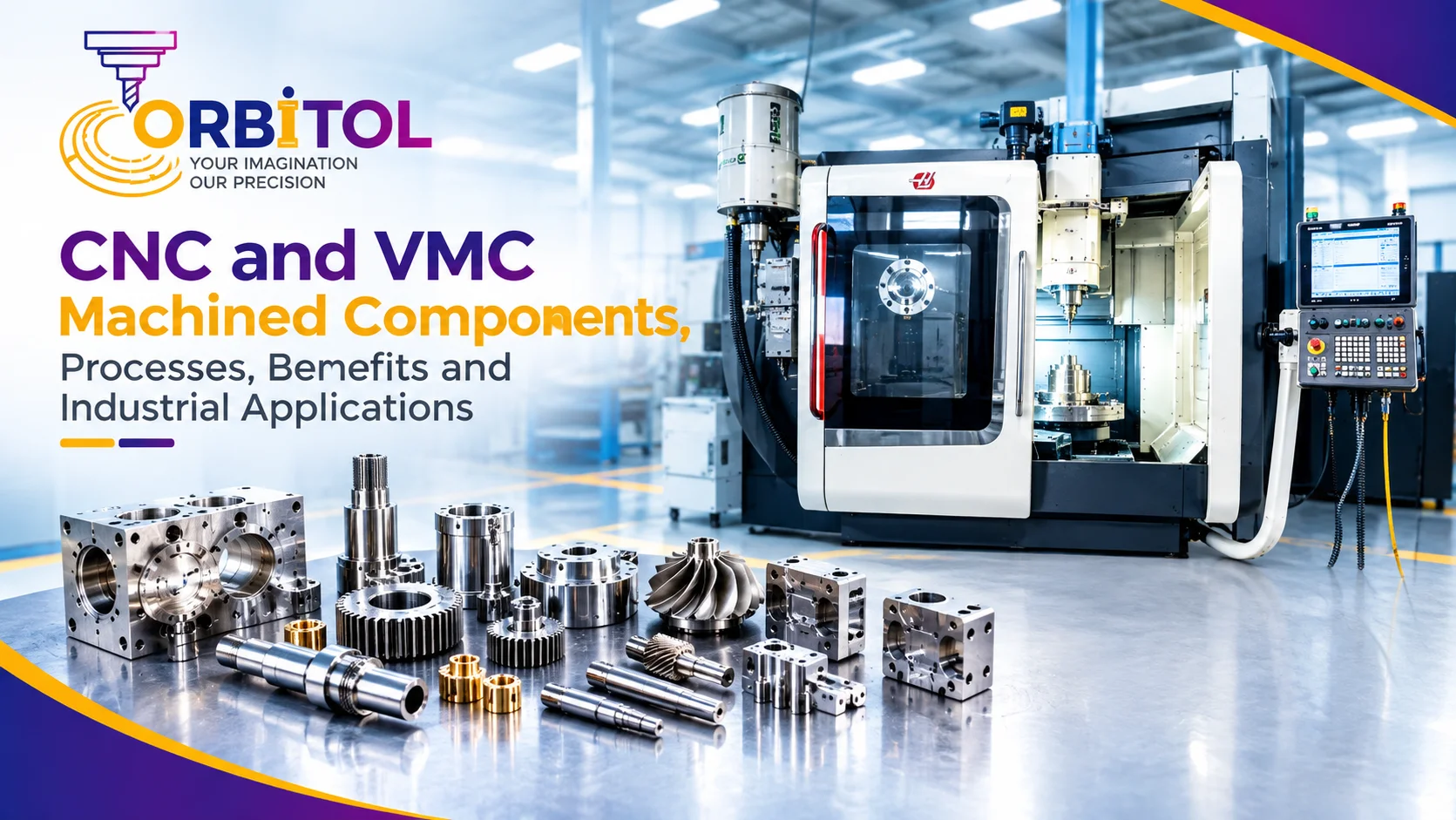
Orbitol is utilizing state-of-the-art CNC and VMC technologies:
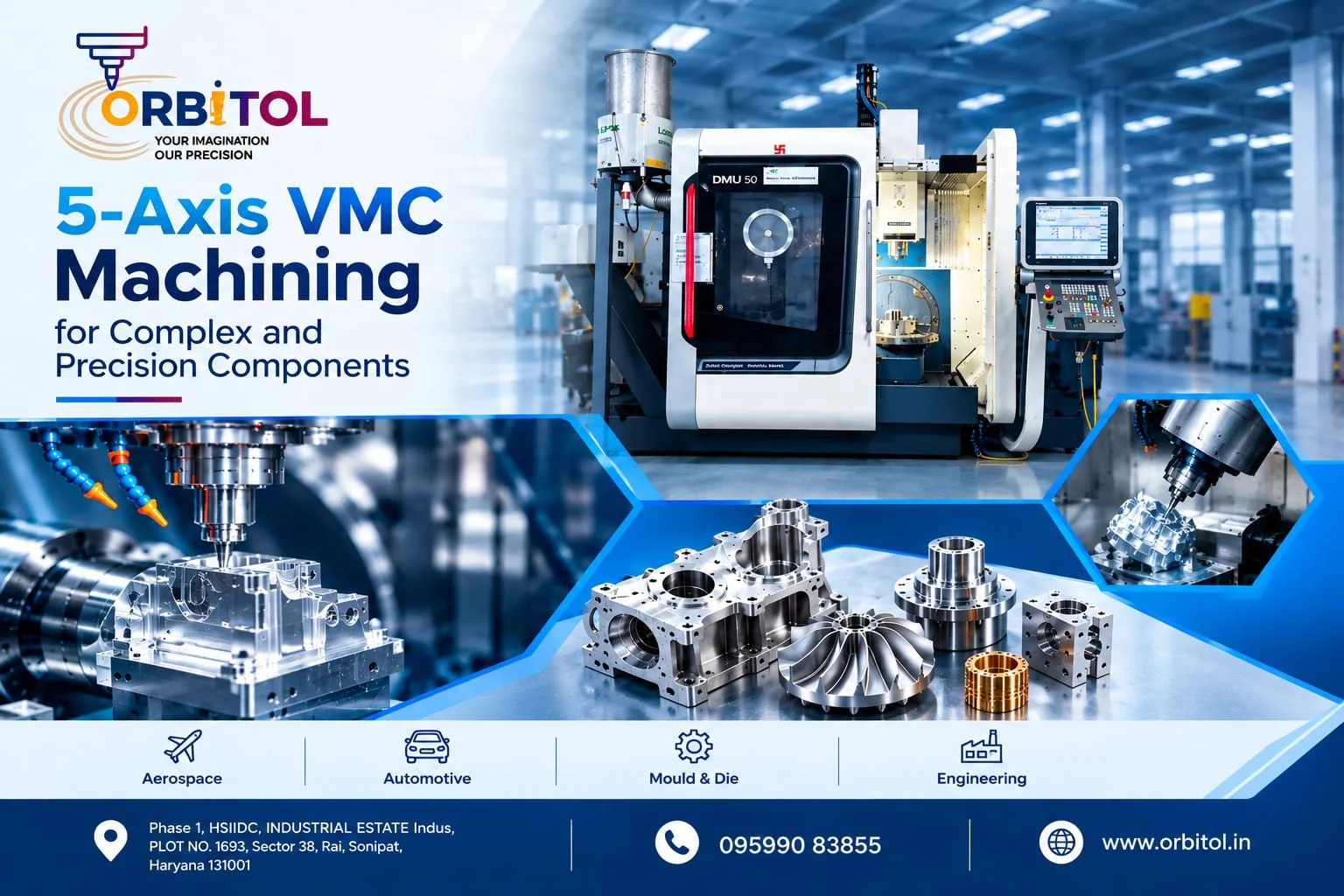
- Multi-axis 5-axis CNC machines: Allow the machining of complicated shapes in one go, cutting errors and improving the quality of the surface.
- High-speed spindles: Increase productivity and yet maintain precision.
- Adaptive toolpath software: It directs the cutting movement according to the material efficiency and less wear of the tool.
- Robotic automation: It eliminates the need for manual handling, which in turn increases consistency and reduces the time cycle.
Due to these technologies, Orbitol is able not only to satisfy the rigorous demands of the high-value industries but also to provide scalable production capability.
At Orbitol, the choice of material is primarily determined by the application requirements, the load conditions, the environmental impact, and the expected life cycle—thus guaranteeing the best possible performance for each component.
Design for Manufacturability in Precision CNC Machining
Precision CNC machining works best when the design and manufacturing teams collaborate. If the components are not designed well, the machining process would then be complex, costlier, and take longer.
Orbitol offers the following support to its customers:
- Design review support
- Manufacturability suggestions
- Tolerance optimization
- Material feasibility checks
- Prototyping for design validation
Such a cooperative approach aids in the elimination of production obstacles and at the same time keeps the desired level of precision and performance. The early involvement of the design phase prevents the expensive redesigns and guarantees that manufacturing is perfectly in tune with the specifications set by the engineering department.
Advanced CNC Technologies at Orbitol
Orbitol is at the forefront of technology in the area of CNC and VMC:
- 5-axis multi-axis CNC machines: Make it possible to work on intricate shapes in one go, thereby lowering mistakes and boosting the overall quality of the surface finish.
- High-speed spindles: They no longer compromise precision but rather enhance productivity.
- Adaptive toolpath software: It customizes the cutting sequences for the best use of the material, and less wear on the tool.
- Robotic automation: It not only minimizes manual handling but also improves quality and speeding up the process.
By utilizing these technologies, Orbitol can not only fulfill the strict requirements of high-value industries but also offer production that can be easily adjusted in terms of scale.
Your training consists of data collection that extends until October 2023. The material selection process at Orbitol uses application requirements and load patterns and environmental conditions and expected product lifespan to achieve maximum function of all materials. The process of Design for Manufacturability applies to Precision CNC Machining operations. The best results from Precision CNC machining emerge when designers and manufacturers operate their work as a unified system. The presence of badly designed parts leads to higher expenses. The process of manufacturing and production will take more time to complete.
Orbitol provides its customers with:
- Design review support
- Manufactability suggestions
- Tolerance optimization
- Material feasibility checks
- Prototyping for design validation
The joint work between team members creates benefits which help to reduce production difficulties while they preserve accuracy and operational capabilities. The design phase should begin with early engagement because it helps to prevent expensive redesign work while creating manufacturing processes that match engineering specifications.
Advanced CNC Technologies at Orbitol
Orbitol operates modern CNC and VMC systems which advance their manufacturing capabilities. The 5 axis CNC machines which operate through multiple axes create an ability to produce complicated 3D shapes through one operational process which decreases mistakes and improves product surface finish. The high speed spindle system increases work efficiency but maintains operational accuracy. The Adaptive toolpath software creates optimized cutting processes which use material resources efficiently while decreasing tool wear. The system of robotic automation cuts down on the requirement for workers to perform physical tasks which results in better operational efficiency and shorter production times.
The advanced technologies enable Orbitol to satisfy the strict requirements of premium sectors while offering production capabilities that can grow to meet industrial demands.
The Role of Quality Control in Precision CNC Machining
Precision machining is incomplete without rigorous inspection and quality assurance. At Orbitol, quality control is integrated at every stage of production.
Key quality practices include:
- In-process inspection to detect deviations early
- Dimensional verification using calibrated instruments
- Surface roughness and hardness testing
- Process control to maintain consistency across batches
- Final inspection before dispatch, including certifications when required
This structured approach ensures that every component delivered meets customer drawings, regulatory standards, and international quality benchmarks such as ISO and AS9100.
Why OEMs Prefer Precision CNC Machining Partners Like Orbitol
OEMs and engineering firms choose machining partners based on reliability, accuracy, and long-term value—not just cost.
Orbitol stands out because of:
- Advanced CNC & VMC machining capabilities
- Skilled engineering and production teams
- Strong focus on accuracy and repeatability
- Commitment to delivery timelines
- Transparent communication and technical support
OEMs gain from Orbitol’s expertise which enables them to manage essential parts that need precise measurement and complicated shapes and need to follow strict industry standards.
Precision CNC Machining and Cost Efficiency
The initial high expenses of precision machining because of its precise technology results in lower complete manufacturing expenses through three main factors.
- Minimizing material wastage
- Reducing rework and rejection
- Improving assembly efficiency
- Enhancing component lifespan
The correct production of components in first attempts enables OEMs to manage expenses better and maintain production timelines and decrease their supply chain vulnerabilities.
Scalability and Consistency in Precision CNC Machining
Precision CNC machining allows users to develop products through testing until they reach full production capacity while maintaining identical accuracy standards.
The manufacturing process maintains product quality standards because it provides manufacturers with a consistent production method which enables them to produce products at larger quantities.
Manufacturers achieve equivalent product quality through their global supply network which maintains identical standards for their products.
The product distribution process requires immediate fulfillment of all product distribution needs.
The system enables users to manage product development throughout all phases of the product lifecycle.
Orbitol operates two modes which enable it to perform both precision work and manufacturing operations required to meet changing industrial requirements.
Sustainability and Precision CNC Machining
Manufacturing processes require manufacturers to reach accuracy targets while protecting natural resources. Orbitol implements sustainable practices which include.
- The operational processes require organizations to obtain material resources.
- The organization will process discarded metal material to create reusable resources.
- The company uses CNC systems which operate with lower energy consumption.
- The organization uses cooling and lubricant materials which produce minor effects on the environment.
- The company achieves sustainability to meet environmental standards which results in savings and improvements to brand image for OEM partners.
The Future of Precision CNC Machining
Precision CNC machining will advance as industrial sectors adopt automated systems and intelligent factories and modern production methods. The main future developments will explore these areas.
Digital twin integration: Virtual modeling of components to predict manufacturing outcomes
AI-driven process optimization: Reducing tool wear and predicting maintenance needs
Conclusion
Precision CNC machining functions as a fundamental requirement for contemporary industrial manufacturing operations which demand both dependable results and exact performance standards. The manufacturing industry requires precision machining to fulfill its increasing demands for complex product designs and high-performance capabilities and all required safety regulations according to current market needs. The industry now requires businesses to create products which deliver optimal performance throughout their entire operational duration.
Orbitol Intelligence Pvt. Ltd. provides manufacturers and engineering companies with reliable support through its advanced CNC and VMC systems and its commitment to design for manufacturability and its strict quality control methods. Orbitol uses its technical knowledge together with process planning solutions that match particular needs to guarantee that all components will achieve exact size requirements and maintain consistent performance during mass production and throughout their entire operational duration.
The future of manufacturing requires automated systems which operate sustainably and implement intelligent production methods while precision CNC machining serves as the primary method for achieving high-precision results in industrial manufacturing. Companies that invest in the right machining partners today will achieve consistent quality and cost efficiency and competitive advantage throughout their future operations. Orbitol possesses the ability to handle the upcoming industrial expansion through its dedication to maintaining accurate standards and developing new solutions and providing dependable services.